
DAVOS — Recent discussions to resolve the future of Greenland have focused on proposals to increase NATO’s presence in the Arctic, give America a sovereign claim to pockets of Greenland’s territory and block potentially hostile adversaries from mining the island’s minerals, The New York Times reported.Those elements offer the fullest picture yet of the contours of a potential Greenland compromise that President Donald Trump announced on Wednesday. His move appeared to at least temporarily defuse an American-made trans-Atlantic crisis over the Danish territory, the paper said.Trump said on Thursday he had secured total and permanent US access to Greenland in a deal with NATO, whose head said allies would have to step up their commitment to Arctic security to ward off threats from Russia and China.News of a framework deal came as Trump backed off tariff threats against Europe and ruled out taking Greenland by force, bringing a degree of respite in what was brewing to be the biggest rupture in transatlantic ties in decades.Trump’s U-turn triggered a rebound in European markets and a return toward record highs for Wall Street’s main indexes, but also raised questions about how much damage had already been done to transatlantic ties and business confidence.Details of any agreement were unclear and Denmark insisted its sovereignty over the island was not up for discussion. EU foreign policy chief Kaja Kallas said the bloc’s US relations had “taken a big blow” in the past week, as EU leaders met for an emergency summit.Greenland’s Prime Minister Jens-Frederik Nielsen welcomed Trump’s comments but said he was still in the dark on many aspects.”I don’t know what there is in the agreement, or the deal, about my country,” he told reporters in the capital Nuuk.”We are ready to discuss a lot of things and we are ready to negotiate a better partnership and so on. But sovereignty is a red line,” he said, when asked about reports that Trump was seeking control of areas around US military bases in Greenland as part of a wider deal.Speaking to reporters aboard Air Force One on his return from the World Economic Forum in Davos, Switzerland, Trump said a new deal was being negotiated that would be “much more generous to the United States, so much more generous.”He skirted questions on sovereignty, but said: “We have to have the ability to do exactly what we want to do.”Earlier Trump told Fox Business Network the deal would essentially bring “total access” for the United States.A source familiar with the matter said NATO Secretary General Mark Rutte and Trump had agreed in Davos on further talks between the US, Denmark and Greenland on updating a 1951 agreement that governs US military access and presence on the Arctic island.The 1951 agreement established the US right to construct military bases in Greenland and move around freely in Greenlandic territory. This is still the case as long as Denmark and Greenland are informed of its actions. Washington has a base at Pituffik in northern Greenland.Rutte told Reuters in Davos it was now up to NATO’s senior commanders to work through the details of extra security requirements.”I have no doubt we can do this quite fast. Certainly, I would hope for 2026, I hope even early in 2026,” he said.Danish Prime Minister Mette Frederiksen said no negotiations had been held with NATO regarding the sovereignty of Greenland, a semi-autonomous territory of Denmark.”It is still a difficult and serious situation, but progress has also been made in the sense that we have now got things where they need to be. Namely that we can discuss how we promote common security in the Arctic region,” she said.Speaking later ahead of the emergency summit of EU leaders, Frederiksen called for a “permanent presence of NATO in the Arctic region, including around Greenland.”Kallas said “disagreements that allies have between them, like Europe and America, are just benefiting our adversaries who are looking and enjoying the view.”Finnish President Alexander Stubb said he hoped allies could put together a plan to boost Arctic security by a NATO summit in Ankara in July.British Prime Minister Keir Starmer told Rutte on Thursday that the UK stood ready to play its full part in ensuring security in the Arctic, a spokesperson said.After meeting with Rutte, Trump said there could be a deal that satisfies his desire for a “Golden Dome” missile-defence system and access to critical minerals while blocking what he says are Russia and China’s ambitions in the Arctic.Rutte said minerals exploitation was not discussed in his meeting with Trump. Specific negotiations over the Arctic island would continue between the United States, Denmark and Greenland itself, he said.China’s Foreign Ministry told Reuters on Friday that claims China is a threat are “baseless”, when asked to respond to the Arctic comments.China opposes other countries using it as “an excuse” to push their own agenda, the ministry said.China has repeatedly said its scientific expeditions in the Arctic and commercial shipping operations in the region followed international treaties and laws, accusing the West of distorting facts and hyping up its activities as clues to military intent. — AgenciesDAVOS — Recent discussions to resolve the future of Greenland have focused on proposals to increase NATO’s presence in the Arctic, give America a sovereign claim to pockets of Greenland’s territory and block potentially hostile adversaries from mining the island’s minerals, The New York Times reported.Those elements offer the fullest picture yet of the contours of a potential Greenland compromise that President Donald Trump announced on Wednesday. His move appeared to at least temporarily defuse an American-made trans-Atlantic crisis over the Danish territory, the paper said.Trump said on Thursday he had secured total and permanent US access to Greenland in a deal with NATO, whose head said allies would have to step up their commitment to Arctic security to ward off threats from Russia and China.News of a framework deal came as Trump backed off tariff threats against Europe and ruled out taking Greenland by force, bringing a degree of respite in what was brewing to be the biggest rupture in transatlantic ties in decades.Trump’s U-turn triggered a rebound in European markets and a return toward record highs for Wall Street’s main indexes, but also raised questions about how much damage had already been done to transatlantic ties and business confidence.Details of any agreement were unclear and Denmark insisted its sovereignty over the island was not up for discussion. EU foreign policy chief Kaja Kallas said the bloc’s US relations had “taken a big blow” in the past week, as EU leaders met for an emergency summit.Greenland’s Prime Minister Jens-Frederik Nielsen welcomed Trump’s comments but said he was still in the dark on many aspects.”I don’t know what there is in the agreement, or the deal, about my country,” he told reporters in the capital Nuuk.”We are ready to discuss a lot of things and we are ready to negotiate a better partnership and so on. But sovereignty is a red line,” he said, when asked about reports that Trump was seeking control of areas around US military bases in Greenland as part of a wider deal.Speaking to reporters aboard Air Force One on his return from the World Economic Forum in Davos, Switzerland, Trump said a new deal was being negotiated that would be “much more generous to the United States, so much more generous.”He skirted questions on sovereignty, but said: “We have to have the ability to do exactly what we want to do.”Earlier Trump told Fox Business Network the deal would essentially bring “total access” for the United States.A source familiar with the matter said NATO Secretary General Mark Rutte and Trump had agreed in Davos on further talks between the US, Denmark and Greenland on updating a 1951 agreement that governs US military access and presence on the Arctic island.The 1951 agreement established the US right to construct military bases in Greenland and move around freely in Greenlandic territory. This is still the case as long as Denmark and Greenland are informed of its actions. Washington has a base at Pituffik in northern Greenland.Rutte told Reuters in Davos it was now up to NATO’s senior commanders to work through the details of extra security requirements.”I have no doubt we can do this quite fast. Certainly, I would hope for 2026, I hope even early in 2026,” he said.Danish Prime Minister Mette Frederiksen said no negotiations had been held with NATO regarding the sovereignty of Greenland, a semi-autonomous territory of Denmark.”It is still a difficult and serious situation, but progress has also been made in the sense that we have now got things where they need to be. Namely that we can discuss how we promote common security in the Arctic region,” she said.Speaking later ahead of the emergency summit of EU leaders, Frederiksen called for a “permanent presence of NATO in the Arctic region, including around Greenland.”Kallas said “disagreements that allies have between them, like Europe and America, are just benefiting our adversaries who are looking and enjoying the view.”Finnish President Alexander Stubb said he hoped allies could put together a plan to boost Arctic security by a NATO summit in Ankara in July.British Prime Minister Keir Starmer told Rutte on Thursday that the UK stood ready to play its full part in ensuring security in the Arctic, a spokesperson said.After meeting with Rutte, Trump said there could be a deal that satisfies his desire for a “Golden Dome” missile-defence system and access to critical minerals while blocking what he says are Russia and China’s ambitions in the Arctic.Rutte said minerals exploitation was not discussed in his meeting with Trump. Specific negotiations over the Arctic island would continue between the United States, Denmark and Greenland itself, he said.China’s Foreign Ministry told Reuters on Friday that claims China is a threat are “baseless”, when asked to respond to the Arctic comments.China opposes other countries using it as “an excuse” to push their own agenda, the ministry said.China has repeatedly said its scientific expeditions in the Arctic and commercial shipping operations in the region followed international treaties and laws, accusing the West of distorting facts and hyping up its activities as clues to military intent. — Agencies
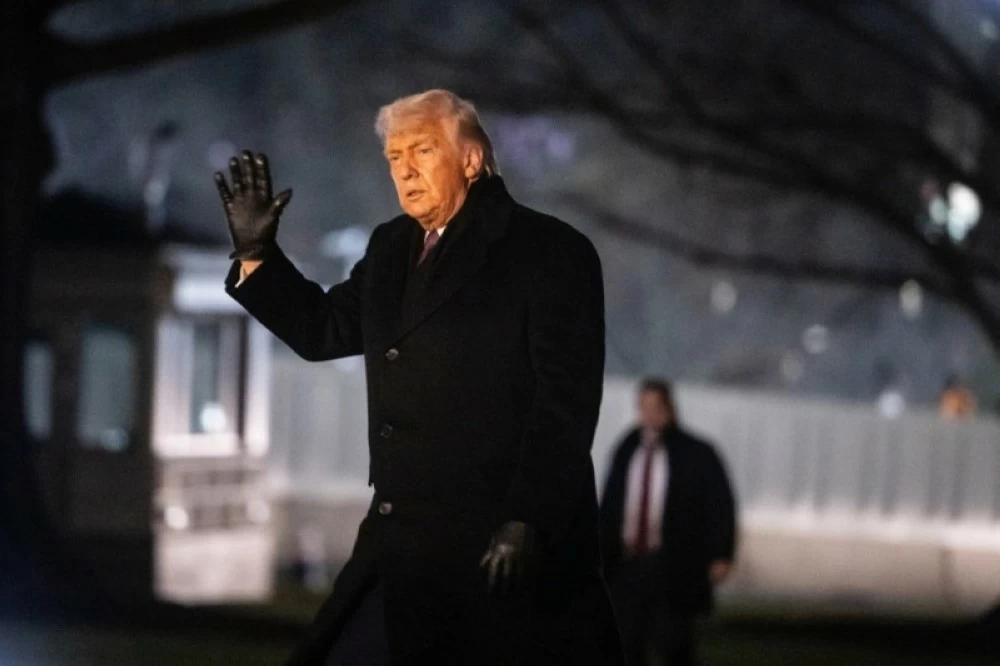
Trump touts 'total access' Greenland deal