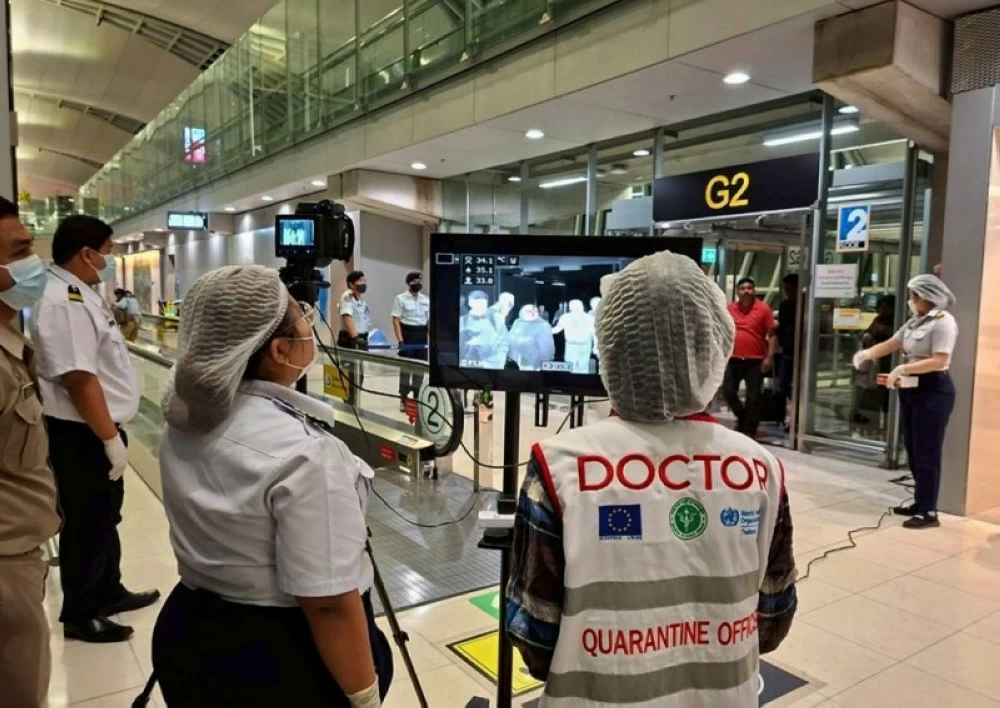

BANGKOK — Airports in several Asian countries have reintroduced COVID-style passenger screening following reports of an outbreak of the deadly Nipah virus in India’s West Bengal state.Thailand, Nepal, and Taiwan have stepped up passenger screening and surveillance after the the report sparked concern in parts of Asia.Thailand has started screening passengers at three airports that receive flights from West Bengal. Nepal has also begun screening arrivals at Kathmandu airport and other land border points with India.Five healthcare workers in West Bengal were infected by the virus early this month. Some 110 people who were in contact with them have been quarantined.All five cases were linked to a private hospital in Barasat. Two nurses are being treated in an intensive coronary care unit, one of whom remains in “very critical” condition, local media reported citing the state’s health department.No cases have yet been reported outside India, but several countries are stepping up precautions.Nipah is a zoonotic virus that spreads from animals such as bats and pigs to humans and can also pass through close person-to-person contact. Symptoms range from fever, headache, muscle pain, vomiting, and sore throat to severe respiratory distress or fatal encephalitis in extreme cases.On Sunday, Thailand started screening passengers at three international airports in Bangkok and Phuket that receive flights from West Bengal. Passengers from these flights have been asked to make health declarations.The parks and wildlife department has also implemented stricter screenings in natural tourist attractions.Jurai Wongswasdi, a spokeswoman for the Department for Disease Control, told BBC Thai authorities are “fairly confident” about guarding against an outbreak in Thailand.Nepal, too, has begun screening people arriving through the airport in Kathmandu and other land border points with India.With a fatality rate of up to 75 percent and no effective treatment or vaccines available, the virus outbreak has triggered unease in China ahead of the Lunar New Year holiday, a period of extremely high travel traffic into, within and out of the country. The 40-day travel rush, known as chunyun, runs this year from February 2 to March 13.Authorities in India have confirmed that the situation is contained, with only a small number of cases reported.Last month, China and India eased visa rules for each other in a move aimed at boosting travel between the world’s two most populous countries.Meanwhile, health authorities in Taiwan have proposed to list the Nipah virus as a “Category 5 disease”. Under the island’s system, diseases classified as Category 5 are emerging or rare infections with major public health risks, that require immediate reporting and special control measures. The World Health Organization has described Nipah in its top ten priority diseases, along with pathogens like Covid-19 and Zika, because of its potential to trigger an epidemic.The incubation period ranges from four to 14 days. To date, no drugs of vaccines have been approved to treat the disease.The first recognised Nipah outbreak was in 1998 among pig farmers in Malaysia and later spread to neighbouring Singapore. The virus got its name from the village where it was first discovered.More than 100 people were killed and a million pigs culled in an effort to contain the virus. It also resulted in significant economic losses for farmers and those in the livestock trade.Bangladesh has borne the brunt in recent years, with more than 100 people dying of Nipah since 2001.The virus has also been detected in India. Outbreaks were reported in West Bengal in 2001 and 2007.More recently, the southern state of Kerala has been a Nipah hotspot. In 2018, 19 cases were reported of which 17 were fatal; and in 2023, two out of six confirmed cases later died. — AgenciesBANGKOK — Airports in several Asian countries have reintroduced COVID-style passenger screening following reports of an outbreak of the deadly Nipah virus in India’s West Bengal state.Thailand, Nepal, and Taiwan have stepped up passenger screening and surveillance after the the report sparked concern in parts of Asia.Thailand has started screening passengers at three airports that receive flights from West Bengal. Nepal has also begun screening arrivals at Kathmandu airport and other land border points with India.Five healthcare workers in West Bengal were infected by the virus early this month. Some 110 people who were in contact with them have been quarantined.All five cases were linked to a private hospital in Barasat. Two nurses are being treated in an intensive coronary care unit, one of whom remains in “very critical” condition, local media reported citing the state’s health department.No cases have yet been reported outside India, but several countries are stepping up precautions.Nipah is a zoonotic virus that spreads from animals such as bats and pigs to humans and can also pass through close person-to-person contact. Symptoms range from fever, headache, muscle pain, vomiting, and sore throat to severe respiratory distress or fatal encephalitis in extreme cases.On Sunday, Thailand started screening passengers at three international airports in Bangkok and Phuket that receive flights from West Bengal. Passengers from these flights have been asked to make health declarations.The parks and wildlife department has also implemented stricter screenings in natural tourist attractions.Jurai Wongswasdi, a spokeswoman for the Department for Disease Control, told BBC Thai authorities are “fairly confident” about guarding against an outbreak in Thailand.Nepal, too, has begun screening people arriving through the airport in Kathmandu and other land border points with India.With a fatality rate of up to 75 percent and no effective treatment or vaccines available, the virus outbreak has triggered unease in China ahead of the Lunar New Year holiday, a period of extremely high travel traffic into, within and out of the country. The 40-day travel rush, known as chunyun, runs this year from February 2 to March 13.Authorities in India have confirmed that the situation is contained, with only a small number of cases reported.Last month, China and India eased visa rules for each other in a move aimed at boosting travel between the world’s two most populous countries.Meanwhile, health authorities in Taiwan have proposed to list the Nipah virus as a “Category 5 disease”. Under the island’s system, diseases classified as Category 5 are emerging or rare infections with major public health risks, that require immediate reporting and special control measures. The World Health Organization has described Nipah in its top ten priority diseases, along with pathogens like Covid-19 and Zika, because of its potential to trigger an epidemic.The incubation period ranges from four to 14 days. To date, no drugs of vaccines have been approved to treat the disease.The first recognised Nipah outbreak was in 1998 among pig farmers in Malaysia and later spread to neighbouring Singapore. The virus got its name from the village where it was first discovered.More than 100 people were killed and a million pigs culled in an effort to contain the virus. It also resulted in significant economic losses for farmers and those in the livestock trade.Bangladesh has borne the brunt in recent years, with more than 100 people dying of Nipah since 2001.The virus has also been detected in India. Outbreaks were reported in West Bengal in 2001 and 2007.More recently, the southern state of Kerala has been a Nipah hotspot. In 2018, 19 cases were reported of which 17 were fatal; and in 2023, two out of six confirmed cases later died. — Agencies
Asian airports on high alert after Nipah outbreak in Indian state