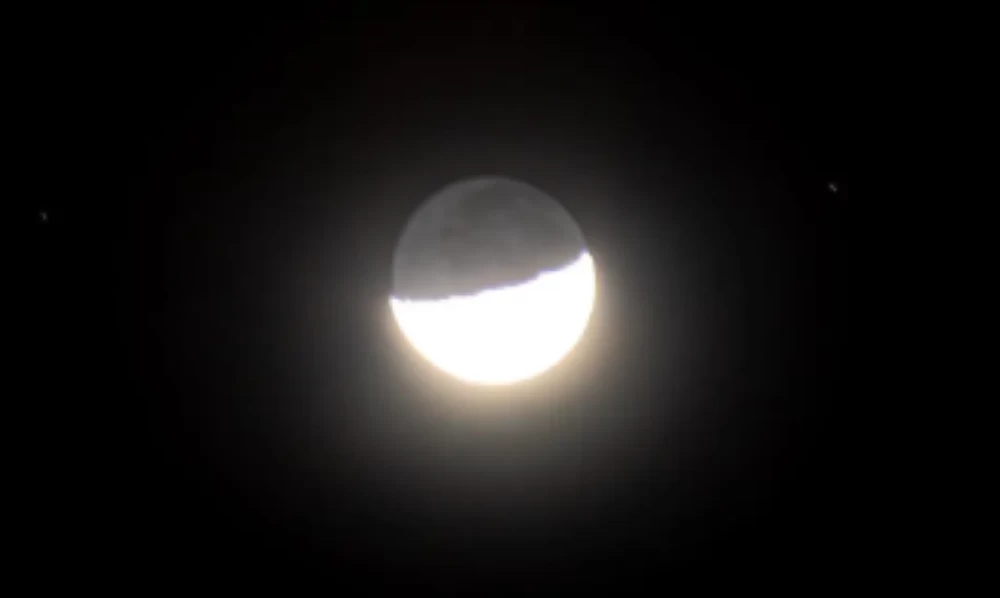

RIYADH — The skies over Saudi Arabia witnessed Monday night the conjunction of the Pleiades star cluster with the Moon, an astronomical event known as the “Seventh Qiran.”The phenomenon is regarded as a seasonal marker signaling the beginning of spring and accompanying climatic changes that contribute to soil fertility.**media[2668315]**Mohammed Al-Hazimi, a member of the Astronomy and Space Club, said that in popular heritage the conjunction is referred to as “Majee’ wa Shabee’,” a term associated with improving weather conditions and the onset of milder temperatures.He added that the Qiran lasts approximately 27 days, during which noticeable weather shifts occur, contributing to the sprouting of wild plants and the flourishing of vegetation.The period is also linked to the emergence of “faq‘,” or desert truffles, in several regions of the Kingdom.In ancient times, Arabs relied on such conjunctions to identify seasonal transitions.The event continues to draw interest from astronomy enthusiasts and those concerned with cultural heritage.RIYADH — The skies over Saudi Arabia witnessed Monday night the conjunction of the Pleiades star cluster with the Moon, an astronomical event known as the “Seventh Qiran.”The phenomenon is regarded as a seasonal marker signaling the beginning of spring and accompanying climatic changes that contribute to soil fertility.**media[2668315]**Mohammed Al-Hazimi, a member of the Astronomy and Space Club, said that in popular heritage the conjunction is referred to as “Majee’ wa Shabee’,” a term associated with improving weather conditions and the onset of milder temperatures.He added that the Qiran lasts approximately 27 days, during which noticeable weather shifts occur, contributing to the sprouting of wild plants and the flourishing of vegetation.The period is also linked to the emergence of “faq‘,” or desert truffles, in several regions of the Kingdom.In ancient times, Arabs relied on such conjunctions to identify seasonal transitions.The event continues to draw interest from astronomy enthusiasts and those concerned with cultural heritage.
Moon-Pleiades conjunction marks seasonal shift over Saudi skies