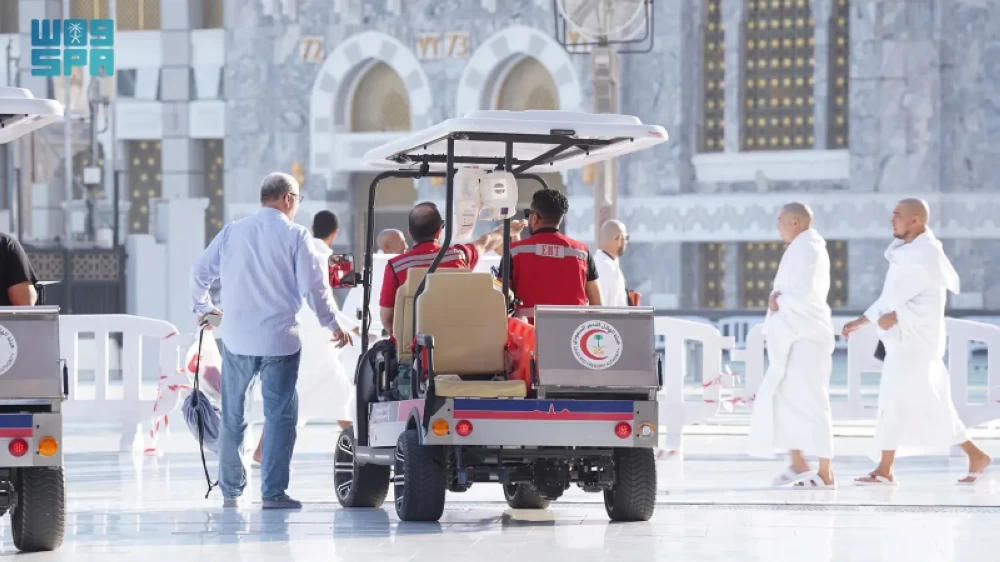
MAKKAH — The Saudi Red Crescent Authority in the Makkah region responded to 23,709 emergency reports during the first half of the holy month of Ramadan.According to the authority, 8,798 cases were transported to healthcare facilities to complete medical treatment.Specialized medical pathways recorded 41 cardiac catheterization cases and 49 stroke cases, which were handled in accordance with approved medical protocols to ensure rapid intervention and transfer to specialized centers.Air ambulance services also handled 28 emergency cases, with 15 patients transported by air to healthcare facilities to receive advanced medical care.Emergency care units stationed inside the Grand Mosque contributed to faster response times through advanced points equipped with resuscitation equipment and vital signs monitoring devices in high-density areas such as the mataf, corridors and courtyards.The electric emergency chair “Rufaida” also helped speed up access to patients in crowded areas inside the Grand Mosque due to its maneuverability among crowds and stabilization system that ensures patient safety during transport.The authority recorded the highest number of emergency reports on the 10th day of Ramadan, with 1,860 cases, while the peak operational period was between 4 p.m. and midnight.Hassan Nafea, director general of the Saudi Red Crescent Authority in the Makkah region, said the figures reflect the extensive field efforts made to serve visitors to the Grand Mosque and the strong coordination with health sector partners and relevant authorities to ensure rapid response and high-quality emergency services.MAKKAH — The Saudi Red Crescent Authority in the Makkah region responded to 23,709 emergency reports during the first half of the holy month of Ramadan.According to the authority, 8,798 cases were transported to healthcare facilities to complete medical treatment.Specialized medical pathways recorded 41 cardiac catheterization cases and 49 stroke cases, which were handled in accordance with approved medical protocols to ensure rapid intervention and transfer to specialized centers.Air ambulance services also handled 28 emergency cases, with 15 patients transported by air to healthcare facilities to receive advanced medical care.Emergency care units stationed inside the Grand Mosque contributed to faster response times through advanced points equipped with resuscitation equipment and vital signs monitoring devices in high-density areas such as the mataf, corridors and courtyards.The electric emergency chair “Rufaida” also helped speed up access to patients in crowded areas inside the Grand Mosque due to its maneuverability among crowds and stabilization system that ensures patient safety during transport.The authority recorded the highest number of emergency reports on the 10th day of Ramadan, with 1,860 cases, while the peak operational period was between 4 p.m. and midnight.Hassan Nafea, director general of the Saudi Red Crescent Authority in the Makkah region, said the figures reflect the extensive field efforts made to serve visitors to the Grand Mosque and the strong coordination with health sector partners and relevant authorities to ensure rapid response and high-quality emergency services.
Saudi Red Crescent handles 23,709 emergency calls in Makkah during first half of Ramadan