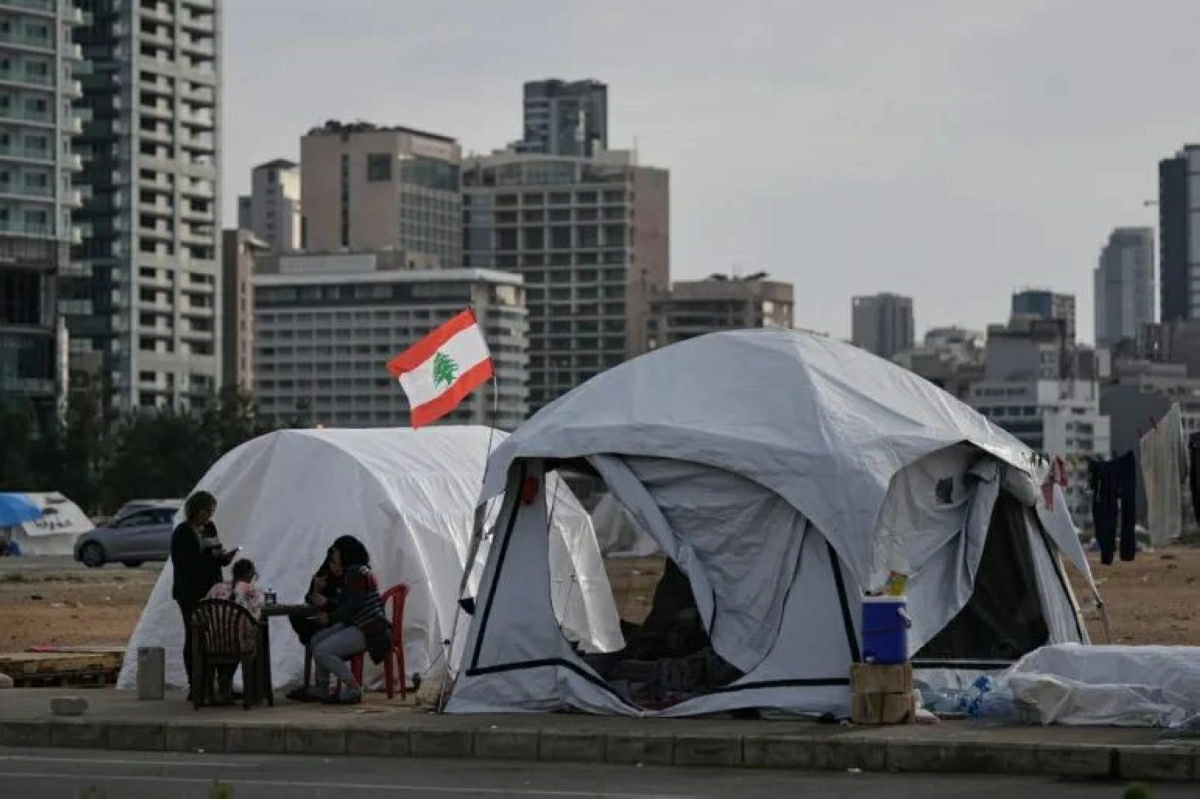

BEIRUT – Nearly a quater of the Lebanese population is at risk of acute food insecurity in the coming months as violence, mass displacement and economic hardship worsen an already fragile humanitarian situation, according to a UN-backed report.released on Wednesday. “Acute food insecurity is likely to deepen without sustained and timely humanitarian and livelihood support,” the report said. A sharp escalation in violence has reversed recent food security gains in Lebanon and pushed the country back into crisis, according to the latest Integrated Food Security Phase Classification (IPC) projected analysis released by the country’s Ministry of Agriculture, in collaboration with the Food and Agriculture Organization of the United Nations (FAO) and the World Food Programme (WFP). The analysis reveals that 1.24 million people – nearly one in four of the population analysed – are expected to face food insecurity levels classified as Crisis (IPC Phase 3) or worse, between April and August 2026. This marks a significant deterioration from the period of November 2025 through March 2026, when an estimated 874,000 people, roughly 17 percent of the population, were experiencing acute food insecurity. “The fragility we warned about in the previous IPC analysis has unfortunately proven to be true,” said Allison Oman Lawi, WFP Representative and Country Director in Lebanon. “Hard won gains have been swiftly reversed. Families who were just managing to cope are now being pushed back into crisis as conflict, displacement and rising costs collide, making food increasingly unaffordable.” This confirms continued and deepening fragility in rural and agrifood systems. Compounded shocks are undermining agricultural livelihoods and impacting food security, highlighting the urgent need for emergency agricultural assistance to support farmers and prevent further deterioration, said Nora Ourabah Haddad, FAO Representative in Lebanon. “These results underscore the severity of the current situation in Lebanon, where conflict intersects with economic pressures putting national food security under critical risk and juncture. We reaffirm our commitment to adopting a sustainable, science-based approach that goes beyond merely monitoring crises, by responding to them through continuous policies and programmes that strengthen the resilience of the agricultural sector and protect farmers’ livelihoods,” she said. “Safeguarding food security in Lebanon is a shared national and international responsibility, and investment in agriculture remains essential to ensuring stability and strengthening communities’ resilience to recurring crises” said Lebanese Minister of Agriculture Dr. Nizar Hani. The findings confirm that Lebanon’s food security situation remains highly sensitive to shocks. Without predictable humanitarian assistance, improved access, and stabilisation of the security and economic environment, food insecurity is likely to deepen further in the months ahead. The deterioration is being driven by a convergence of shocks linked to the ongoing escalation. Insecurity and displacement are disrupting livelihoods and income opportunities, while market access remains uneven in conflict affected areas as supply chains come under strain. At the same time, rising inflation and food prices continue to erode purchasing power, while reduced humanitarian assistance and funding shortfalls are limiting families’ ability to cope. Agriculture — a critical source of food and income — has been significantly affected and has yet to recover from the 2024 conflict. Damage to farmland, widespread displacement of farming households, restricted access to agricultural areas, rising input costs, and persistent insecurity are constraining production, while localized market disruptions are further limiting farmers’ ability to operate. Furthermore, regional dynamics are compounding the crisis. Disruptions to trade routes, rising fuel and transport costs, and increasing food prices linked to the regional conflict are further squeezing markets and household budgets. The crisis is affecting all population groups. Among Lebanese households, 725,000 people (19 percent) are projected to face Crisis (IPC Phase 3) or worse levels of acute food insecurity. The situation remains particularly severe among displaced and vulnerable populations, with 362,000 Syrian refugees (36 percent) and 104,000 Palestinian refugees (45 percent) classified in Crisis or worse. Newly arrived populations from Syria since 2024 are among the most affected, with around 50,000 people (52 percent) projected to face acute food insecurity. As the analysis reflects conditions in the immediate aftermath of the current escalation, the full effects of the conflict escalation and wider regional war may not yet be fully reflected in currently available evidence, as such actual outcomes could deteriorate further should these pressures intensify or persist for longer than currently assumed. The report came on the same day that Israeli authorities issued a new displacement order for 16 areas in Lebanon south of the Litani River, which directed residents to relocate to the nearby city of Saida.UN spokesperson Stephane Dujarric said the latest order adds to growing displacement pressures across the country as civilians continue to bear the brunt of ongoing hostilities. “We and our partners are responding to the mounting needs where access allows,” Dujarric told reporters in New York, but he pointed out that humanitarian operations remain constrained by limited access in affected areas. Despite the scale of the crisis in the country, funding for humanitarian efforts remains critically insufficient. The Lebanon Flash Appeal has so far received just over $117 million, which is only 38 percent of the $308 million required to meet the most urgent needs. Dujarric warned that without further immediate financial support and improved humanitarian access, conditions are likely to deteriorate further, leaving millions at heightened risk of hunger and hardship in the months ahead. — AgenciesBEIRUT – Nearly a quater of the Lebanese population is at risk of acute food insecurity in the coming months as violence, mass displacement and economic hardship worsen an already fragile humanitarian situation, according to a UN-backed report.released on Wednesday. “Acute food insecurity is likely to deepen without sustained and timely humanitarian and livelihood support,” the report said. A sharp escalation in violence has reversed recent food security gains in Lebanon and pushed the country back into crisis, according to the latest Integrated Food Security Phase Classification (IPC) projected analysis released by the country’s Ministry of Agriculture, in collaboration with the Food and Agriculture Organization of the United Nations (FAO) and the World Food Programme (WFP). The analysis reveals that 1.24 million people – nearly one in four of the population analysed – are expected to face food insecurity levels classified as Crisis (IPC Phase 3) or worse, between April and August 2026. This marks a significant deterioration from the period of November 2025 through March 2026, when an estimated 874,000 people, roughly 17 percent of the population, were experiencing acute food insecurity. “The fragility we warned about in the previous IPC analysis has unfortunately proven to be true,” said Allison Oman Lawi, WFP Representative and Country Director in Lebanon. “Hard won gains have been swiftly reversed. Families who were just managing to cope are now being pushed back into crisis as conflict, displacement and rising costs collide, making food increasingly unaffordable.” This confirms continued and deepening fragility in rural and agrifood systems. Compounded shocks are undermining agricultural livelihoods and impacting food security, highlighting the urgent need for emergency agricultural assistance to support farmers and prevent further deterioration, said Nora Ourabah Haddad, FAO Representative in Lebanon. “These results underscore the severity of the current situation in Lebanon, where conflict intersects with economic pressures putting national food security under critical risk and juncture. We reaffirm our commitment to adopting a sustainable, science-based approach that goes beyond merely monitoring crises, by responding to them through continuous policies and programmes that strengthen the resilience of the agricultural sector and protect farmers’ livelihoods,” she said. “Safeguarding food security in Lebanon is a shared national and international responsibility, and investment in agriculture remains essential to ensuring stability and strengthening communities’ resilience to recurring crises” said Lebanese Minister of Agriculture Dr. Nizar Hani. The findings confirm that Lebanon’s food security situation remains highly sensitive to shocks. Without predictable humanitarian assistance, improved access, and stabilisation of the security and economic environment, food insecurity is likely to deepen further in the months ahead. The deterioration is being driven by a convergence of shocks linked to the ongoing escalation. Insecurity and displacement are disrupting livelihoods and income opportunities, while market access remains uneven in conflict affected areas as supply chains come under strain. At the same time, rising inflation and food prices continue to erode purchasing power, while reduced humanitarian assistance and funding shortfalls are limiting families’ ability to cope. Agriculture — a critical source of food and income — has been significantly affected and has yet to recover from the 2024 conflict. Damage to farmland, widespread displacement of farming households, restricted access to agricultural areas, rising input costs, and persistent insecurity are constraining production, while localized market disruptions are further limiting farmers’ ability to operate. Furthermore, regional dynamics are compounding the crisis. Disruptions to trade routes, rising fuel and transport costs, and increasing food prices linked to the regional conflict are further squeezing markets and household budgets. The crisis is affecting all population groups. Among Lebanese households, 725,000 people (19 percent) are projected to face Crisis (IPC Phase 3) or worse levels of acute food insecurity. The situation remains particularly severe among displaced and vulnerable populations, with 362,000 Syrian refugees (36 percent) and 104,000 Palestinian refugees (45 percent) classified in Crisis or worse. Newly arrived populations from Syria since 2024 are among the most affected, with around 50,000 people (52 percent) projected to face acute food insecurity. As the analysis reflects conditions in the immediate aftermath of the current escalation, the full effects of the conflict escalation and wider regional war may not yet be fully reflected in currently available evidence, as such actual outcomes could deteriorate further should these pressures intensify or persist for longer than currently assumed. The report came on the same day that Israeli authorities issued a new displacement order for 16 areas in Lebanon south of the Litani River, which directed residents to relocate to the nearby city of Saida.UN spokesperson Stephane Dujarric said the latest order adds to growing displacement pressures across the country as civilians continue to bear the brunt of ongoing hostilities. “We and our partners are responding to the mounting needs where access allows,” Dujarric told reporters in New York, but he pointed out that humanitarian operations remain constrained by limited access in affected areas. Despite the scale of the crisis in the country, funding for humanitarian efforts remains critically insufficient. The Lebanon Flash Appeal has so far received just over $117 million, which is only 38 percent of the $308 million required to meet the most urgent needs. Dujarric warned that without further immediate financial support and improved humanitarian access, conditions are likely to deteriorate further, leaving millions at heightened risk of hunger and hardship in the months ahead. — Agencies
Conflict escalation pushing a quarter of Lebanese population into hunger, warns UN