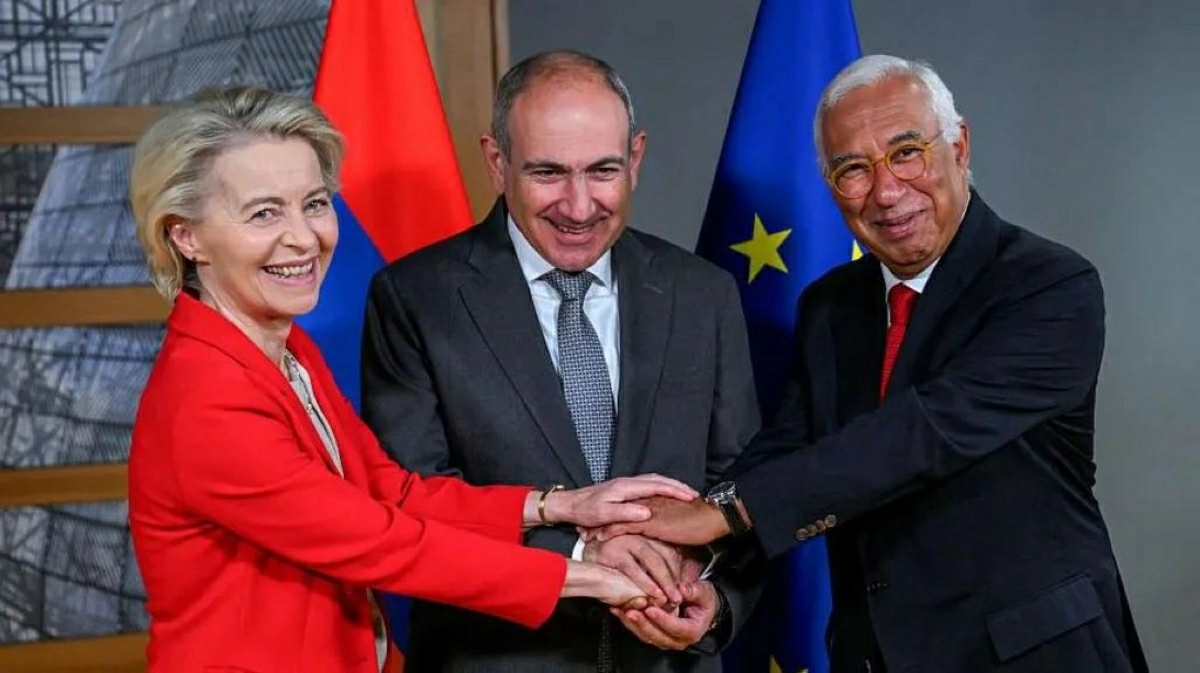
YEREVAN — World leaders, including Canadian Prime Minister Mark Carney, British Prime Minister Sir Keir Starmer and French President Emmanuel Macron are arriving in Yerevan, Armenia, ahead of the 8th European Political Community (EPC) meeting. At a time of profound geopolitical transformation, leaders from nearly 50 countries, including all 27 members of the European Union, will meet on Monday to discuss important politics face-to-face, including the US-Iran tensions. Tuesday will then see the first ever bilateral EU-Armenia summit, attended by European Commission President Ursula von der Leyen and European Council President António Costa. The summit will be co-chaired by European Council President António Costa and Armenian Prime Minister Nikol Pashinyan. Ukrainian President Volodymyr Zelensky and Polish Prime Minister Donald Tusk were among leaders who arrived Sunday afternoon. Zelensky is expected to have sideline meeting with several countries. Armenia is considered Russia’s closest ally in the region. It is a member of Russian President Vladimir Putin’s Eurasian Economic Union, and Moscow hosts a military base on Armenian soil. A country of fewer than three million people, Armenia is heavily dependent on Russia for energy resources. It buys Russian gas at a preferential rate, which Putin made a point of spelling out when Pashinyan visited Moscow on April. Moscow has watched Armenia’s increasingly warm relations with the EU with undisguised irritation. During their meeting at the Kremlin, Putin reminded Pashinyan that his EU membership ambitions were incompatible with Eurasian Economic Union membership. “It is not possible to be simultaneously in a customs union with both the European Union and the Eurasian Economic Union,” he said. “It is simply impossible by definition.” Just days before Monday’s EPC summit, Russia banned the import of Armenian mineral water. “This is the hallmark of how hybrid threat works,” said Artur Papyan of CyberHUB-AM, which monitors Armenia’s information space. Last month, the EU approved a new civilian mission for Armenia for the next two years — designed to counter Russian disinformation, cyberattacks and illicit financial flows, particularly ahead of Armenia’s parliamentary elections in June. It is modelled on a similar EU deployment to Moldova before the 2025 elections, in which pro-EU forces held on to power. “I have studied those cases, especially the Moldova and Romania cases, also Ukrainian ones,” said Papyan. “I can see there are common tactics, procedures.” Last year, the country adopted a law formally declaring its intention to apply for EU membership.When the EU’s Enlargement Commissioner Marta Kos visited Armenia in March, she declared that “Armenia and the EU have never been closer”. While European leaders are heading to Yerevan with promises of civilian missions and visa liberalisation in the next two years, there is no timeline for EU membership, defence commitments nor any plan to replace Russian gas. Without such firm commitments, Armenia’s “balancing act” between Russia and the West is far from over.YEREVAN — World leaders, including Canadian Prime Minister Mark Carney, British Prime Minister Sir Keir Starmer and French President Emmanuel Macron are arriving in Yerevan, Armenia, ahead of the 8th European Political Community (EPC) meeting. At a time of profound geopolitical transformation, leaders from nearly 50 countries, including all 27 members of the European Union, will meet on Monday to discuss important politics face-to-face, including the US-Iran tensions. Tuesday will then see the first ever bilateral EU-Armenia summit, attended by European Commission President Ursula von der Leyen and European Council President António Costa. The summit will be co-chaired by European Council President António Costa and Armenian Prime Minister Nikol Pashinyan. Ukrainian President Volodymyr Zelensky and Polish Prime Minister Donald Tusk were among leaders who arrived Sunday afternoon. Zelensky is expected to have sideline meeting with several countries. Armenia is considered Russia’s closest ally in the region. It is a member of Russian President Vladimir Putin’s Eurasian Economic Union, and Moscow hosts a military base on Armenian soil. A country of fewer than three million people, Armenia is heavily dependent on Russia for energy resources. It buys Russian gas at a preferential rate, which Putin made a point of spelling out when Pashinyan visited Moscow on April. Moscow has watched Armenia’s increasingly warm relations with the EU with undisguised irritation. During their meeting at the Kremlin, Putin reminded Pashinyan that his EU membership ambitions were incompatible with Eurasian Economic Union membership. “It is not possible to be simultaneously in a customs union with both the European Union and the Eurasian Economic Union,” he said. “It is simply impossible by definition.” Just days before Monday’s EPC summit, Russia banned the import of Armenian mineral water. “This is the hallmark of how hybrid threat works,” said Artur Papyan of CyberHUB-AM, which monitors Armenia’s information space. Last month, the EU approved a new civilian mission for Armenia for the next two years — designed to counter Russian disinformation, cyberattacks and illicit financial flows, particularly ahead of Armenia’s parliamentary elections in June. It is modelled on a similar EU deployment to Moldova before the 2025 elections, in which pro-EU forces held on to power. “I have studied those cases, especially the Moldova and Romania cases, also Ukrainian ones,” said Papyan. “I can see there are common tactics, procedures.” Last year, the country adopted a law formally declaring its intention to apply for EU membership.When the EU’s Enlargement Commissioner Marta Kos visited Armenia in March, she declared that “Armenia and the EU have never been closer”. While European leaders are heading to Yerevan with promises of civilian missions and visa liberalisation in the next two years, there is no timeline for EU membership, defence commitments nor any plan to replace Russian gas. Without such firm commitments, Armenia’s “balancing act” between Russia and the West is far from over.
World leaders arriving in Armenia for 8th EPC summit