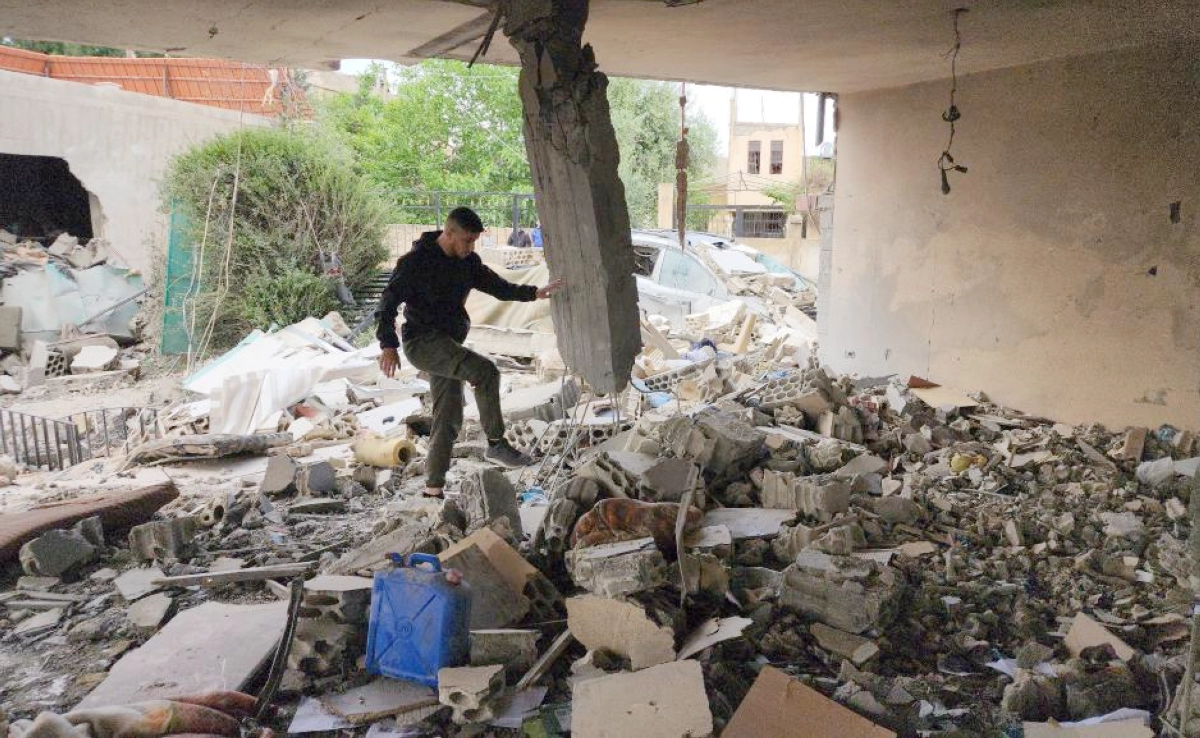

BEIRUT — Lebanon’s Health Ministry said on Monday that the cumulative death toll from Israeli attacks since March 2 has risen to 3,020, with 9,273 others wounded, as Israeli strikes and shelling across the country continued into Monday morning. More than a million people have been displaced in Lebanon by the fighting, with some sheltering in tents along roads and the sea in Beirut. At least six people were killed in the latest attacks, including two Palestinians in the Baalbek district of eastern Lebanon after a guided missile struck their apartment shortly after midnight. The victims were identified as Wael Abdel Halim, a commander in the Palestinian Islamic Jihad, and his 17-year-old daughter Rama, according to the Lebanese National News Agency (NNA). The Palestinian Islamic Jihad confirmed one of its officials was killed in an Israeli strike on his house at midnight alongside his daughter in Baalbek near the Syrian border. In southern Lebanon, three people were killed in an Israeli airstrike targeting a village, according to the NNA, while another person was killed and eight others were wounded in a strike on the town of Maarakeh. Israeli warplanes also struck a residential and commercial complex along the Deir al-Zahrani highway in southern Lebanon on Monday morning, completely destroying the building, and launched additional raids targeting several areas in the districts of Tyre and Bint Jbeil, southern Lebanon. On Monday, the Israeli military issued urgent warnings to residents of several towns and villages in southern Lebanon. Meanwhile, Hezbollah said it targeted an Israeli Iron Dome platform in the barracks of northern Israel’s Galilee Panhandle with an attack drone, and struck a gathering of Israeli soldiers and military vehicles in southern Lebanon’s Rashaf with a rocket barrage. A ceasefire between Israel and Lebanon took effect at midnight between April 16 and 17, after weeks of intensified cross-border fighting starting from March 2, which was linked to the US-Israeli war with Iran. On April 23, Washington said Israel and Lebanon agreed to extend the ceasefire by three weeks. On Friday, Washington said the two sides agreed to extend the ceasefire for another 45 days. Despite the truce, Israel has continued carrying out strikes in Lebanon, while Hezbollah has also launched attacks on northern Israel and Israeli military positions in southern Lebanon. Twenty Israeli soldiers, two Israeli civilians inside Israel and a defense contractor working in southern Lebanon have been killed on the Israeli side since the latest fighting started. UN peacekeeping forces in southern Lebanon have also been caught in the crossfire and six have been killed. Lebanese President Joseph Aoun has said he will do the “impossible” in order to stop the war with Israel. “The framework that Lebanon has set for the negotiations consists of an Israeli withdrawal, a ceasefire, the deployment of the army along the border, the return of the displaced, and economic aid,” Aoun said in a statement Monday. “My duty, based on my position and my responsibility, is to do the impossible, and to choose what is least costly, in order to stop the war against Lebanon and its people,” he added. US President Donald Trump has publicly called for a meeting between the Lebanese president and Israeli Prime Minister Benjamin Netanyahu. However, Aoun has declined to go to Washington to meet or speak directly with Netanyahu at this stage.BEIRUT — Lebanon’s Health Ministry said on Monday that the cumulative death toll from Israeli attacks since March 2 has risen to 3,020, with 9,273 others wounded, as Israeli strikes and shelling across the country continued into Monday morning. More than a million people have been displaced in Lebanon by the fighting, with some sheltering in tents along roads and the sea in Beirut. At least six people were killed in the latest attacks, including two Palestinians in the Baalbek district of eastern Lebanon after a guided missile struck their apartment shortly after midnight. The victims were identified as Wael Abdel Halim, a commander in the Palestinian Islamic Jihad, and his 17-year-old daughter Rama, according to the Lebanese National News Agency (NNA). The Palestinian Islamic Jihad confirmed one of its officials was killed in an Israeli strike on his house at midnight alongside his daughter in Baalbek near the Syrian border. In southern Lebanon, three people were killed in an Israeli airstrike targeting a village, according to the NNA, while another person was killed and eight others were wounded in a strike on the town of Maarakeh. Israeli warplanes also struck a residential and commercial complex along the Deir al-Zahrani highway in southern Lebanon on Monday morning, completely destroying the building, and launched additional raids targeting several areas in the districts of Tyre and Bint Jbeil, southern Lebanon. On Monday, the Israeli military issued urgent warnings to residents of several towns and villages in southern Lebanon. Meanwhile, Hezbollah said it targeted an Israeli Iron Dome platform in the barracks of northern Israel’s Galilee Panhandle with an attack drone, and struck a gathering of Israeli soldiers and military vehicles in southern Lebanon’s Rashaf with a rocket barrage. A ceasefire between Israel and Lebanon took effect at midnight between April 16 and 17, after weeks of intensified cross-border fighting starting from March 2, which was linked to the US-Israeli war with Iran. On April 23, Washington said Israel and Lebanon agreed to extend the ceasefire by three weeks. On Friday, Washington said the two sides agreed to extend the ceasefire for another 45 days. Despite the truce, Israel has continued carrying out strikes in Lebanon, while Hezbollah has also launched attacks on northern Israel and Israeli military positions in southern Lebanon. Twenty Israeli soldiers, two Israeli civilians inside Israel and a defense contractor working in southern Lebanon have been killed on the Israeli side since the latest fighting started. UN peacekeeping forces in southern Lebanon have also been caught in the crossfire and six have been killed. Lebanese President Joseph Aoun has said he will do the “impossible” in order to stop the war with Israel. “The framework that Lebanon has set for the negotiations consists of an Israeli withdrawal, a ceasefire, the deployment of the army along the border, the return of the displaced, and economic aid,” Aoun said in a statement Monday. “My duty, based on my position and my responsibility, is to do the impossible, and to choose what is least costly, in order to stop the war against Lebanon and its people,” he added. US President Donald Trump has publicly called for a meeting between the Lebanese president and Israeli Prime Minister Benjamin Netanyahu. However, Aoun has declined to go to Washington to meet or speak directly with Netanyahu at this stage.
Lebanon says death toll from Israeli attacks tops 3,000