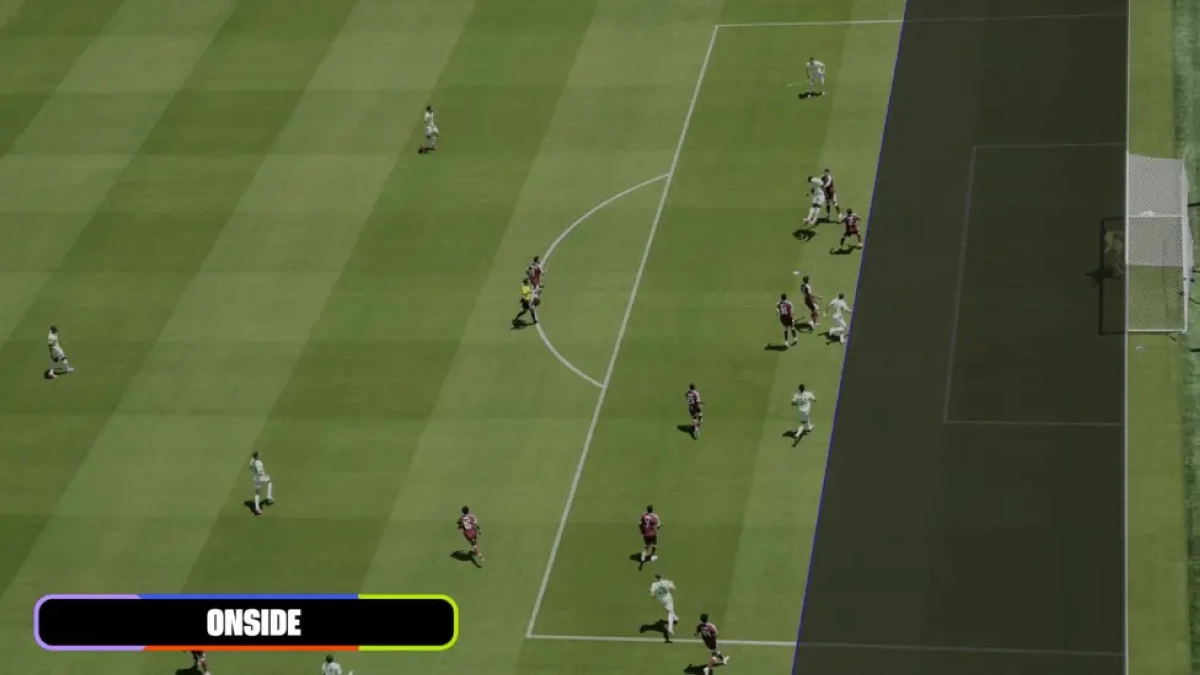

SANTA CLARA, California — FIFA has come under scrutiny after a technical failure prevented its semi-automated offside system from producing the usual visual graphics during a controversial penalty decision in Switzerland’s 1-1 World Cup draw against Qatar.The incident occurred in Saturday’s Group B match when Switzerland was awarded a first-half penalty after Qatar goalkeeper Mahmoud Abunada brought down Remo Freuler inside the penalty area. Breel Embolo converted from the spot to give the Swiss the lead.Questions quickly emerged over whether Freuler, or another Swiss player involved in the buildup, had been offside before the foul occurred.FIFA did not immediately release its standard semi-automated offside animation, instead publishing two still images more than four hours after the match while explaining that a technical outage had affected the system.”A brief technical outage prevented the onside animation graphic from being generated,” FIFA said in a statement.The governing body added that the video assistant referee followed normal procedures and that the offside review concluded neither Swiss player involved in the move was in an offside position.”The workflow of the VAR was not affected by this issue and followed the normal procedure in checking the on-field decision,” FIFA said.The delayed release of evidence fueled debate among fans, broadcasters and pundits, with many questioning why the tournament’s advanced offside technology was unable to provide its usual visual explanation.The semi-automated offside technology, introduced to speed up decisions and improve accuracy, creates digital player models using data collected from every participant at the tournament. FIFA has used the system throughout World Cup 2026 to quickly illustrate offside calls and review decisions.However, the governing body acknowledged that when technical problems occur, officials can revert to traditional VAR line-drawing methods to determine whether a player is onside.The controversy overshadowed an otherwise memorable result for Qatar, which secured a historic first-ever World Cup point after Boualem Khoukhi’s stoppage-time equalizer earned a 1-1 draw against one of the favorites in Group B.SANTA CLARA, California — FIFA has come under scrutiny after a technical failure prevented its semi-automated offside system from producing the usual visual graphics during a controversial penalty decision in Switzerland’s 1-1 World Cup draw against Qatar.The incident occurred in Saturday’s Group B match when Switzerland was awarded a first-half penalty after Qatar goalkeeper Mahmoud Abunada brought down Remo Freuler inside the penalty area. Breel Embolo converted from the spot to give the Swiss the lead.Questions quickly emerged over whether Freuler, or another Swiss player involved in the buildup, had been offside before the foul occurred.FIFA did not immediately release its standard semi-automated offside animation, instead publishing two still images more than four hours after the match while explaining that a technical outage had affected the system.”A brief technical outage prevented the onside animation graphic from being generated,” FIFA said in a statement.The governing body added that the video assistant referee followed normal procedures and that the offside review concluded neither Swiss player involved in the move was in an offside position.”The workflow of the VAR was not affected by this issue and followed the normal procedure in checking the on-field decision,” FIFA said.The delayed release of evidence fueled debate among fans, broadcasters and pundits, with many questioning why the tournament’s advanced offside technology was unable to provide its usual visual explanation.The semi-automated offside technology, introduced to speed up decisions and improve accuracy, creates digital player models using data collected from every participant at the tournament. FIFA has used the system throughout World Cup 2026 to quickly illustrate offside calls and review decisions.However, the governing body acknowledged that when technical problems occur, officials can revert to traditional VAR line-drawing methods to determine whether a player is onside.The controversy overshadowed an otherwise memorable result for Qatar, which secured a historic first-ever World Cup point after Boualem Khoukhi’s stoppage-time equalizer earned a 1-1 draw against one of the favorites in Group B.
FIFA explains VAR outage after controversial Switzerland penalty against Qatar