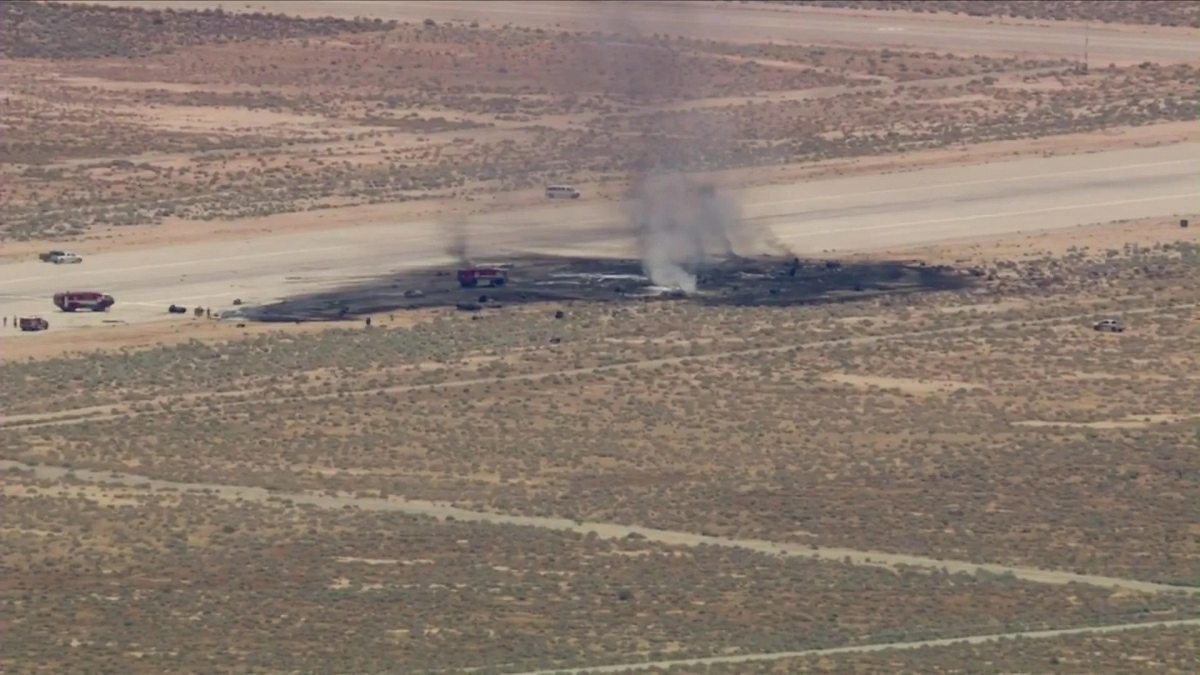

LOS ANGELES — Eight people aboard a US Air Force B-52 Stratofortress bomber are believed to have been killed after the aircraft crashed shortly after takeoff from Edwards Air Force Base in California’s Mojave Desert on Monday.The US Air Force said initial indications suggested the crash was not survivable.“Initial indications are that the crash was not survivable,” Edwards Air Force Base said in a statement posted on social media.The aircraft went down at approximately 11:20 a.m. local time shortly after departing the base, located about 100 miles north of Los Angeles. The cause of the crash remains under investigation.Aerial footage from the scene showed extensive destruction, with little remaining of the aircraft. Thick black smoke rose over a large area of scorched desert as emergency crews responded to the crash site.The Air Force has not yet released details about the crew members or whether the bomber was carrying any weapons at the time of the incident.Following the crash, Edwards Air Force Base temporarily closed its airfield and diverted inbound aircraft. Officials also suspended non-commercial visitor access to allow emergency responders to focus on recovery operations.The Boeing B-52 Stratofortress entered service in 1955 and remains one of the most recognizable aircraft in the US military fleet. Designed to carry both conventional and nuclear weapons, the bomber has been used in multiple conflicts, from the Vietnam War to more recent operations involving Iran.Edwards Air Force Base serves as one of the Air Force’s primary testing and development centers, with the 412th Test Wing responsible for evaluating aircraft, weapons systems, software and equipment before operational deployment.Aviation safety expert Jeff Guzzetti said the fact that the aircraft crashed shortly after takeoff could indicate a flight control problem, although he stressed it was too early to determine the exact cause.“It was definitely a controllability issue,” Guzzetti said, noting that possible causes could include a flight control malfunction, engine failure or problems related to equipment being tested onboard.The crash is expected to trigger a comprehensive military investigation into one of the most serious Air Force aviation accidents in recent years.LOS ANGELES — Eight people aboard a US Air Force B-52 Stratofortress bomber are believed to have been killed after the aircraft crashed shortly after takeoff from Edwards Air Force Base in California’s Mojave Desert on Monday.The US Air Force said initial indications suggested the crash was not survivable.“Initial indications are that the crash was not survivable,” Edwards Air Force Base said in a statement posted on social media.The aircraft went down at approximately 11:20 a.m. local time shortly after departing the base, located about 100 miles north of Los Angeles. The cause of the crash remains under investigation.Aerial footage from the scene showed extensive destruction, with little remaining of the aircraft. Thick black smoke rose over a large area of scorched desert as emergency crews responded to the crash site.The Air Force has not yet released details about the crew members or whether the bomber was carrying any weapons at the time of the incident.Following the crash, Edwards Air Force Base temporarily closed its airfield and diverted inbound aircraft. Officials also suspended non-commercial visitor access to allow emergency responders to focus on recovery operations.The Boeing B-52 Stratofortress entered service in 1955 and remains one of the most recognizable aircraft in the US military fleet. Designed to carry both conventional and nuclear weapons, the bomber has been used in multiple conflicts, from the Vietnam War to more recent operations involving Iran.Edwards Air Force Base serves as one of the Air Force’s primary testing and development centers, with the 412th Test Wing responsible for evaluating aircraft, weapons systems, software and equipment before operational deployment.Aviation safety expert Jeff Guzzetti said the fact that the aircraft crashed shortly after takeoff could indicate a flight control problem, although he stressed it was too early to determine the exact cause.“It was definitely a controllability issue,” Guzzetti said, noting that possible causes could include a flight control malfunction, engine failure or problems related to equipment being tested onboard.The crash is expected to trigger a comprehensive military investigation into one of the most serious Air Force aviation accidents in recent years.
B-52 bomber crashes at California air base, eight feared dead