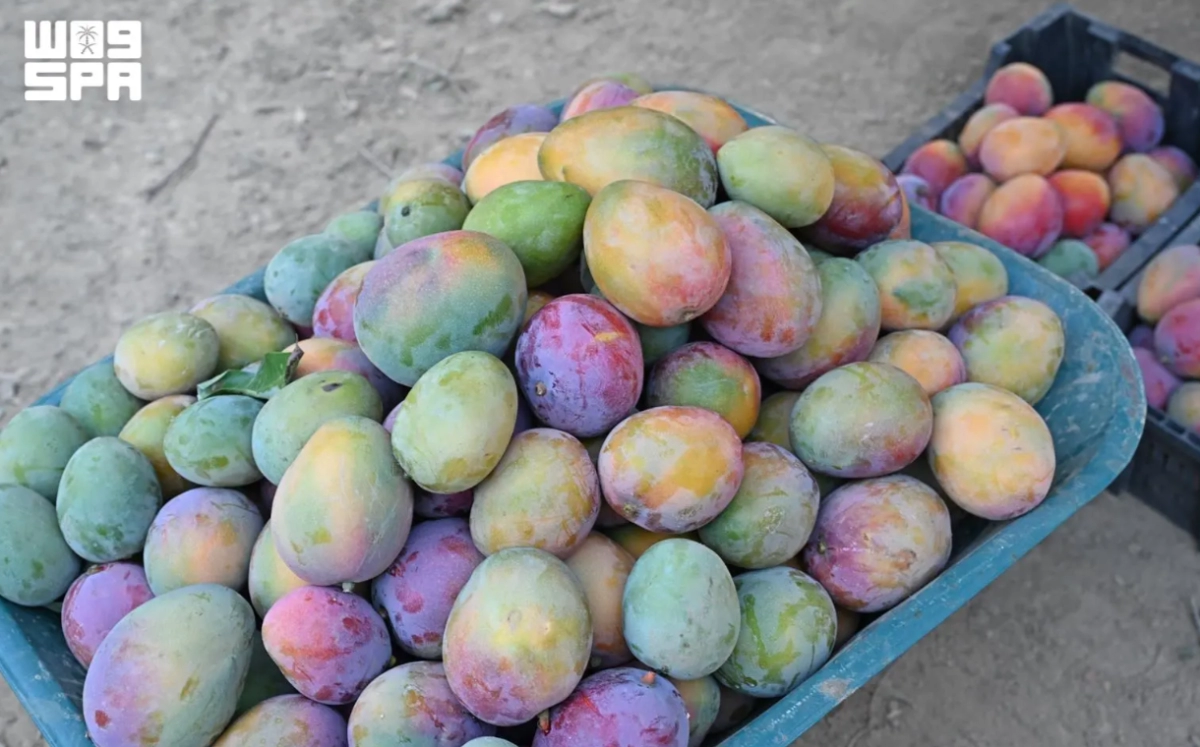

ABHA — Artificial intelligence helped Haswah Mango Farm in Rijal Alma increase the flowering rate of most of its mango trees to more than 98 percent in 2026, highlighting the growing role of smart farming technologies in Saudi Arabia. Hidden among the green hills and valleys east of Al Hubail Center in Rijal Alma, the farm—also known as Abdullah Saad Al Zalafi Farm—was established in early 2019 as part of broader efforts to support environmental sustainability and strengthen food security. The project began with detailed studies of soil characteristics and water sources to ensure their suitability for growing mangoes in the area’s diverse environment. **media[2730783]** Relying primarily on seasonal rainfall between August and October, supplemented by well water during dry periods after confirming its quality, the farm cultivates several mango varieties, most notably Tommy Atkins and Angra. The nearby well has around 800 parts per million (ppm) of salinity, which is within the acceptable range for irrigating mango trees. What distinguishes the farm, however, is its integrated artificial intelligence (AI) system, which uses soil moisture sensors, wind-speed monitors, and water-quality analysis systems to provide data for precise decision-making, improving resource efficiency and boosting productivity. Speaking to the Saudi Press Agency (SPA), farm supervisor Jamal Abdullah Al Zalafi said 2026 marked a turning point in the farm’s adoption of artificial intelligence after integrating data from soil moisture, wind speed, and water quality sensors with AI-powered analytics. **media[2730779]** “These technologies helped us achieve a flowering rate exceeding 98 percent across most of the farm’s trees, compared with just 60 percent in 2025. They also significantly improved the accuracy of irrigation, disease prevention, and fertilization.” He added that soil moisture sensors have become central to the farm’s irrigation schedule, with AI continuously analyzing data to determine the optimal watering time, preventing water waste while ensuring healthy tree growth. The farm’s experience reflects findings from a study by Dr. Amina Hamdouni of Imam Mohammad Ibn Saud Islamic University, published in February 2026 by the Multidisciplinary Digital Publishing Institute (MDPI) in Basel, Switzerland. **media[2730778]** The study found that irrigation systems supported by data analytics and artificial intelligence significantly improve water-use efficiency and crop productivity, enhance agricultural decision-making through digital water monitoring, and reduce waste through smarter resource management. The approach also aligns with Saudi Arabia’s “Improving Irrigation Efficiency and Water Productivity Among Farmers” project, launched in 2024 by the Saudi Irrigation Organization in partnership with the UN Food and Agriculture Organization (FAO) to encourage farmers to adopt modern irrigation technologies and sustainable agricultural practices. During its first phase, the initiative aims to achieve a 20 percent adoption rate of modern technologies by establishing demonstration farms across several regions, including Asir, and training farmers to operate smart irrigation systems using sensors and mobile-connected digital control units. **media[2730786]** Field trials under the project showed water consumption on mango farms in Jazan fell by 19 percent, while water use in Al Baha greenhouses declined by 24 percent. Irrigation efficiency at demonstration farms rose from around 50 percent to more than 92 percent, while date farms in Al Ahsa recorded profit increases exceeding 200 percent due to improved crop quality. Despite its relatively small size, Haswah Mango Farm produced approximately 4 metric tons of premium-quality mangoes in 2025, highlighting the potential for tropical fruit cultivation in the Tihama region of Asir. **media[2730785]** The farm also reflects the Kingdom’s wider shift toward smart agriculture. Among the technologies gaining momentum are hydroponics, which can reduce water consumption by up to 90 percent compared with conventional farming, and vertical farming, which enables high-quality crop production in limited spaces while reducing reliance on pesticides and plant disease treatments. High-tech greenhouses are another advanced application of smart agriculture. Pilot projects by the Ministry of Environment, Water, and Agriculture show these technologies consistently outperform traditional farming methods while significantly reducing water and fertilizer consumption, depending on the crop and technology used. Trials by the Estidamah Center found that hydroponics achieved approximately 90 percent water savings while producing high-quality vegetables for local and international markets. **media[2730780]** Meanwhile, high-tech glasshouses recorded tomato yields of approximately 99 kilograms per square meter, requiring no more than 3 liters of water to produce 1 kilogram of tomatoes while maintaining high energy efficiency. Saudi Arabia’s agricultural innovation ecosystem also includes biofertilizers, which use beneficial microorganisms to enhance crop growth and improve plants’ ability to absorb water and nutrients, as well as nanotechnology, which can increase water-use efficiency by 20 to 30 percent. Together, these innovations are among the Kingdom’s most promising tools for advancing agricultural sustainability. **media[2730784]**ABHA — Artificial intelligence helped Haswah Mango Farm in Rijal Alma increase the flowering rate of most of its mango trees to more than 98 percent in 2026, highlighting the growing role of smart farming technologies in Saudi Arabia. Hidden among the green hills and valleys east of Al Hubail Center in Rijal Alma, the farm—also known as Abdullah Saad Al Zalafi Farm—was established in early 2019 as part of broader efforts to support environmental sustainability and strengthen food security. The project began with detailed studies of soil characteristics and water sources to ensure their suitability for growing mangoes in the area’s diverse environment. **media[2730783]** Relying primarily on seasonal rainfall between August and October, supplemented by well water during dry periods after confirming its quality, the farm cultivates several mango varieties, most notably Tommy Atkins and Angra. The nearby well has around 800 parts per million (ppm) of salinity, which is within the acceptable range for irrigating mango trees. What distinguishes the farm, however, is its integrated artificial intelligence (AI) system, which uses soil moisture sensors, wind-speed monitors, and water-quality analysis systems to provide data for precise decision-making, improving resource efficiency and boosting productivity. Speaking to the Saudi Press Agency (SPA), farm supervisor Jamal Abdullah Al Zalafi said 2026 marked a turning point in the farm’s adoption of artificial intelligence after integrating data from soil moisture, wind speed, and water quality sensors with AI-powered analytics. **media[2730779]** “These technologies helped us achieve a flowering rate exceeding 98 percent across most of the farm’s trees, compared with just 60 percent in 2025. They also significantly improved the accuracy of irrigation, disease prevention, and fertilization.” He added that soil moisture sensors have become central to the farm’s irrigation schedule, with AI continuously analyzing data to determine the optimal watering time, preventing water waste while ensuring healthy tree growth. The farm’s experience reflects findings from a study by Dr. Amina Hamdouni of Imam Mohammad Ibn Saud Islamic University, published in February 2026 by the Multidisciplinary Digital Publishing Institute (MDPI) in Basel, Switzerland. **media[2730778]** The study found that irrigation systems supported by data analytics and artificial intelligence significantly improve water-use efficiency and crop productivity, enhance agricultural decision-making through digital water monitoring, and reduce waste through smarter resource management. The approach also aligns with Saudi Arabia’s “Improving Irrigation Efficiency and Water Productivity Among Farmers” project, launched in 2024 by the Saudi Irrigation Organization in partnership with the UN Food and Agriculture Organization (FAO) to encourage farmers to adopt modern irrigation technologies and sustainable agricultural practices. During its first phase, the initiative aims to achieve a 20 percent adoption rate of modern technologies by establishing demonstration farms across several regions, including Asir, and training farmers to operate smart irrigation systems using sensors and mobile-connected digital control units. **media[2730786]** Field trials under the project showed water consumption on mango farms in Jazan fell by 19 percent, while water use in Al Baha greenhouses declined by 24 percent. Irrigation efficiency at demonstration farms rose from around 50 percent to more than 92 percent, while date farms in Al Ahsa recorded profit increases exceeding 200 percent due to improved crop quality. Despite its relatively small size, Haswah Mango Farm produced approximately 4 metric tons of premium-quality mangoes in 2025, highlighting the potential for tropical fruit cultivation in the Tihama region of Asir. **media[2730785]** The farm also reflects the Kingdom’s wider shift toward smart agriculture. Among the technologies gaining momentum are hydroponics, which can reduce water consumption by up to 90 percent compared with conventional farming, and vertical farming, which enables high-quality crop production in limited spaces while reducing reliance on pesticides and plant disease treatments. High-tech greenhouses are another advanced application of smart agriculture. Pilot projects by the Ministry of Environment, Water, and Agriculture show these technologies consistently outperform traditional farming methods while significantly reducing water and fertilizer consumption, depending on the crop and technology used. Trials by the Estidamah Center found that hydroponics achieved approximately 90 percent water savings while producing high-quality vegetables for local and international markets. **media[2730780]** Meanwhile, high-tech glasshouses recorded tomato yields of approximately 99 kilograms per square meter, requiring no more than 3 liters of water to produce 1 kilogram of tomatoes while maintaining high energy efficiency. Saudi Arabia’s agricultural innovation ecosystem also includes biofertilizers, which use beneficial microorganisms to enhance crop growth and improve plants’ ability to absorb water and nutrients, as well as nanotechnology, which can increase water-use efficiency by 20 to 30 percent. Together, these innovations are among the Kingdom’s most promising tools for advancing agricultural sustainability. **media[2730784]**
AI helps Saudi mango farm boost flowering rate to 98%