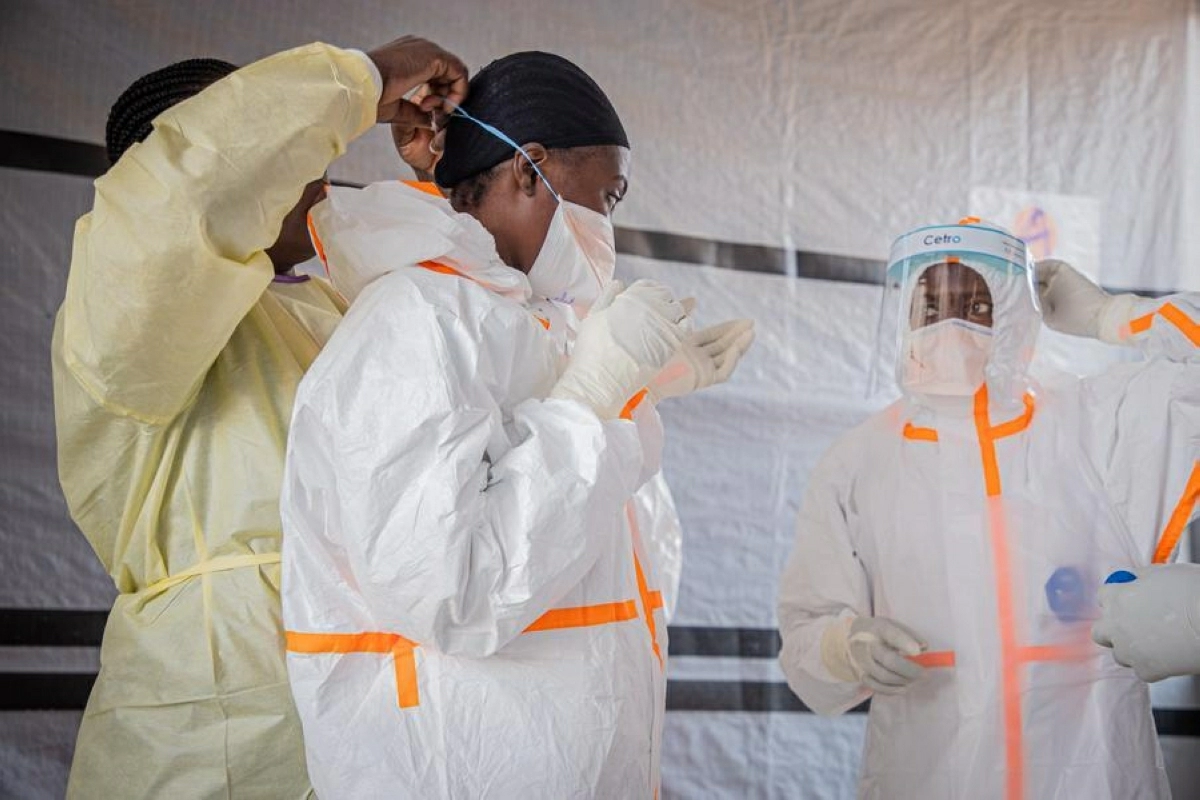

KINSHASA — The Ebola outbreak in the Democratic Republic of the Congo (DRC) remains in a “very active” phase and has yet to peak, the Xinhua news agency reported quoting health authorities as saying on Thursday.The outbreak in DRC is the “fastest growing” ever, they said as the World Health Organization confirmed the disease has killed more than 600 people.Updated numbers issued by the UN health agency showed there have been 1,759 confirmed cases in DR Congo since the outbreak was declared in mid-May, including 600 confirmed deaths.“This is the fastest growing Ebola outbreak ever, not only among the previous Bundibugyo outbreaks, but all the different viruses that are causing Ebola,” Wessam Mankoula, head of emergency preparedness and response for the Africa Centers for Disease Control and Prevention (Africa CDC), told reporters.The deadliest Ebola outbreak — in 2013-16 in West Africa — had 994 cases in the first six weeks, compared to 1,596 in the current one, he said.“Unfortunately the virus is still ahead of our response. It’s moving faster than deploying the resources to control the situation,” Mankoula said, adding that the number of cases was estimated to be doubling every 28 days.He said $1.4 billion was needed in total for the disease and humanitarian response.“We need to surge our response, and surging our response means financial resources, human resources,” Wessam said. “We are urging all partners, donors… to fast-track the disbursement of those resources.”In Bunia, the capital of the eastern Ituri Province and the epicenter of the outbreak, Health Minister Samuel Roger Kamba said the steady rise in reported cases partly reflected expanded community surveillance rather than a sudden worsening of transmission.”When many resources are mobilized, especially community health workers who go to find patients in the community, the number of cases will indeed increase,” he said. “But this increase also gives us information about the real situation in the community.”According to epidemiological data released late Thursday, the DRC has reported 1,792 confirmed cases, including 625 deaths and 295 recoveries. A total of 764 patients are currently in isolation or receiving hospital care.Kamba said it remained too early to predict when infections would plateau because health officials were still identifying previously undetected cases, while population mobility and challenges in community engagement continued to complicate containment efforts.The minister also warned that infected patients from Ituri had carried the virus into neighboring areas. He said imported cases had been detected in Kisangani, the capital of Tshopo Province, and in Wamba in Haut-Uele Province, expanding the response perimeter.DRC health authorities said investigations into the reported cases in Tshopo, a major economic and transport hub in northeastern Congo, were continuing. Several health experts told Xinhua that the spread of the outbreak into new provinces has raised concerns about wider geographic spread.Meanwhile, the Africa Centers for Disease Control and Prevention (Africa CDC) provided new details on therapeutic research against the Bundibugyo Ebola virus, the strain driving the current outbreak.Mosoka Fallah, an Africa CDC official, said a clinical trial launched on July 2 is evaluating the monoclonal antibody MBP134 and the antiviral remdesivir, both individually and in combination. The trial, which began at one treatment center, is expected to expand to additional sites as enrollment increases.Fallah added that a separate prophylaxis trial evaluating obeldesivir, an orally administered broad-spectrum antiviral drug, among about 800 high-risk contacts is expected to begin next week.Ebola spreads through close contact and infected bodily fluids. The current outbreak is caused by Bundibugyo, a rare species that has no approved vaccine or treatment and is believed to have spread for some time before it was detected.The WHO’s figures for the DRC, which come from the health authorities in the vast country, show that the outbreak there has a case fatality rate of 34 percent.A total of 285 patients in the DRC have recovered, while 304 suspected cases of the viral haemorrhagic fever are under investigation.The outbreak in northeastern DRC has hit four provinces but is focused on Ituri province.The DRC’s 17th Ebola outbreak was declared on May 15 after several deaths in Ituri, a mineral-rich province plagued by armed groups.KINSHASA — The Ebola outbreak in the Democratic Republic of the Congo (DRC) remains in a “very active” phase and has yet to peak, the Xinhua news agency reported quoting health authorities as saying on Thursday.The outbreak in DRC is the “fastest growing” ever, they said as the World Health Organization confirmed the disease has killed more than 600 people.Updated numbers issued by the UN health agency showed there have been 1,759 confirmed cases in DR Congo since the outbreak was declared in mid-May, including 600 confirmed deaths.“This is the fastest growing Ebola outbreak ever, not only among the previous Bundibugyo outbreaks, but all the different viruses that are causing Ebola,” Wessam Mankoula, head of emergency preparedness and response for the Africa Centers for Disease Control and Prevention (Africa CDC), told reporters.The deadliest Ebola outbreak — in 2013-16 in West Africa — had 994 cases in the first six weeks, compared to 1,596 in the current one, he said.“Unfortunately the virus is still ahead of our response. It’s moving faster than deploying the resources to control the situation,” Mankoula said, adding that the number of cases was estimated to be doubling every 28 days.He said $1.4 billion was needed in total for the disease and humanitarian response.“We need to surge our response, and surging our response means financial resources, human resources,” Wessam said. “We are urging all partners, donors… to fast-track the disbursement of those resources.”In Bunia, the capital of the eastern Ituri Province and the epicenter of the outbreak, Health Minister Samuel Roger Kamba said the steady rise in reported cases partly reflected expanded community surveillance rather than a sudden worsening of transmission.”When many resources are mobilized, especially community health workers who go to find patients in the community, the number of cases will indeed increase,” he said. “But this increase also gives us information about the real situation in the community.”According to epidemiological data released late Thursday, the DRC has reported 1,792 confirmed cases, including 625 deaths and 295 recoveries. A total of 764 patients are currently in isolation or receiving hospital care.Kamba said it remained too early to predict when infections would plateau because health officials were still identifying previously undetected cases, while population mobility and challenges in community engagement continued to complicate containment efforts.The minister also warned that infected patients from Ituri had carried the virus into neighboring areas. He said imported cases had been detected in Kisangani, the capital of Tshopo Province, and in Wamba in Haut-Uele Province, expanding the response perimeter.DRC health authorities said investigations into the reported cases in Tshopo, a major economic and transport hub in northeastern Congo, were continuing. Several health experts told Xinhua that the spread of the outbreak into new provinces has raised concerns about wider geographic spread.Meanwhile, the Africa Centers for Disease Control and Prevention (Africa CDC) provided new details on therapeutic research against the Bundibugyo Ebola virus, the strain driving the current outbreak.Mosoka Fallah, an Africa CDC official, said a clinical trial launched on July 2 is evaluating the monoclonal antibody MBP134 and the antiviral remdesivir, both individually and in combination. The trial, which began at one treatment center, is expected to expand to additional sites as enrollment increases.Fallah added that a separate prophylaxis trial evaluating obeldesivir, an orally administered broad-spectrum antiviral drug, among about 800 high-risk contacts is expected to begin next week.Ebola spreads through close contact and infected bodily fluids. The current outbreak is caused by Bundibugyo, a rare species that has no approved vaccine or treatment and is believed to have spread for some time before it was detected.The WHO’s figures for the DRC, which come from the health authorities in the vast country, show that the outbreak there has a case fatality rate of 34 percent.A total of 285 patients in the DRC have recovered, while 304 suspected cases of the viral haemorrhagic fever are under investigation.The outbreak in northeastern DRC has hit four provinces but is focused on Ituri province.The DRC’s 17th Ebola outbreak was declared on May 15 after several deaths in Ituri, a mineral-rich province plagued by armed groups.
DRC says Ebola outbreak yet to peak as virus spreads to new areas