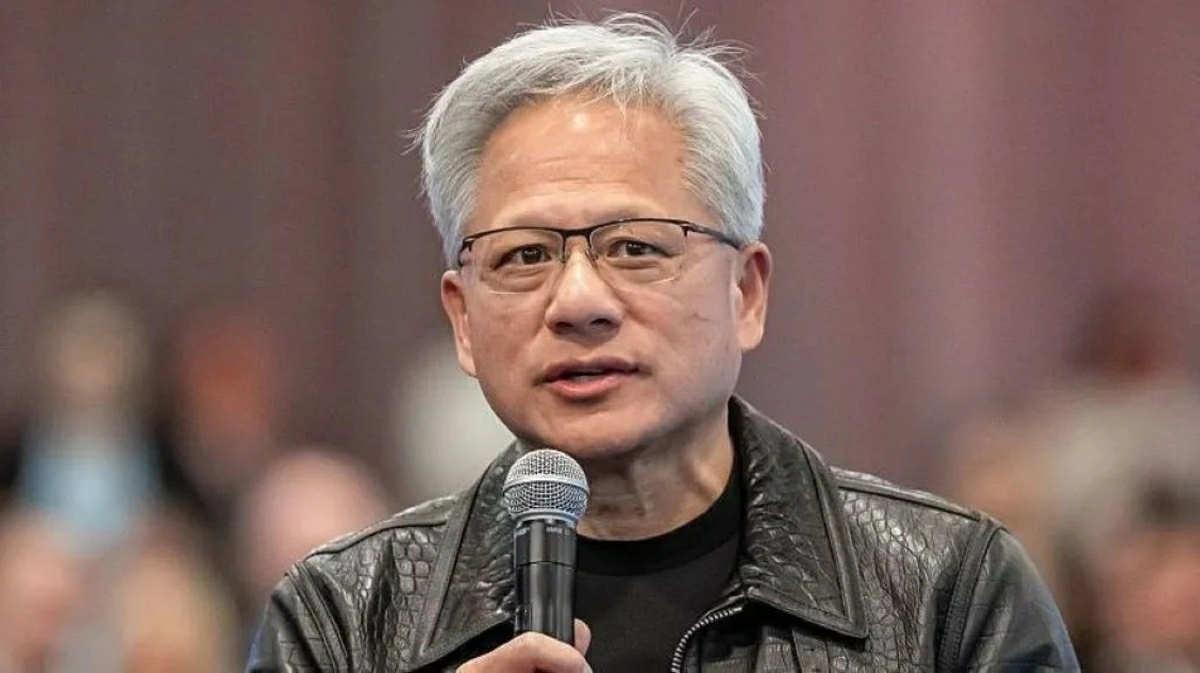

SAN FRANCISCO — Nvidia CEO Jensen Huang has described warnings that AI could lead to humanity’s extinction by the next decade as “doomsday narratives”.Warnings from researchers in recent weeks about potential risks posed by the technology escalated the debate about AI safety, with some industry executives calling for a slowdown in developing models.In an interview with CBS News aired on Sunday, Nvidia’s CEO accused leaders of the frontier AI labs of being disingenuous in their warnings that, without more AI oversight, the products they are building could harm humanity in myriad forms.Huang said: “Scaring people is unnecessary. It is irresponsible.””2030 is not going to be the end of the world. There is 0% chance that’s going to be the end of the world”, Huang said in the interview.His remarks follow claims posted on social media by former Anthropic researcher Jacob Coxon that AI developers believe the technology “could kill us all by the end of the decade”.Coxon’s concerns sparked debate about the technology’s risks, including calls by top executives like Anthropic boss Dario Amodei and OpenAI’s Sam Altman urging for AI’s development to slow down.Huang said that such predictions are “not grounded in science”, adding that it is in Nvidia’s best interest to ensure the industry builds its products responsibly.”Our company’s success is directly connected to the safe deployment of products and services,” he said. “If we don’t continue to do that, our value would be diminished.”Huang suggested AI firms talking about a “slowdown” could be seeking liability protections for harms their products may cause.”Go and read between the lines,” he said. “They’re actually not asking for more laws. They’re asking to be relieved of the laws we do have, and I think that that’s a problem.”Nvidia is a key player in the industry, developing cutting edge computer chips that are crucial for making AI models.The firm’s most powerful chips face restrictions in China due to measures imposed by both Washington and Beijing.US export controls aim to slow China’s military and AI progress, while Chinese regulations are designed to encourage reliance on domestically produced technology.US Treasury Secretary Scott Bessent and Chinese Vice Premier He Lifeng held talks in New York on Sunday as they try to strike deals on AI, tariffs and critical minerals.After the meeting, Bessent told reporters that the two sides had discussed setting up a new AI safety notification mechanism.It came as President Donald Trump and his Chinese counterpart Xi Jinping are due to hold a summit in Washington later this week.Last week, Huang appeared at a UK summit hosted by King Charles, who warned tech leaders of the “existential dangers” of AI.”The task before you is not merely to advance technology, but to ensure that it remains firmly in the service of humanity, community and the natural world,” the King told the group.In the US, President Trump has downplayed concerns about AI’s risks.Trump made a surprise phone call to Huang while the Nvidia boss was speaking on stage at a tech conference last Monday.During the call, Trump criticized calls to slow the pace of AI development and dismissed fears as a “hoax”.“The robots are not going to be taking over the world,” Trump told Huang, who’d put the president on speaker while on stage at the All-In Summit in Los Angeles. Huang’s position as the leader of the world’s most valuable company and the chipmaker at the heart of the AI boom has earned him the president’s ear on the most important AI topics.Nvidia has been powering the AI boom since before the launch of ChatGPT in late 2022, supplying the graphics processing units used by OpenAI, Anthropic and others to train their models and run large workloads. Revenue surged to $215 billion in the latest fiscal year, up from $17 billion in 2021.“Trump just likes winners, and Jensen’s very good at speaking his language,” Samuel Hammond, director of AI policy at the think tank Foundation for American Innovation, said in an interview.SAN FRANCISCO — Nvidia CEO Jensen Huang has described warnings that AI could lead to humanity’s extinction by the next decade as “doomsday narratives”.Warnings from researchers in recent weeks about potential risks posed by the technology escalated the debate about AI safety, with some industry executives calling for a slowdown in developing models.In an interview with CBS News aired on Sunday, Nvidia’s CEO accused leaders of the frontier AI labs of being disingenuous in their warnings that, without more AI oversight, the products they are building could harm humanity in myriad forms.Huang said: “Scaring people is unnecessary. It is irresponsible.””2030 is not going to be the end of the world. There is 0% chance that’s going to be the end of the world”, Huang said in the interview.His remarks follow claims posted on social media by former Anthropic researcher Jacob Coxon that AI developers believe the technology “could kill us all by the end of the decade”.Coxon’s concerns sparked debate about the technology’s risks, including calls by top executives like Anthropic boss Dario Amodei and OpenAI’s Sam Altman urging for AI’s development to slow down.Huang said that such predictions are “not grounded in science”, adding that it is in Nvidia’s best interest to ensure the industry builds its products responsibly.”Our company’s success is directly connected to the safe deployment of products and services,” he said. “If we don’t continue to do that, our value would be diminished.”Huang suggested AI firms talking about a “slowdown” could be seeking liability protections for harms their products may cause.”Go and read between the lines,” he said. “They’re actually not asking for more laws. They’re asking to be relieved of the laws we do have, and I think that that’s a problem.”Nvidia is a key player in the industry, developing cutting edge computer chips that are crucial for making AI models.The firm’s most powerful chips face restrictions in China due to measures imposed by both Washington and Beijing.US export controls aim to slow China’s military and AI progress, while Chinese regulations are designed to encourage reliance on domestically produced technology.US Treasury Secretary Scott Bessent and Chinese Vice Premier He Lifeng held talks in New York on Sunday as they try to strike deals on AI, tariffs and critical minerals.After the meeting, Bessent told reporters that the two sides had discussed setting up a new AI safety notification mechanism.It came as President Donald Trump and his Chinese counterpart Xi Jinping are due to hold a summit in Washington later this week.Last week, Huang appeared at a UK summit hosted by King Charles, who warned tech leaders of the “existential dangers” of AI.”The task before you is not merely to advance technology, but to ensure that it remains firmly in the service of humanity, community and the natural world,” the King told the group.In the US, President Trump has downplayed concerns about AI’s risks.Trump made a surprise phone call to Huang while the Nvidia boss was speaking on stage at a tech conference last Monday.During the call, Trump criticized calls to slow the pace of AI development and dismissed fears as a “hoax”.“The robots are not going to be taking over the world,” Trump told Huang, who’d put the president on speaker while on stage at the All-In Summit in Los Angeles. Huang’s position as the leader of the world’s most valuable company and the chipmaker at the heart of the AI boom has earned him the president’s ear on the most important AI topics.Nvidia has been powering the AI boom since before the launch of ChatGPT in late 2022, supplying the graphics processing units used by OpenAI, Anthropic and others to train their models and run large workloads. Revenue surged to $215 billion in the latest fiscal year, up from $17 billion in 2021.“Trump just likes winners, and Jensen’s very good at speaking his language,” Samuel Hammond, director of AI policy at the think tank Foundation for American Innovation, said in an interview.
Nvidia chief rejects AI extinction fears as 'doomsday narratives'