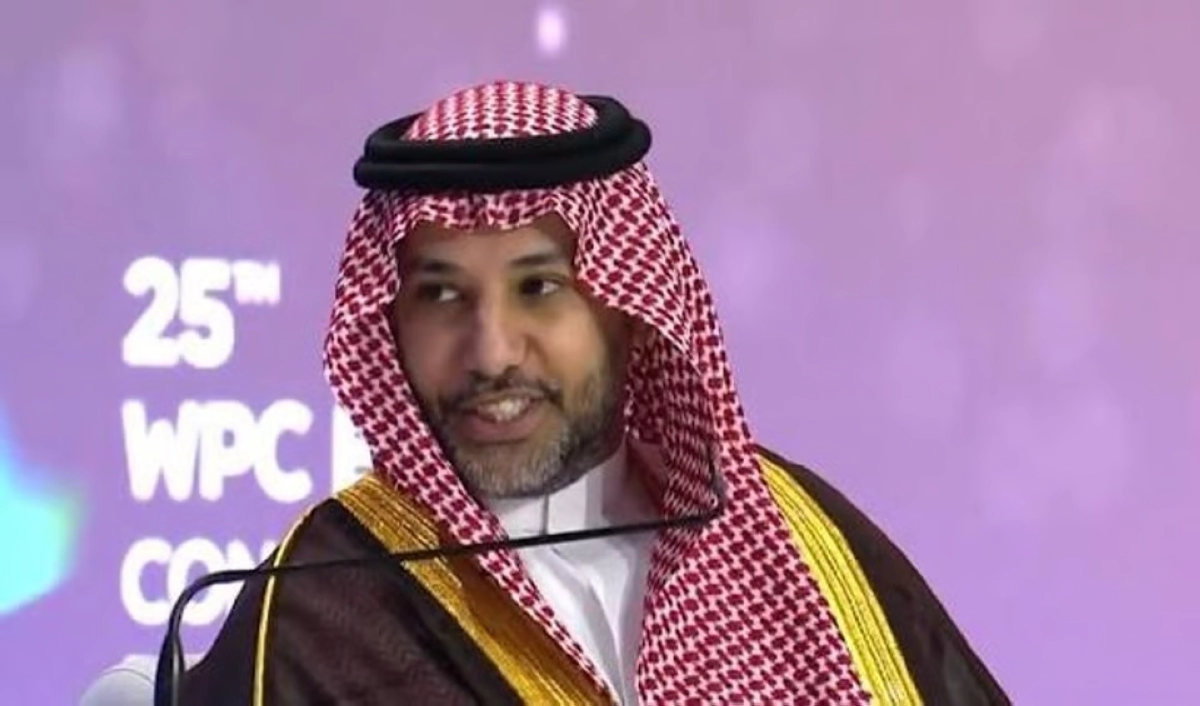

RIYADH — Deputy Minister of Finance Abdulmohsen Al-Khalaf stated that non-oil activities had accounted for 55 percent of Saudi Arabia’s gross domestic product (GDP) for the first time in its history. Speaking at the World Petroleum Congress in Riyadh on Monday, Al-Khalaf said this marks a structural shift that reflects the progress achieved in economic diversification since the launch of Vision 2030. “The non-oil government revenues have risen from approximately SR166 billion ($44.3 billion) in 2015 to around SR500 billion ($133.3 billion) at present, strengthening the Saudi economy’s resilience to economic changes and enhancing its ability to absorb shocks,” he said. Al-Khalaf said that the unemployment rate among Saudis had declined to approximately 6 percent, registering a record low level, amid continued improvement in the labor market and the success of initiatives aimed at promoting employment and empowering national cadres. He also noted the expansion of promising economic sectors, including tourism, entertainment, sports, technology, artificial intelligence and data centers. The deputy minister emphasized that the reforms implemented under Vision 2030 had bolstered the resilience of the Saudi economy and enhanced its capacity to navigate changing circumstances, while maintaining momentum in the implementation of national priorities.RIYADH — Deputy Minister of Finance Abdulmohsen Al-Khalaf stated that non-oil activities had accounted for 55 percent of Saudi Arabia’s gross domestic product (GDP) for the first time in its history. Speaking at the World Petroleum Congress in Riyadh on Monday, Al-Khalaf said this marks a structural shift that reflects the progress achieved in economic diversification since the launch of Vision 2030. “The non-oil government revenues have risen from approximately SR166 billion ($44.3 billion) in 2015 to around SR500 billion ($133.3 billion) at present, strengthening the Saudi economy’s resilience to economic changes and enhancing its ability to absorb shocks,” he said. Al-Khalaf said that the unemployment rate among Saudis had declined to approximately 6 percent, registering a record low level, amid continued improvement in the labor market and the success of initiatives aimed at promoting employment and empowering national cadres. He also noted the expansion of promising economic sectors, including tourism, entertainment, sports, technology, artificial intelligence and data centers. The deputy minister emphasized that the reforms implemented under Vision 2030 had bolstered the resilience of the Saudi economy and enhanced its capacity to navigate changing circumstances, while maintaining momentum in the implementation of national priorities.
Al-Khalaf: Non-oil activities account for 55% of Saudi GDP for first time