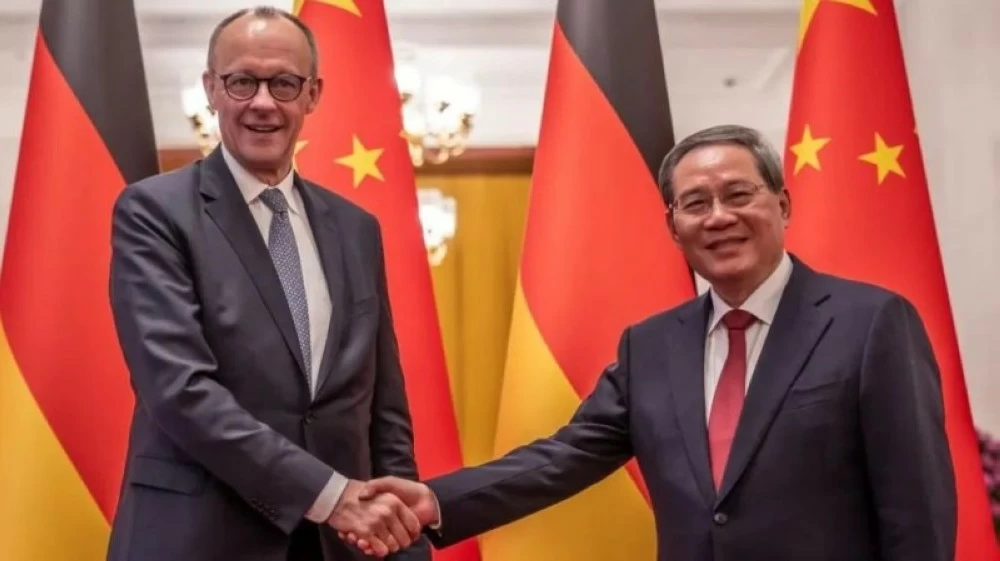

BEIJING — German Chancellor Friedrich Merz arrived in China on Wednesday seeking closer diplomatic ties as well as relief from economic policies that he said were impeding “fair competition.”In a speech at a meeting of the Advisory Council of German-Chinese Business, which was attended by Chinese Premier Li Qiang, Merz warned that a yawning trade imbalance between his country and China is “not healthy” and said he wanted to find ways “to reduce this trade deficit”, which had “quadrupled” in five years.Imports into Germany from China were more than double the value of those exported back last year, according to federal statistics.Merz said he had also asked Beijing to use its influence with Moscow to help end the war in Ukraine.However, the huge trade gap loomed large over the talks with the Chancellor, who was followed by a big business delegation.Merz called on China to reduce subsidies for its domestic manufacturers, to allow the value of its currency, the renminbi, to rise, and to ensure continued exports of raw materials, such as critical minerals, all of which would benefit German industry. Doing so, he said, would allow Germany and China to forge a tighter bond.“In view of the uncertainties caused by customs policy that we see around the world,” Merz said, addressing Li directly, “we can now set a different example in our bilateral relations, through the reliability and security of the economic relations between our two countries.”Following a series of discussions with Li and Chinese leader Xi Jinping, Merz appeared pleased. “After today, I am very optimistic,” Merz said. “This is a good path for German-Chinese relations, both in the coming months and years.”He announced a Chinese pledge to order up to 120 new aircraft from the European aerospace giant Airbus, and said more deals could follow.China once again took the top spot as Germany’s biggest trade partner in 2025, supplanting the US.In 2025, goods worth €170.6 billion (£148.8bn; $200.9bn) came from China into Germany — an 8.8% annual increase — while German exports to China fell by 9.7% to €81.3 billion.The situation “is eroding the core of German industry, especially in the car, machinery and chemicals sectors,” said Jürgen Matthes at the German Economic Institute (IW).Matthes, the IW’s head of International Economic Policy, believes distortions are chiefly down to “massive” Chinese subsidies and currency under-valuation.Beijing has previously said its subsidy policies are transparent and fully consistent with international trade rules.In response to past allegations of unfairly controlling its currency’s value, China said it is committed to implementing a floating exchange rate regime, based on market supply and demand, but managed where necessary.The bloating trade deficit was partly caused by the pandemic and Russia’s full-scale invasion of Ukraine which led to rising production costs in Europe, according to Brussels-based economic think tank Bruegel.”During the same period, China entered a prolonged deflationary phase, stemming from over-investment in manufacturing, creating the overcapacity we see today.”It has left leaders weighing how best to offset the impact of cheap Chinese goods.The continent has already been rocked by the turbulence of US President Donald Trump’s tariff policies.”No one in Europe wants a two front trade war with the world’s two superpowers,” says Noah Barkin, a visiting senior fellow at the German Marshall Fund.Business groups in Germany had urged Merz to send a clear signal during his inaugural trip to China as chancellor.He must address problems including “distortions” in competition and export controls on critical rare earths – according to the Federation of German Industries.Former long-serving Chancellor Angel Merkel faced frequent accusations of brushing aside human rights concerns in favor of deepening economic ties with Beijing.Speaking to reporters, Merz said the relationship opens up opportunities, “but also entails risks.””We want to further strengthen our partnership… However, we will of course also protect our interests,” he said, after earlier stating that trying to decouple from China would be a mistake. — AgenciesBEIJING — German Chancellor Friedrich Merz arrived in China on Wednesday seeking closer diplomatic ties as well as relief from economic policies that he said were impeding “fair competition.”In a speech at a meeting of the Advisory Council of German-Chinese Business, which was attended by Chinese Premier Li Qiang, Merz warned that a yawning trade imbalance between his country and China is “not healthy” and said he wanted to find ways “to reduce this trade deficit”, which had “quadrupled” in five years.Imports into Germany from China were more than double the value of those exported back last year, according to federal statistics.Merz said he had also asked Beijing to use its influence with Moscow to help end the war in Ukraine.However, the huge trade gap loomed large over the talks with the Chancellor, who was followed by a big business delegation.Merz called on China to reduce subsidies for its domestic manufacturers, to allow the value of its currency, the renminbi, to rise, and to ensure continued exports of raw materials, such as critical minerals, all of which would benefit German industry. Doing so, he said, would allow Germany and China to forge a tighter bond.“In view of the uncertainties caused by customs policy that we see around the world,” Merz said, addressing Li directly, “we can now set a different example in our bilateral relations, through the reliability and security of the economic relations between our two countries.”Following a series of discussions with Li and Chinese leader Xi Jinping, Merz appeared pleased. “After today, I am very optimistic,” Merz said. “This is a good path for German-Chinese relations, both in the coming months and years.”He announced a Chinese pledge to order up to 120 new aircraft from the European aerospace giant Airbus, and said more deals could follow.China once again took the top spot as Germany’s biggest trade partner in 2025, supplanting the US.In 2025, goods worth €170.6 billion (£148.8bn; $200.9bn) came from China into Germany — an 8.8% annual increase — while German exports to China fell by 9.7% to €81.3 billion.The situation “is eroding the core of German industry, especially in the car, machinery and chemicals sectors,” said Jürgen Matthes at the German Economic Institute (IW).Matthes, the IW’s head of International Economic Policy, believes distortions are chiefly down to “massive” Chinese subsidies and currency under-valuation.Beijing has previously said its subsidy policies are transparent and fully consistent with international trade rules.In response to past allegations of unfairly controlling its currency’s value, China said it is committed to implementing a floating exchange rate regime, based on market supply and demand, but managed where necessary.The bloating trade deficit was partly caused by the pandemic and Russia’s full-scale invasion of Ukraine which led to rising production costs in Europe, according to Brussels-based economic think tank Bruegel.”During the same period, China entered a prolonged deflationary phase, stemming from over-investment in manufacturing, creating the overcapacity we see today.”It has left leaders weighing how best to offset the impact of cheap Chinese goods.The continent has already been rocked by the turbulence of US President Donald Trump’s tariff policies.”No one in Europe wants a two front trade war with the world’s two superpowers,” says Noah Barkin, a visiting senior fellow at the German Marshall Fund.Business groups in Germany had urged Merz to send a clear signal during his inaugural trip to China as chancellor.He must address problems including “distortions” in competition and export controls on critical rare earths – according to the Federation of German Industries.Former long-serving Chancellor Angel Merkel faced frequent accusations of brushing aside human rights concerns in favor of deepening economic ties with Beijing.Speaking to reporters, Merz said the relationship opens up opportunities, “but also entails risks.””We want to further strengthen our partnership… However, we will of course also protect our interests,” he said, after earlier stating that trying to decouple from China would be a mistake. — Agencies
Germany's Merz hails China ties, warns of trade imbalance during first Beijing trip