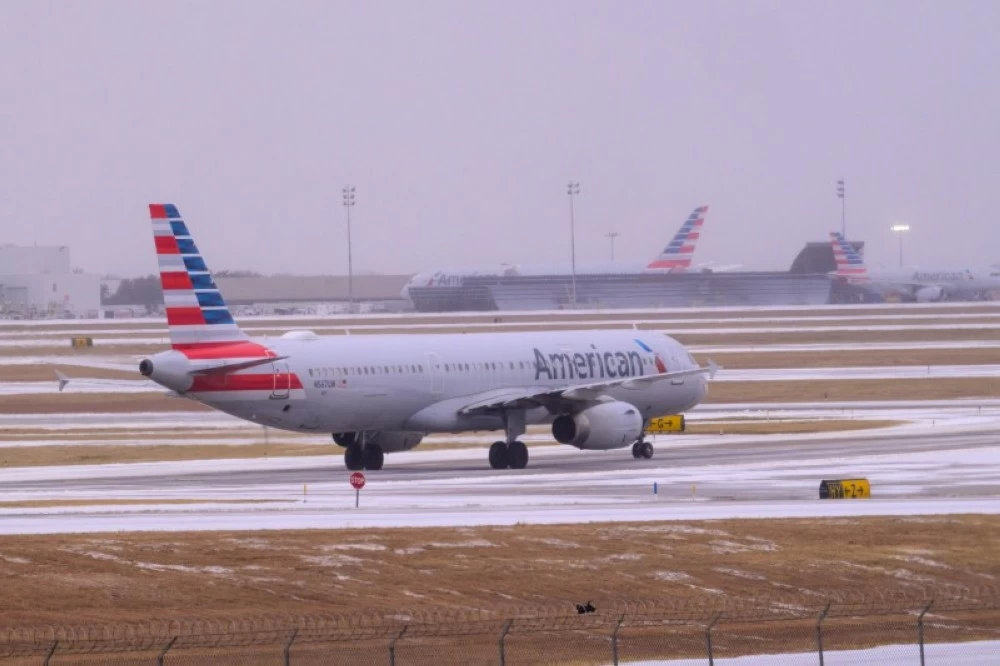

OKLAHOMA CITY — Nearly 12,000 flights across the United States scheduled for the weekend were canceled as a massive winter storm battered large parts of the country Saturday, threatening prolonged power outages and hazardous travel due to heavy snow and widespread ice. About 140 million people — more than 40% of the U.S. population — were under winter storm warnings from New Mexico to New England. The National Weather Service warned of heavy snowfall and a potentially catastrophic band of ice stretching from eastern Texas to North Carolina. By midday Saturday, up to a quarter-inch of ice had accumulated in parts of southeastern Oklahoma, eastern Texas and Louisiana. “What really makes this storm unique is that, following it, temperatures are going to drop significantly,” said Allison Santorelli, a meteorologist with the National Weather Service. “The snow and ice will be very slow to melt, which will hinder recovery efforts.” Governors in more than a dozen states declared emergencies or urged residents to stay home as conditions worsened. Virginia Gov. Abigail Spanberger warned residents to prepare for extended disruptions. “Every Virginian should stay off the road as of this evening, all day Sunday, and at least into the morning on Monday,” she said. Ice and sleet blanketed roads across northern Texas and parts of Mississippi, while Little Rock, Arkansas, saw a mix of sleet and snow. Power officials warned that ice accumulation could down trees and overhead power lines. Forecasters said damage in ice-hit areas could rival that of a hurricane. By Saturday afternoon, about 120,000 power outages were reported nationwide, including roughly 56,000 in Texas, 36,000 in Louisiana and nearly 10,000 in New Mexico, according to poweroutage.us. In Shelby County, Texas, near the Louisiana border, ice-laden trees snapped, bringing down power lines and leaving about a third of the county’s residents without electricity. All Saturday flights were canceled at Will Rogers International Airport in Oklahoma City, with Sunday morning flights also called off. Nationwide, more than 3,700 flights were canceled Saturday and nearly 8,000 on Sunday, according to FlightAware. Dallas-Fort Worth, Nashville and Charlotte Douglas airports were among the most affected. The storm was expected to move into the Northeast, dumping 1 to 2 feet of snow from Washington to New York and Boston. New York City Mayor Zohran Mamdani urged residents to remain indoors. “Please, if you can avoid it, do not drive, do not travel,” he said. Officials in Georgia warned of the most significant ice storm in more than a decade, followed by extreme cold. Crews began treating highways with brine as temperatures plunged. The Midwest experienced wind chills as low as minus 40 degrees Fahrenheit, with frostbite possible within minutes. In Rhinelander, Wisconsin, temperatures dropped to minus 36 degrees, the coldest reading in nearly 30 years. Across the South, churches moved services online, Mardi Gras parades were canceled or rescheduled, and schools and universities announced closures. The Grand Ole Opry in Nashville performed without an audience. Donald Trump said Friday that his administration was coordinating with state and local officials and that Federal Emergency Management Agency was prepared to respond. Emergency declarations were approved for South Carolina and Virginia, with several other states awaiting federal approval.Meteorologists said the storm’s scale and the extreme cold following it make the system particularly dangerous, with impacts expected to last for days.OKLAHOMA CITY — Nearly 12,000 flights across the United States scheduled for the weekend were canceled as a massive winter storm battered large parts of the country Saturday, threatening prolonged power outages and hazardous travel due to heavy snow and widespread ice. About 140 million people — more than 40% of the U.S. population — were under winter storm warnings from New Mexico to New England. The National Weather Service warned of heavy snowfall and a potentially catastrophic band of ice stretching from eastern Texas to North Carolina. By midday Saturday, up to a quarter-inch of ice had accumulated in parts of southeastern Oklahoma, eastern Texas and Louisiana. “What really makes this storm unique is that, following it, temperatures are going to drop significantly,” said Allison Santorelli, a meteorologist with the National Weather Service. “The snow and ice will be very slow to melt, which will hinder recovery efforts.” Governors in more than a dozen states declared emergencies or urged residents to stay home as conditions worsened. Virginia Gov. Abigail Spanberger warned residents to prepare for extended disruptions. “Every Virginian should stay off the road as of this evening, all day Sunday, and at least into the morning on Monday,” she said. Ice and sleet blanketed roads across northern Texas and parts of Mississippi, while Little Rock, Arkansas, saw a mix of sleet and snow. Power officials warned that ice accumulation could down trees and overhead power lines. Forecasters said damage in ice-hit areas could rival that of a hurricane. By Saturday afternoon, about 120,000 power outages were reported nationwide, including roughly 56,000 in Texas, 36,000 in Louisiana and nearly 10,000 in New Mexico, according to poweroutage.us. In Shelby County, Texas, near the Louisiana border, ice-laden trees snapped, bringing down power lines and leaving about a third of the county’s residents without electricity. All Saturday flights were canceled at Will Rogers International Airport in Oklahoma City, with Sunday morning flights also called off. Nationwide, more than 3,700 flights were canceled Saturday and nearly 8,000 on Sunday, according to FlightAware. Dallas-Fort Worth, Nashville and Charlotte Douglas airports were among the most affected. The storm was expected to move into the Northeast, dumping 1 to 2 feet of snow from Washington to New York and Boston. New York City Mayor Zohran Mamdani urged residents to remain indoors. “Please, if you can avoid it, do not drive, do not travel,” he said. Officials in Georgia warned of the most significant ice storm in more than a decade, followed by extreme cold. Crews began treating highways with brine as temperatures plunged. The Midwest experienced wind chills as low as minus 40 degrees Fahrenheit, with frostbite possible within minutes. In Rhinelander, Wisconsin, temperatures dropped to minus 36 degrees, the coldest reading in nearly 30 years. Across the South, churches moved services online, Mardi Gras parades were canceled or rescheduled, and schools and universities announced closures. The Grand Ole Opry in Nashville performed without an audience. Donald Trump said Friday that his administration was coordinating with state and local officials and that Federal Emergency Management Agency was prepared to respond. Emergency declarations were approved for South Carolina and Virginia, with several other states awaiting federal approval.Meteorologists said the storm’s scale and the extreme cold following it make the system particularly dangerous, with impacts expected to last for days.
Monster winter storm cancels nearly 12,000 US flights, threatens days-long power outages