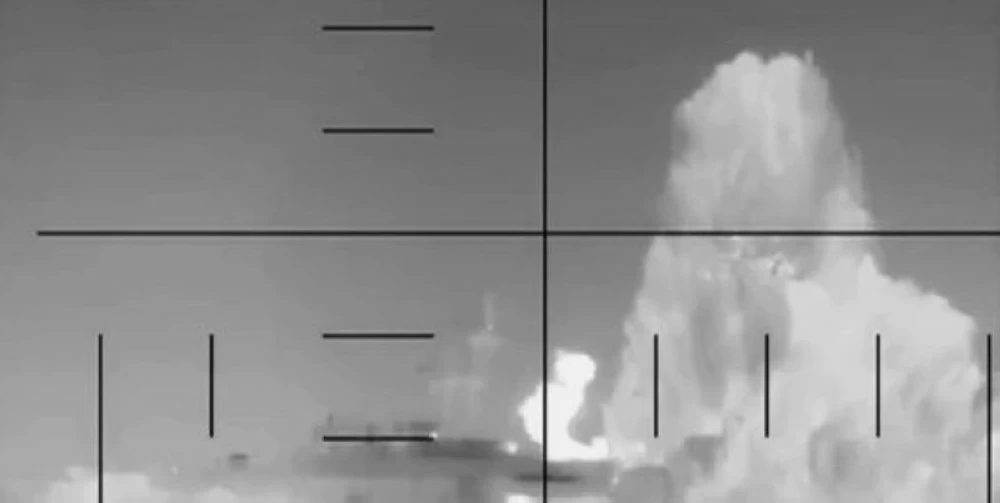

DUBAI — The sinking of an Iranian warship off the Sri Lankan coast by the US navy raises questions over how New Delhi will respond to American military action so close to its shores, Bloomberg reports. A US submarine torpedoed the Iranian frigate IRIS Dena off the coast of Sri Lanka on Wednesday, with 32 sailors rescued and at least 87 confirmed dead. It was the first time since World War II that an American submarine had attacked a surface vessel, according to US Defense Secretary Pete Hegseth. “Yesterday, in the Indian Ocean…an American submarine sunk an Iranian warship that thought it was safe in international waters. Instead, it was sunk by a torpedo,” Hegseth said at a Pentagon briefing on Wednesday. It is “the first sinking of an enemy ship by a torpedo since World War II,” he added. “Like in that war, back when we were still the War Department, we are fighting to win.” Sri Lanka’s navy was informed that the Iranian warship IRIS Dena, with 180 people on board, was in distress and sinking, Sri Lanka’s Foreign Minister Vijitha Herath told lawmakers. A rescue mission was launched, mobilizing ships and planes. Sri Lanka’s navy said it recovered 87 bodies and rescued 32 people, who were admitted to a hospital in Galle, on the south of the island.The Iranian naval ship sank outside Sri Lanka’s territorial waters, officials said. The IRIS Dena is one of Iran’s newest warships. It was patrolling in deep water and was armed with guns, missiles, and torpedoes. It also carried one helicopter. The attack took place just days after the Iranian ship had participated in a flagship Indian naval exercise at the invitation of New Delhi, alongside Indian and other foreign warships. The incident places the government of Prime Minister Narendra Modi in a difficult position as it continues to avoid taking firm sides in the widening Middle East conflict. It wasn’t immediately clear whether the US had informed India of its plans to conduct military activities in the region. India’s Ministries of Defense and External Affairs didn’t respond to requests for comment. The US Embassy in New Delhi also didn’t immediately respond. “By sinking a vessel returning from an Indian-hosted multilateral exercise, Washington effectively turned India’s maritime neighborhood into a war zone, raising uncomfortable questions about India’s authority in its own backyard,” Brahma Chellaney, professor emeritus of strategic studies at the New Delhi-based Center for Policy Research, said in a post on X. The sinking of the IRIS Dena occurred in Sri Lanka’s exclusive economic zone in the Indian Ocean, a busy shipping corridor. The presence of a US submarine in the area raises concerns over trade routes, as well as strategic risks for India, which often conducts joint patrols with Sri Lanka in the waters. The IRIS Dena was in India Feb. 15 to 25 to participate in the International Fleet Review, alongside vessels from 40 other countries including the US and Russia. Modi’s government is already weathering criticism at home for not explicitly condemning the US and Israeli strikes on Iran. Modi had visited Israel and met with Prime Minister Benjamin Netanyahu shortly before the joint US-Israeli strikes, prompting criticism from opposition figures that the visit provided tacit approval for the attacks. The conflict puts India in a particularly difficult position. New Delhi has historical ties with Iran and had previously bought large quantities of its oil. At the same time, Modi faces precarious relations with the Trump administration after it slapped punitive 50% tariffs on Indian exports last year, before abruptly unveiling a trade deal that reduced the duties. “The episode risks frictions with Washington and domestic embarrassment for Indian Prime Minister Narendra Modi’s government,” Chetna Kumar and Adam Farrar, geoeconomics analysts for Bloomberg Economics, wrote Thursday. While the strike on the vessel sets an uncomfortable precedent and increases political pressure on the Indian and Sri Lankan governments over the war, “we don’t see it as an indicator that the conflict is widening to South Asia,” they said.DUBAI — The sinking of an Iranian warship off the Sri Lankan coast by the US navy raises questions over how New Delhi will respond to American military action so close to its shores, Bloomberg reports. A US submarine torpedoed the Iranian frigate IRIS Dena off the coast of Sri Lanka on Wednesday, with 32 sailors rescued and at least 87 confirmed dead. It was the first time since World War II that an American submarine had attacked a surface vessel, according to US Defense Secretary Pete Hegseth. “Yesterday, in the Indian Ocean…an American submarine sunk an Iranian warship that thought it was safe in international waters. Instead, it was sunk by a torpedo,” Hegseth said at a Pentagon briefing on Wednesday. It is “the first sinking of an enemy ship by a torpedo since World War II,” he added. “Like in that war, back when we were still the War Department, we are fighting to win.” Sri Lanka’s navy was informed that the Iranian warship IRIS Dena, with 180 people on board, was in distress and sinking, Sri Lanka’s Foreign Minister Vijitha Herath told lawmakers. A rescue mission was launched, mobilizing ships and planes. Sri Lanka’s navy said it recovered 87 bodies and rescued 32 people, who were admitted to a hospital in Galle, on the south of the island.The Iranian naval ship sank outside Sri Lanka’s territorial waters, officials said. The IRIS Dena is one of Iran’s newest warships. It was patrolling in deep water and was armed with guns, missiles, and torpedoes. It also carried one helicopter. The attack took place just days after the Iranian ship had participated in a flagship Indian naval exercise at the invitation of New Delhi, alongside Indian and other foreign warships. The incident places the government of Prime Minister Narendra Modi in a difficult position as it continues to avoid taking firm sides in the widening Middle East conflict. It wasn’t immediately clear whether the US had informed India of its plans to conduct military activities in the region. India’s Ministries of Defense and External Affairs didn’t respond to requests for comment. The US Embassy in New Delhi also didn’t immediately respond. “By sinking a vessel returning from an Indian-hosted multilateral exercise, Washington effectively turned India’s maritime neighborhood into a war zone, raising uncomfortable questions about India’s authority in its own backyard,” Brahma Chellaney, professor emeritus of strategic studies at the New Delhi-based Center for Policy Research, said in a post on X. The sinking of the IRIS Dena occurred in Sri Lanka’s exclusive economic zone in the Indian Ocean, a busy shipping corridor. The presence of a US submarine in the area raises concerns over trade routes, as well as strategic risks for India, which often conducts joint patrols with Sri Lanka in the waters. The IRIS Dena was in India Feb. 15 to 25 to participate in the International Fleet Review, alongside vessels from 40 other countries including the US and Russia. Modi’s government is already weathering criticism at home for not explicitly condemning the US and Israeli strikes on Iran. Modi had visited Israel and met with Prime Minister Benjamin Netanyahu shortly before the joint US-Israeli strikes, prompting criticism from opposition figures that the visit provided tacit approval for the attacks. The conflict puts India in a particularly difficult position. New Delhi has historical ties with Iran and had previously bought large quantities of its oil. At the same time, Modi faces precarious relations with the Trump administration after it slapped punitive 50% tariffs on Indian exports last year, before abruptly unveiling a trade deal that reduced the duties. “The episode risks frictions with Washington and domestic embarrassment for Indian Prime Minister Narendra Modi’s government,” Chetna Kumar and Adam Farrar, geoeconomics analysts for Bloomberg Economics, wrote Thursday. While the strike on the vessel sets an uncomfortable precedent and increases political pressure on the Indian and Sri Lankan governments over the war, “we don’t see it as an indicator that the conflict is widening to South Asia,” they said.
Pressure piles on India's Modi after US sinks Iranian frigate in Indian Ocean