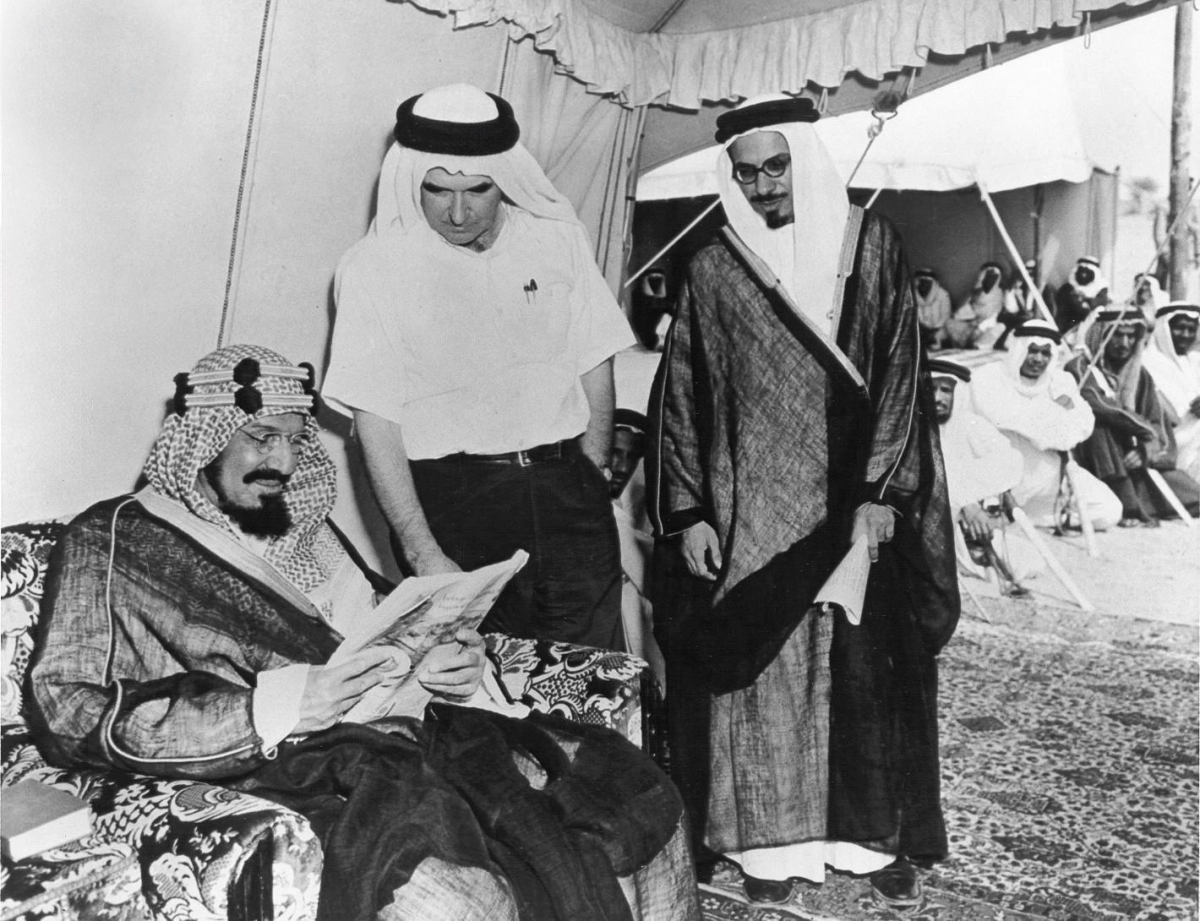
RIYADH — In 1932, the Kingdom of Saudi Arabia entered the world under a new name.Its institutions were young. Modern healthcare and education systems were still taking shape. Communications between distant regions remained difficult, and the country’s transport infrastructure bore little resemblance to the networks that connect its cities today.Nearly a century later, the scale of the transformation is visible not only in skylines, highways and new industries, but in the numbers.Saudi Arabia’s population is now estimated at more than 35.3 million, according to the General Authority for Statistics. Behind that figure is a country fundamentally different from the one whose foundations were being built during the reign of King Abdulaziz.From classrooms to human capitalOrganized education was one of the earliest priorities of the developing Saudi state.The Directorate of General Education was established in 1926. The Saudi Scientific Institute followed in 1927 to prepare teachers, while the Education Council was established in 1928. Students were eventually sent abroad on scholarships as the country sought expertise that was not yet available domestically.The challenge then was establishing the foundations of an education system.The challenge today is different: preparing Saudis for an economy increasingly shaped by technology, research, advanced industry and new professions.That shift — from creating access to developing capabilities — captures the wider transformation of the Kingdom.From public health to quality of lifeHealthcare followed a similar trajectory.The Public Health Department was established in Makkah in 1926 as the state confronted epidemics, limited medical provision and the particular healthcare requirements of pilgrims.A century later, healthcare has become a nationwide system undergoing another transformation of its own, with prevention, digital health, service quality and longer healthy lives among the priorities pursued under Vision 2030.The story is no longer simply about making medical care available.It is increasingly about how well and how long people live.From 854 telephone lines to a connected societyPerhaps no comparison captures the distance traveled as vividly as communications.By 1934, Saudi Arabia had approximately 854 manual telephone lines.Five years later, a wireless telephone connection between Riyadh and Taif represented a major technological step. King Abdulaziz saw it as the beginning of connecting the Kingdom’s different regions.What was once a challenge of connecting distant Saudi cities has become an economy and society built around instant digital connectivity.Government services, banking, commerce, education, healthcare and everyday communication increasingly operate through digital platforms.The technology changed almost beyond recognition.The objective — connecting people and overcoming distance — did not.From an emerging economy to diversificationSaudi Arabia’s economic transformation is equally striking.Oil would fundamentally alter the country’s development after its discovery in commercial quantities, providing resources for infrastructure, public services and decades of economic expansion.Today, the Kingdom is undertaking another transition: expanding economic activity beyond oil.In 2025, Saudi Arabia’s real GDP grew 4.5%, while non-oil activities expanded 4.9% and accounted for more than half of GDP, according to the Vision 2030 annual report. Industries that occupied little or no place in the Saudi economy a generation ago — tourism, entertainment, advanced technology and other emerging sectors — now form part of the country’s diversification drive.Tourism provides one of the clearest examples.Saudi Arabia recorded more than 29 million inbound tourists in 2025, compared with more than 18 million in 2016. Domestic tourist numbers rose from more than 45 million to more than 93 million over the same period. Tourism’s contribution to GDP reached 5%, according to the 2025 Vision 2030 annual report. A changing role for Saudi womenThe transformation is also visible in the labor market.Women’s labor-force participation stood at 22.8% at the Vision 2030 baseline. By 2025, it had reached 35%, prompting the Kingdom to raise the original Vision target to 40% by 2030. Women today work across sectors ranging from medicine, law and finance to aviation, technology, tourism and government — expanding the pool of talent contributing to the country’s development.A transformation still underwayThe contrast between 1932 and 2026 can be dramatic.A country where government administration once relied on a relatively small number of officials now operates extensive institutions and digital public services.An education system that once had to send students abroad because specialized expertise was unavailable at home now serves a population preparing for increasingly sophisticated industries.A communications network measured in hundreds of manual telephone lines has given way to an interconnected digital society.And an economy transformed once by oil is now being transformed again through diversification.Yet 2026 is not an endpoint.Saudi Vision 2030 itself remains a project in progress. Its three broad themes — a vibrant society, a thriving economy and an ambitious nation — encompass reforms and investments extending across government, culture, tourism, housing, healthcare, human capabilities, industry and quality of life. That may be the most revealing way to view the distance between 1932 and 2026.The story of Saudi Arabia is not simply how much changed in 94 years.It is that the process of building never stopped.RIYADH — In 1932, the Kingdom of Saudi Arabia entered the world under a new name.Its institutions were young. Modern healthcare and education systems were still taking shape. Communications between distant regions remained difficult, and the country’s transport infrastructure bore little resemblance to the networks that connect its cities today.Nearly a century later, the scale of the transformation is visible not only in skylines, highways and new industries, but in the numbers.Saudi Arabia’s population is now estimated at more than 35.3 million, according to the General Authority for Statistics. Behind that figure is a country fundamentally different from the one whose foundations were being built during the reign of King Abdulaziz.From classrooms to human capitalOrganized education was one of the earliest priorities of the developing Saudi state.The Directorate of General Education was established in 1926. The Saudi Scientific Institute followed in 1927 to prepare teachers, while the Education Council was established in 1928. Students were eventually sent abroad on scholarships as the country sought expertise that was not yet available domestically.The challenge then was establishing the foundations of an education system.The challenge today is different: preparing Saudis for an economy increasingly shaped by technology, research, advanced industry and new professions.That shift — from creating access to developing capabilities — captures the wider transformation of the Kingdom.From public health to quality of lifeHealthcare followed a similar trajectory.The Public Health Department was established in Makkah in 1926 as the state confronted epidemics, limited medical provision and the particular healthcare requirements of pilgrims.A century later, healthcare has become a nationwide system undergoing another transformation of its own, with prevention, digital health, service quality and longer healthy lives among the priorities pursued under Vision 2030.The story is no longer simply about making medical care available.It is increasingly about how well and how long people live.From 854 telephone lines to a connected societyPerhaps no comparison captures the distance traveled as vividly as communications.By 1934, Saudi Arabia had approximately 854 manual telephone lines.Five years later, a wireless telephone connection between Riyadh and Taif represented a major technological step. King Abdulaziz saw it as the beginning of connecting the Kingdom’s different regions.What was once a challenge of connecting distant Saudi cities has become an economy and society built around instant digital connectivity.Government services, banking, commerce, education, healthcare and everyday communication increasingly operate through digital platforms.The technology changed almost beyond recognition.The objective — connecting people and overcoming distance — did not.From an emerging economy to diversificationSaudi Arabia’s economic transformation is equally striking.Oil would fundamentally alter the country’s development after its discovery in commercial quantities, providing resources for infrastructure, public services and decades of economic expansion.Today, the Kingdom is undertaking another transition: expanding economic activity beyond oil.In 2025, Saudi Arabia’s real GDP grew 4.5%, while non-oil activities expanded 4.9% and accounted for more than half of GDP, according to the Vision 2030 annual report. Industries that occupied little or no place in the Saudi economy a generation ago — tourism, entertainment, advanced technology and other emerging sectors — now form part of the country’s diversification drive.Tourism provides one of the clearest examples.Saudi Arabia recorded more than 29 million inbound tourists in 2025, compared with more than 18 million in 2016. Domestic tourist numbers rose from more than 45 million to more than 93 million over the same period. Tourism’s contribution to GDP reached 5%, according to the 2025 Vision 2030 annual report. A changing role for Saudi womenThe transformation is also visible in the labor market.Women’s labor-force participation stood at 22.8% at the Vision 2030 baseline. By 2025, it had reached 35%, prompting the Kingdom to raise the original Vision target to 40% by 2030. Women today work across sectors ranging from medicine, law and finance to aviation, technology, tourism and government — expanding the pool of talent contributing to the country’s development.A transformation still underwayThe contrast between 1932 and 2026 can be dramatic.A country where government administration once relied on a relatively small number of officials now operates extensive institutions and digital public services.An education system that once had to send students abroad because specialized expertise was unavailable at home now serves a population preparing for increasingly sophisticated industries.A communications network measured in hundreds of manual telephone lines has given way to an interconnected digital society.And an economy transformed once by oil is now being transformed again through diversification.Yet 2026 is not an endpoint.Saudi Vision 2030 itself remains a project in progress. Its three broad themes — a vibrant society, a thriving economy and an ambitious nation — encompass reforms and investments extending across government, culture, tourism, housing, healthcare, human capabilities, industry and quality of life. That may be the most revealing way to view the distance between 1932 and 2026.The story of Saudi Arabia is not simply how much changed in 94 years.It is that the process of building never stopped.
1932 / 2026: A nation transformed