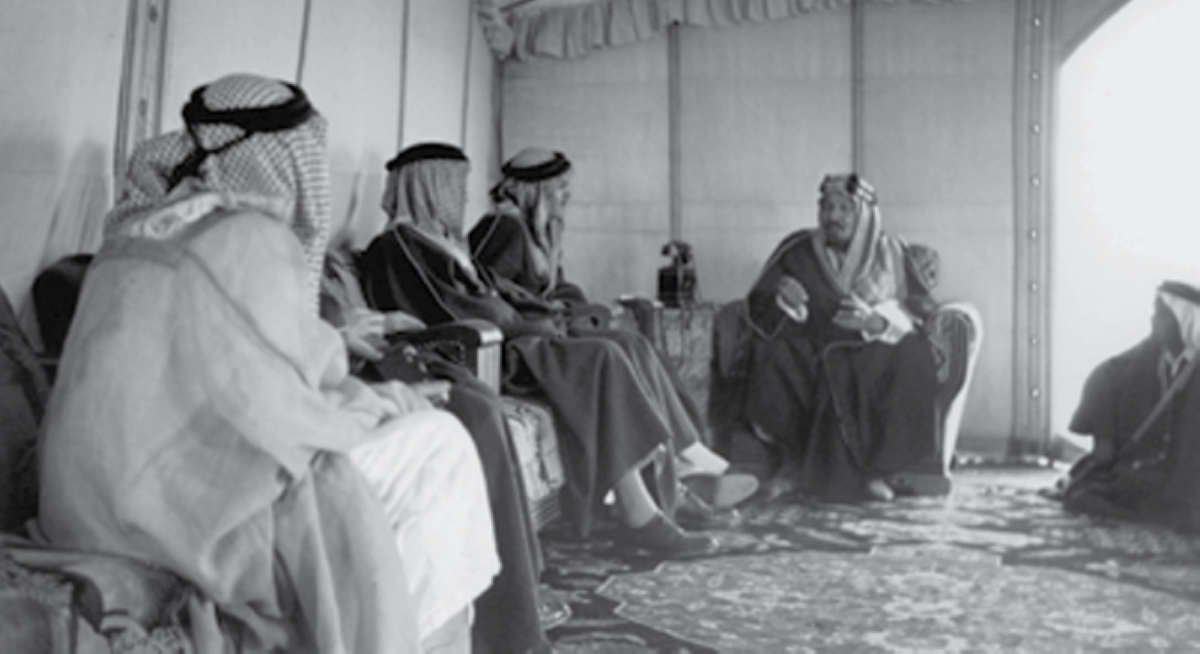

RIYADH — Nations are not built in a single moment.They are built layer by layer: through institutions capable of governing, schools capable of educating, healthcare systems capable of protecting people, communications capable of overcoming distance and generations prepared to build upon what came before them.Saudi Arabia’s modern story illustrates that progression.Under King Abdulaziz bin Abdulrahman Al Saud, the work of unification was accompanied by another undertaking — constructing the foundations of a modern state.The historical record preserved by the King Abdulaziz Foundation for Research and Archives, known as Darah, shows those foundations emerging across different areas of national life.Government administration grew from a relatively small nucleus around the King into increasingly specialized institutions. Education moved toward an organized system with the establishment of the Directorate of General Education in 1926, followed by teacher preparation, an Education Council and overseas scholarships. Public healthcare acquired an institutional structure with the establishment of the Public Health Department in Makkah in 1926. Communications developed through telegraph, post, telephone and later wireless connections.None of those developments represented an endpoint.They represented foundations.Successive Saudi kings expanded upon them as the Kingdom entered new stages of development. Government institutions grew in scale and specialization. Education expanded across the country. Healthcare networks reached a growing population. Roads, airports, electricity and communications transformed connections between Saudi cities. Oil revenues accelerated development and provided the means for an extraordinary expansion of infrastructure and public services.By the beginning of the 21st century, the challenge facing Saudi Arabia had changed.The question was no longer how to establish the basic institutions of a modern state.It was how to prepare those institutions — and the economy and society around them — for a rapidly changing future.In 2016, Saudi Arabia launched Vision 2030, a national transformation framework built around three themes: a vibrant society, a thriving economy and an ambitious nation. Its goals span economic diversification, human capability, quality of life, government effectiveness, investment and new opportunities for citizens. A decade later, the transformation is visible across the Kingdom.Industries that were once limited or largely absent have become important areas of investment and employment. Tourism, entertainment, culture and sport have expanded. New opportunities have opened for Saudi women and young people. Digital government has changed how citizens access public services. New economic sectors are being developed while the Kingdom seeks to increase the contribution of non-oil activities and the private sector.The 2025 Vision 2030 annual report describes the transformation since 2016 as one in which institutions have evolved, economic and social opportunities have expanded and government capabilities have been strengthened. As Saudi Arabia entered the Vision’s third phase in 2026, the focus shifted toward sustaining implementation and delivering against national priorities.But the relationship between Saudi Arabia’s past and its future is perhaps clearest not in individual projects, but in the challenges each generation has chosen to address.King Abdulaziz sought ways to connect distant parts of the Kingdom. Today, Saudi Arabia is pursuing digital transformation and advanced technologies.The early state established schools and sent students abroad to acquire knowledge that the country needed. Today, human-capability development is focused on preparing Saudis for the industries and professions of the future.The first organized health authorities confronted epidemics and expanded access to medical care. Today, healthcare transformation places greater emphasis on prevention, quality and healthier lives.Early government institutions were created to administer an expanding state. Today, the Vision’s Ambitious Nation pillar emphasizes effective, transparent, accountable and high-performing government. The scale has changed.So have the tools.But development remains cumulative: every generation inherits institutions and capabilities built before it, then faces the responsibility of taking them further.That continuity is particularly fitting on National Day.September 23 commemorates the unification of the Kingdom under King Abdulaziz. But the history that followed was never static. Unification provided the foundation upon which institution-building, economic development and social progress could proceed across successive reigns.Vision 2030 represents the latest chapter in that continuing national development.Its ambitions are distinctly of the 21st century: a diversified and sustainable economy, globally competitive talent, advanced industries, world-class destinations, stronger quality of life and government equipped for the future. The Vision also explicitly places national identity and cultural heritage within its concept of a vibrant society. That combination matters.Saudi Arabia’s transformation is not presented as a choice between heritage and modernity. Its current development framework places pride in national identity and cultural traditions alongside economic growth, innovation and modern public services. In 2026, with four years remaining until Vision 2030’s target year, the Kingdom’s transformation remains underway.And that makes this National Day not merely an occasion to look back at what was built.It is also an opportunity to consider what is being built now — and what the next generation will inherit.From the first institutions of the modern Saudi state to the ambitions of Vision 2030, the scale of the national project has expanded dramatically.The foundation was laid.Generation after generation built upon it.And the story continues.RIYADH — Nations are not built in a single moment.They are built layer by layer: through institutions capable of governing, schools capable of educating, healthcare systems capable of protecting people, communications capable of overcoming distance and generations prepared to build upon what came before them.Saudi Arabia’s modern story illustrates that progression.Under King Abdulaziz bin Abdulrahman Al Saud, the work of unification was accompanied by another undertaking — constructing the foundations of a modern state.The historical record preserved by the King Abdulaziz Foundation for Research and Archives, known as Darah, shows those foundations emerging across different areas of national life.Government administration grew from a relatively small nucleus around the King into increasingly specialized institutions. Education moved toward an organized system with the establishment of the Directorate of General Education in 1926, followed by teacher preparation, an Education Council and overseas scholarships. Public healthcare acquired an institutional structure with the establishment of the Public Health Department in Makkah in 1926. Communications developed through telegraph, post, telephone and later wireless connections.None of those developments represented an endpoint.They represented foundations.Successive Saudi kings expanded upon them as the Kingdom entered new stages of development. Government institutions grew in scale and specialization. Education expanded across the country. Healthcare networks reached a growing population. Roads, airports, electricity and communications transformed connections between Saudi cities. Oil revenues accelerated development and provided the means for an extraordinary expansion of infrastructure and public services.By the beginning of the 21st century, the challenge facing Saudi Arabia had changed.The question was no longer how to establish the basic institutions of a modern state.It was how to prepare those institutions — and the economy and society around them — for a rapidly changing future.In 2016, Saudi Arabia launched Vision 2030, a national transformation framework built around three themes: a vibrant society, a thriving economy and an ambitious nation. Its goals span economic diversification, human capability, quality of life, government effectiveness, investment and new opportunities for citizens. A decade later, the transformation is visible across the Kingdom.Industries that were once limited or largely absent have become important areas of investment and employment. Tourism, entertainment, culture and sport have expanded. New opportunities have opened for Saudi women and young people. Digital government has changed how citizens access public services. New economic sectors are being developed while the Kingdom seeks to increase the contribution of non-oil activities and the private sector.The 2025 Vision 2030 annual report describes the transformation since 2016 as one in which institutions have evolved, economic and social opportunities have expanded and government capabilities have been strengthened. As Saudi Arabia entered the Vision’s third phase in 2026, the focus shifted toward sustaining implementation and delivering against national priorities.But the relationship between Saudi Arabia’s past and its future is perhaps clearest not in individual projects, but in the challenges each generation has chosen to address.King Abdulaziz sought ways to connect distant parts of the Kingdom. Today, Saudi Arabia is pursuing digital transformation and advanced technologies.The early state established schools and sent students abroad to acquire knowledge that the country needed. Today, human-capability development is focused on preparing Saudis for the industries and professions of the future.The first organized health authorities confronted epidemics and expanded access to medical care. Today, healthcare transformation places greater emphasis on prevention, quality and healthier lives.Early government institutions were created to administer an expanding state. Today, the Vision’s Ambitious Nation pillar emphasizes effective, transparent, accountable and high-performing government. The scale has changed.So have the tools.But development remains cumulative: every generation inherits institutions and capabilities built before it, then faces the responsibility of taking them further.That continuity is particularly fitting on National Day.September 23 commemorates the unification of the Kingdom under King Abdulaziz. But the history that followed was never static. Unification provided the foundation upon which institution-building, economic development and social progress could proceed across successive reigns.Vision 2030 represents the latest chapter in that continuing national development.Its ambitions are distinctly of the 21st century: a diversified and sustainable economy, globally competitive talent, advanced industries, world-class destinations, stronger quality of life and government equipped for the future. The Vision also explicitly places national identity and cultural heritage within its concept of a vibrant society. That combination matters.Saudi Arabia’s transformation is not presented as a choice between heritage and modernity. Its current development framework places pride in national identity and cultural traditions alongside economic growth, innovation and modern public services. In 2026, with four years remaining until Vision 2030’s target year, the Kingdom’s transformation remains underway.And that makes this National Day not merely an occasion to look back at what was built.It is also an opportunity to consider what is being built now — and what the next generation will inherit.From the first institutions of the modern Saudi state to the ambitions of Vision 2030, the scale of the national project has expanded dramatically.The foundation was laid.Generation after generation built upon it.And the story continues.
From the foundations to Vision 2030