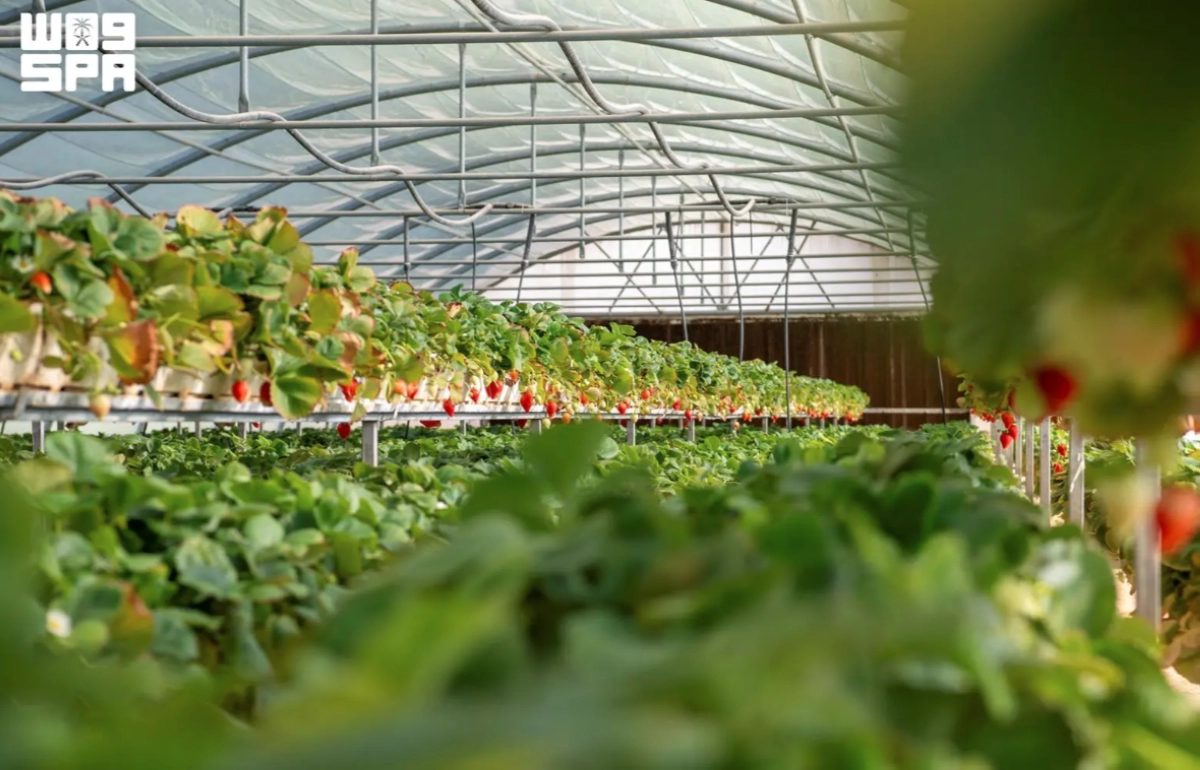

SKAKA — Throughout the year, Al-Jouf transforms into an open-air fruit festival, with farms and markets showcasing the vibrant colors of fruits harvested from more than 10 million trees known for their quality and distinctive flavor. Launched in 2019, the Fruit Festival in Tubarjal Governorate has become a prominent economic and recreational event, highlighting the fruit sector’s role in regional development and commerce. **media[2719302,2719300]** Known as the Kingdom’s food basket, Al-Jouf is renowned for its fertile land and agricultural diversity. The region is home to 11 registered grape varieties, alongside apples, quinces, pears, prickly pears, watermelon, plums, blackberries, mulberries, strawberries, nectarines, pomegranates, pistachios, and almonds. **media[2719299,2719308]** Aqab bin Mukhailif Al-Ruwaili, Director of the Ministry of Environment, Water and Agriculture’s office in Sakaka, said records from the National Center for Prevention and Control of Plant Pests and Animal Diseases document 1.5 million fruit and stone-fruit trees in the region, in addition to 900,000 palm trees. **media[2719304,2719303]** He noted that this agricultural wealth contributes significantly to food security, with Al-Jouf’s farms producing more than 560,000 tons of fruit annually. Although harvesting takes place year-round, peak activity is between May and December. The season begins with figs, grapes, peaches, and apricots, followed by citrus fruits such as lemons, oranges, and mandarins. **media[2719298,2719301]** Building on successful agricultural trials, farmers have expanded beyond traditional crops to cultivate tropical varieties, including Brazilian passion fruit and pineapples. The region also exports fruit tree seedlings and cuttings. The government and private-sector initiatives continue to support the industry through training programs and the Ministry’s Rural Development Program (Reef). Today, Al-Jouf’s fruit sector is a cornerstone of rural tourism, attracting visitors to its farms and fresh produce while strengthening the region’s economy. **media[2719307,2719297]**SKAKA — Throughout the year, Al-Jouf transforms into an open-air fruit festival, with farms and markets showcasing the vibrant colors of fruits harvested from more than 10 million trees known for their quality and distinctive flavor. Launched in 2019, the Fruit Festival in Tubarjal Governorate has become a prominent economic and recreational event, highlighting the fruit sector’s role in regional development and commerce. **media[2719302,2719300]** Known as the Kingdom’s food basket, Al-Jouf is renowned for its fertile land and agricultural diversity. The region is home to 11 registered grape varieties, alongside apples, quinces, pears, prickly pears, watermelon, plums, blackberries, mulberries, strawberries, nectarines, pomegranates, pistachios, and almonds. **media[2719299,2719308]** Aqab bin Mukhailif Al-Ruwaili, Director of the Ministry of Environment, Water and Agriculture’s office in Sakaka, said records from the National Center for Prevention and Control of Plant Pests and Animal Diseases document 1.5 million fruit and stone-fruit trees in the region, in addition to 900,000 palm trees. **media[2719304,2719303]** He noted that this agricultural wealth contributes significantly to food security, with Al-Jouf’s farms producing more than 560,000 tons of fruit annually. Although harvesting takes place year-round, peak activity is between May and December. The season begins with figs, grapes, peaches, and apricots, followed by citrus fruits such as lemons, oranges, and mandarins. **media[2719298,2719301]** Building on successful agricultural trials, farmers have expanded beyond traditional crops to cultivate tropical varieties, including Brazilian passion fruit and pineapples. The region also exports fruit tree seedlings and cuttings. The government and private-sector initiatives continue to support the industry through training programs and the Ministry’s Rural Development Program (Reef). Today, Al-Jouf’s fruit sector is a cornerstone of rural tourism, attracting visitors to its farms and fresh produce while strengthening the region’s economy. **media[2719307,2719297]**
Al-Jouf in full bloom: The region behind Saudi Arabia’s fruit wealth