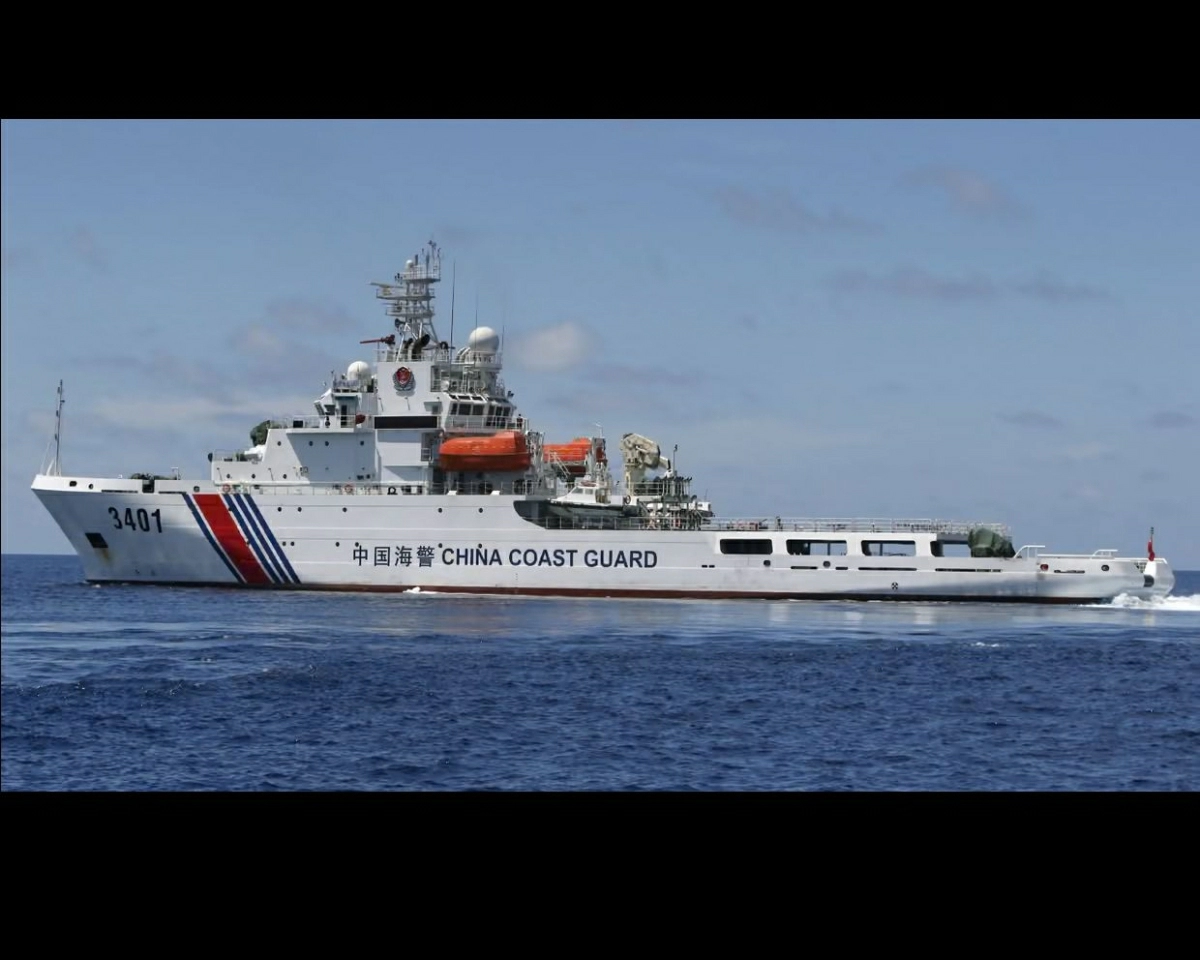

BEIJING — China’s defense ministry urged Japan on Thursday to stop “stirring up trouble” over the South China Sea after reports of deepening cooperation between Tokyo and the Philippines.Japan announced earlier this month that it will provide the Philippines with radars and drones to boost its coastal surveillance capabilities.Chinese and Philippine coastguard vessels frequently clash near disputed shoals and reefs as part of long-simmering tensions over the vital trade waterway.Defense Ministry spokesperson Chen Xi told a regular press briefing in Beijing that Japan was not party to the disputes and had no right to comment on them.”We demand that Japan stop stirring up trouble over the South China Sea issue,” Chen said.Japan had used “so-called external threats” to deepen regional anxieties, form military cliques and attempt to strengthen its military presence in the South China Sea, he added.The US and its allies and partners have repeatedly expressed concern over the situation in the South China Sea as China asserts its sovereignty through growing deployments of naval, coastguard and militia vessels.China claims nearly all of the South China Sea, overlapping maritime claims of the Philippines, Vietnam, Malaysia, Brunei and Taiwan. In 2016, a Hague-based tribunal said China’s claims had no legal basis, a decision Beijing has rejected.China’s military is also operating further out into the Pacific and is present on a daily basis around Taiwan, which Beijing views as its own territory.China carried out a large, unannounced military exercise across the western Pacific and around Taiwan in early November, in what officials in Taipei have previously described as a campaign of “silent intimidation”.Chen, asked about those drills, said the military’s stepped-up training and combat readiness, and its continuous improvement of practical capabilities to defend China’s sovereignty and territorial integrity, are “entirely legitimate and reasonable”.”We oppose certain parties hyping it up with ulterior motives,” he added.”The Democratic Progressive Party authorities are the biggest disruptors of the status quo in the Taiwan Strait,” Chen said, referring to Taiwan’s ruling party.Taiwan’s government says only the island’s people can decide their future, and rejects Beijing’s sovereignty claims.China and Japan accused each other’s ships of intruding into waters near disputed islands that each claims as their territory and have caused diplomatic tensions for decades.Japan’s coast guard said on Thursday it had repeatedly warned two Chinese ships to leave the area after the vessels approached a Japanese fishing boat near uninhabited islands between Taiwan and Okinawa claimed by both Japan and China.The two Chinese vessels entered the area at around 7:42 am Thursday (2242 GMT Wednesday) and were “trying to approach a Japanese fishing boat,” Japan’s coast guard said in a statement.“Such activities by Chinese coast guard vessels constitute a violation of international law, and our patrol vessels are repeatedly issuing demands for the vessels to leave Japan’s territorial sea,” it said.The Japanese coast guard told AFP that this is the fifth time this year a Chinese vessel had approached a Japanese fishing boat in the area.The Chinese government reiterated its claim over the islands and accused Japan of violating its sovereignty.“China has already lodged serious representations with Japan,” Chinese foreign ministry spokesman Guo Jiakun said.“Chinese coast guard vessels took necessary control measures against the relevant vessels in accordance with the law,” he said.Relations between Tokyo and Beijing are at historic lows after Prime Minister Sanae Takaichi suggested last year that Japan could intervene militarily in the event that China attacked Taiwan.A furious China, which views the democratic island as part of its territory, retaliated with trade restrictions and warned its citizens not to travel to Japan.Chinese President Xi Jinping snubbed Takaichi at a regional meeting in Shenzhen last week, which marked the Japanese premier’s first trip to China since she took office.BEIJING — China’s defense ministry urged Japan on Thursday to stop “stirring up trouble” over the South China Sea after reports of deepening cooperation between Tokyo and the Philippines.Japan announced earlier this month that it will provide the Philippines with radars and drones to boost its coastal surveillance capabilities.Chinese and Philippine coastguard vessels frequently clash near disputed shoals and reefs as part of long-simmering tensions over the vital trade waterway.Defense Ministry spokesperson Chen Xi told a regular press briefing in Beijing that Japan was not party to the disputes and had no right to comment on them.”We demand that Japan stop stirring up trouble over the South China Sea issue,” Chen said.Japan had used “so-called external threats” to deepen regional anxieties, form military cliques and attempt to strengthen its military presence in the South China Sea, he added.The US and its allies and partners have repeatedly expressed concern over the situation in the South China Sea as China asserts its sovereignty through growing deployments of naval, coastguard and militia vessels.China claims nearly all of the South China Sea, overlapping maritime claims of the Philippines, Vietnam, Malaysia, Brunei and Taiwan. In 2016, a Hague-based tribunal said China’s claims had no legal basis, a decision Beijing has rejected.China’s military is also operating further out into the Pacific and is present on a daily basis around Taiwan, which Beijing views as its own territory.China carried out a large, unannounced military exercise across the western Pacific and around Taiwan in early November, in what officials in Taipei have previously described as a campaign of “silent intimidation”.Chen, asked about those drills, said the military’s stepped-up training and combat readiness, and its continuous improvement of practical capabilities to defend China’s sovereignty and territorial integrity, are “entirely legitimate and reasonable”.”We oppose certain parties hyping it up with ulterior motives,” he added.”The Democratic Progressive Party authorities are the biggest disruptors of the status quo in the Taiwan Strait,” Chen said, referring to Taiwan’s ruling party.Taiwan’s government says only the island’s people can decide their future, and rejects Beijing’s sovereignty claims.China and Japan accused each other’s ships of intruding into waters near disputed islands that each claims as their territory and have caused diplomatic tensions for decades.Japan’s coast guard said on Thursday it had repeatedly warned two Chinese ships to leave the area after the vessels approached a Japanese fishing boat near uninhabited islands between Taiwan and Okinawa claimed by both Japan and China.The two Chinese vessels entered the area at around 7:42 am Thursday (2242 GMT Wednesday) and were “trying to approach a Japanese fishing boat,” Japan’s coast guard said in a statement.“Such activities by Chinese coast guard vessels constitute a violation of international law, and our patrol vessels are repeatedly issuing demands for the vessels to leave Japan’s territorial sea,” it said.The Japanese coast guard told AFP that this is the fifth time this year a Chinese vessel had approached a Japanese fishing boat in the area.The Chinese government reiterated its claim over the islands and accused Japan of violating its sovereignty.“China has already lodged serious representations with Japan,” Chinese foreign ministry spokesman Guo Jiakun said.“Chinese coast guard vessels took necessary control measures against the relevant vessels in accordance with the law,” he said.Relations between Tokyo and Beijing are at historic lows after Prime Minister Sanae Takaichi suggested last year that Japan could intervene militarily in the event that China attacked Taiwan.A furious China, which views the democratic island as part of its territory, retaliated with trade restrictions and warned its citizens not to travel to Japan.Chinese President Xi Jinping snubbed Takaichi at a regional meeting in Shenzhen last week, which marked the Japanese premier’s first trip to China since she took office.
China asksJapan to stop ’stirring up’ South China Sea disputes