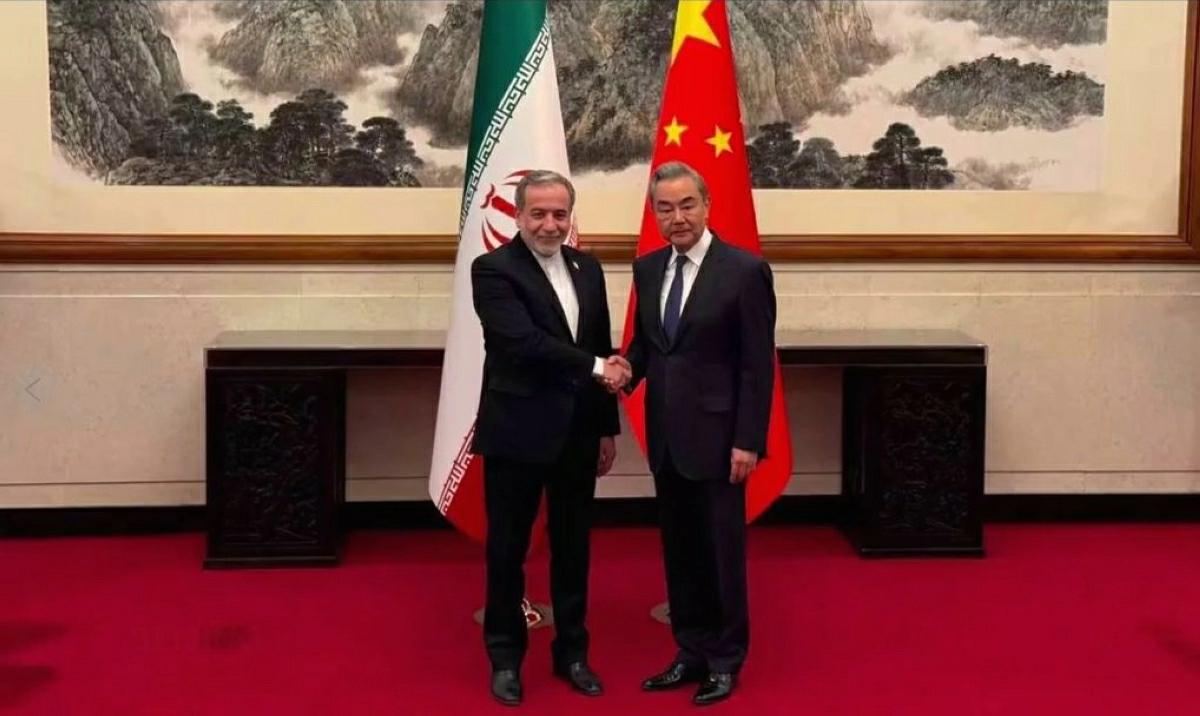

BEIJING— China’s foreign minister has called for a comprehensive ceasefire in the Iran war, in comments that could inject new energy into stalled efforts to end the two-month conflict between the United States and Iran. In talks with his Iranian counterpart Abbas Aragchi in Beijing on Wednesday, Wang Yi also called for the Strait of Hormuz to be reopened “as soon as possible”. Wang said his country was “deeply distressed” by the conflict. He spoke after meeting with Araghchi, who was visiting Beijing for the first time since the war with the US and Israel started Feb. 28. The Chinese minister’s comments followed an earlier statement by US President Donald Trump that he was pausing his short-lived US effort to guide stranded commercial vessels out of the Strait of Hormuz in hopes that a deal could be finalized. Araghchi’s visit to China comes ahead of a planned visit by Trump to Beijing for a high-profile summit with Chinese President Xi Jinping on May 14-15. The trip would be Trump’s first to China during his second term and the first by a US president since Trump visited in 2017. “We believe that a comprehensive ceasefire is urgently needed, that a resumption of hostilities is not acceptable, and that it is particularly important to remain committed to dialogue and negotiations,” Wang said, according to a video of the meeting. He added that Beijing was ready to help de-escalate tensions. The Chinese foreign minister said the conflict “has already lasted for more than two months. It has not only caused serious losses to the Iranian people, but also had a severe impact on regional and global peace. China is deeply distressed by this.” Beijing, which has tried to mediate while avoiding entanglement in the conflict, has repeatedly urged the US and Iran to hold talks, which Wang reiterated on Wednesday. Beijing has called the US naval blockade of Iranian ports “irresponsible and dangerous”, describing it as a move that would “undermine the already fragile ceasefire agreement”. China has been a major buyer of Iranian oil, which is sanctioned by the US. China imported 1.38 million barrels of crude per day from Iran in 2025, according to the Center on Global Energy Policy – around 12% of China’s total crude oil imports. “On the issue of the Strait, the international community shares a common concern over restoring normal and secure navigation through the Strait, and China hopes relevant parties will respond as soon as possible to the strong call from the international community,” Wang said. US Secretary of State Marco Rubio expressed hope that Beijing would reiterate the need for Iran to release its chokehold on the strait, which would deny its main leverage as Trump demands a major rollback of Tehran’s disputed nuclear program. “I hope the Chinese tell him what he needs to be told,” Rubio said during a White House briefing Tuesday. “And that is that what you are doing in the strait is causing you to be globally isolated. You’re the bad guy in this.” Hundreds of merchant ships remain bottled up in the Gulf. The US said it had opened a safe shipping lane Monday and sunk six small Iranian boats that had threatened commercial ships in the strait. Only two merchant ships are known to have passed through the US-guarded route. But Trump announced he was pausing the effort, dubbed Project Freedom, to see whether an agreement with Tehran on ending the war could be reached. China’s Foreign Ministry spokesperson Lin Jian said Beijing has made clear that the relevant sides must act “with prudence” and resolve the conflict through dialogue in order to restore peace. He added that China has been actively promoting peace talks and will continue to do so. In a statement published on the ministry’s website about Wang’s meeting with Araghchi, the foreign ministry said China values Iran’s pledge not to pursue nuclear weapons while affirming its “legitimate right to the peaceful use of nuclear energy.” Pakistan has been mediating between the US and Iran, and had hosted peace talks between the two sides. On Wednesday, Pakistan’s Prime Minister Shehbaz Sharif thanked Trump for what he described as a timely announcement of a pause in the effort to guide ships out of the strait. In a post on X, Sharif said Trump’s response to requests from Pakistan and other countries, particularly Saudi Arabia, would help advance regional peace, stability and reconciliation. “Pakistan remains firmly committed to supporting all efforts that promote restraint and a peaceful resolution of conflicts through dialogue and diplomacy,” Sharif said. “We are very hopeful that the current momentum will lead to a lasting agreement that secures durable peace and stability for the region and beyond.”BEIJING— China’s foreign minister has called for a comprehensive ceasefire in the Iran war, in comments that could inject new energy into stalled efforts to end the two-month conflict between the United States and Iran. In talks with his Iranian counterpart Abbas Aragchi in Beijing on Wednesday, Wang Yi also called for the Strait of Hormuz to be reopened “as soon as possible”. Wang said his country was “deeply distressed” by the conflict. He spoke after meeting with Araghchi, who was visiting Beijing for the first time since the war with the US and Israel started Feb. 28. The Chinese minister’s comments followed an earlier statement by US President Donald Trump that he was pausing his short-lived US effort to guide stranded commercial vessels out of the Strait of Hormuz in hopes that a deal could be finalized. Araghchi’s visit to China comes ahead of a planned visit by Trump to Beijing for a high-profile summit with Chinese President Xi Jinping on May 14-15. The trip would be Trump’s first to China during his second term and the first by a US president since Trump visited in 2017. “We believe that a comprehensive ceasefire is urgently needed, that a resumption of hostilities is not acceptable, and that it is particularly important to remain committed to dialogue and negotiations,” Wang said, according to a video of the meeting. He added that Beijing was ready to help de-escalate tensions. The Chinese foreign minister said the conflict “has already lasted for more than two months. It has not only caused serious losses to the Iranian people, but also had a severe impact on regional and global peace. China is deeply distressed by this.” Beijing, which has tried to mediate while avoiding entanglement in the conflict, has repeatedly urged the US and Iran to hold talks, which Wang reiterated on Wednesday. Beijing has called the US naval blockade of Iranian ports “irresponsible and dangerous”, describing it as a move that would “undermine the already fragile ceasefire agreement”. China has been a major buyer of Iranian oil, which is sanctioned by the US. China imported 1.38 million barrels of crude per day from Iran in 2025, according to the Center on Global Energy Policy – around 12% of China’s total crude oil imports. “On the issue of the Strait, the international community shares a common concern over restoring normal and secure navigation through the Strait, and China hopes relevant parties will respond as soon as possible to the strong call from the international community,” Wang said. US Secretary of State Marco Rubio expressed hope that Beijing would reiterate the need for Iran to release its chokehold on the strait, which would deny its main leverage as Trump demands a major rollback of Tehran’s disputed nuclear program. “I hope the Chinese tell him what he needs to be told,” Rubio said during a White House briefing Tuesday. “And that is that what you are doing in the strait is causing you to be globally isolated. You’re the bad guy in this.” Hundreds of merchant ships remain bottled up in the Gulf. The US said it had opened a safe shipping lane Monday and sunk six small Iranian boats that had threatened commercial ships in the strait. Only two merchant ships are known to have passed through the US-guarded route. But Trump announced he was pausing the effort, dubbed Project Freedom, to see whether an agreement with Tehran on ending the war could be reached. China’s Foreign Ministry spokesperson Lin Jian said Beijing has made clear that the relevant sides must act “with prudence” and resolve the conflict through dialogue in order to restore peace. He added that China has been actively promoting peace talks and will continue to do so. In a statement published on the ministry’s website about Wang’s meeting with Araghchi, the foreign ministry said China values Iran’s pledge not to pursue nuclear weapons while affirming its “legitimate right to the peaceful use of nuclear energy.” Pakistan has been mediating between the US and Iran, and had hosted peace talks between the two sides. On Wednesday, Pakistan’s Prime Minister Shehbaz Sharif thanked Trump for what he described as a timely announcement of a pause in the effort to guide ships out of the strait. In a post on X, Sharif said Trump’s response to requests from Pakistan and other countries, particularly Saudi Arabia, would help advance regional peace, stability and reconciliation. “Pakistan remains firmly committed to supporting all efforts that promote restraint and a peaceful resolution of conflicts through dialogue and diplomacy,” Sharif said. “We are very hopeful that the current momentum will lead to a lasting agreement that secures durable peace and stability for the region and beyond.”
China calls for comprehensive ceasefire, Hormuz Strait reopening in Iran talks