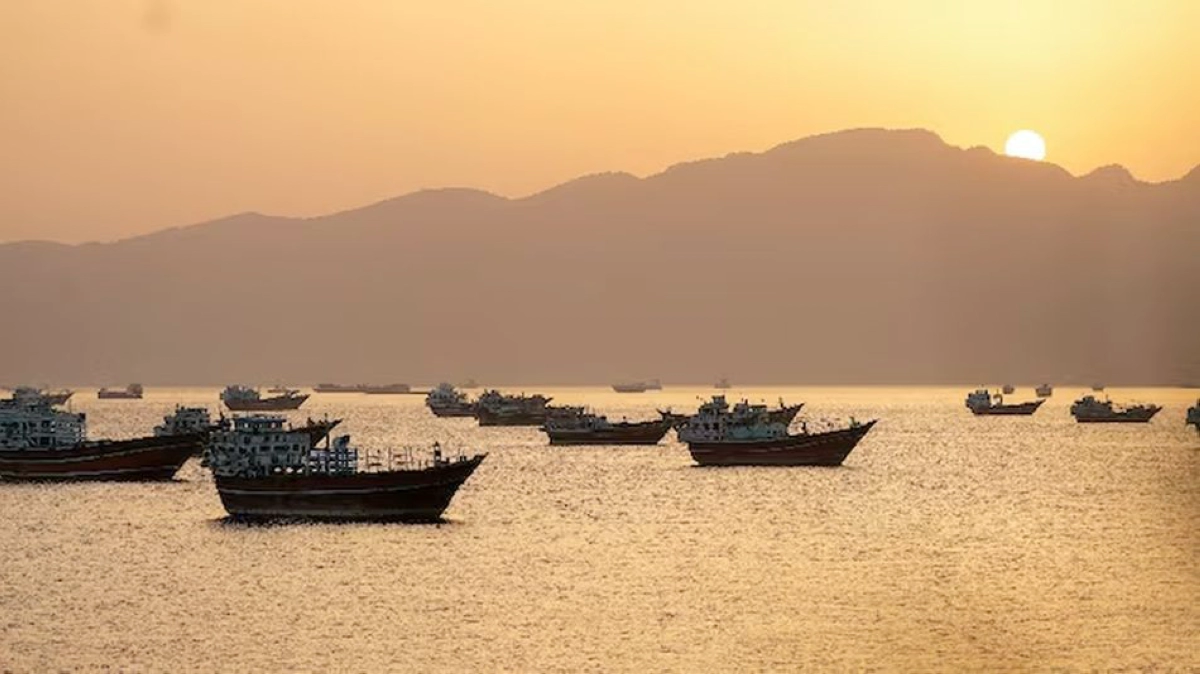

SINGAPORE — Two Chinese supertankers carrying 4 million barrels of oil exited the Strait of Hormuz on Wednesday after waiting in the Gulf for more than two months, shipping data showed, brightening hopes that the US-Israeli conflict with Iran may soon be resolved after positive comments from President Donald Trump and his deputy.Chinese-flagged Very Large Crude Carrier (VLCC) Yuan Gui Yang loaded 2 million barrels of Iraqi Basrah crude on February 27, a day before the US-Israeli war on Iran started, according to data from the London Stock Exchange Group (LSEG) and Kpler.The vessel, chartered by Unipec, the trading arm of Asia’s largest refiner Sinopec, is expected to reach Shuidong Port near Maoming city in southern Guangdong province, on June 4 to discharge its cargo, according to the data.Hong Kong-flagged VLCC Ocean Lily loaded 1 million barrels each of Qatari Al-Shaheen and Iraqi Basrah crude between late February and early March, the data showed.The vessel, owned by Chinese major Sinochem, is expected to reach Quanzhou Port in eastern Fujian province on June 5 to discharge its cargo.The passage of the vessels comes amid continued disruptions and security concerns affecting shipping routes in the Gulf region.Trump said on Tuesday the war would be over “very quickly” while Vice President JD Vance talked up progress in talks with Tehran about an agreement to end hostilities.”We’re in a pretty good spot here,” Vance told a White House press briefing.Trump made his comments a day after saying he had paused a planned resumption of hostilities following a new proposal by Tehran to end the conflict.”I was an hour away from making the decision to go today,” Trump told reporters at the White House.The United States has been struggling to end the war it began with Israel nearly three months ago. Trump has repeatedly said during the conflict that a deal with Tehran was close, and similarly threatened heavy strikes on Iran if it did not reach an accord.The conflict has caused the worst-ever disruption to global energy supplies, blocking hundreds of tankers from leaving the Gulf while damaging energy and shipping facilities across the region.SINGAPORE — Two Chinese supertankers carrying 4 million barrels of oil exited the Strait of Hormuz on Wednesday after waiting in the Gulf for more than two months, shipping data showed, brightening hopes that the US-Israeli conflict with Iran may soon be resolved after positive comments from President Donald Trump and his deputy.Chinese-flagged Very Large Crude Carrier (VLCC) Yuan Gui Yang loaded 2 million barrels of Iraqi Basrah crude on February 27, a day before the US-Israeli war on Iran started, according to data from the London Stock Exchange Group (LSEG) and Kpler.The vessel, chartered by Unipec, the trading arm of Asia’s largest refiner Sinopec, is expected to reach Shuidong Port near Maoming city in southern Guangdong province, on June 4 to discharge its cargo, according to the data.Hong Kong-flagged VLCC Ocean Lily loaded 1 million barrels each of Qatari Al-Shaheen and Iraqi Basrah crude between late February and early March, the data showed.The vessel, owned by Chinese major Sinochem, is expected to reach Quanzhou Port in eastern Fujian province on June 5 to discharge its cargo.The passage of the vessels comes amid continued disruptions and security concerns affecting shipping routes in the Gulf region.Trump said on Tuesday the war would be over “very quickly” while Vice President JD Vance talked up progress in talks with Tehran about an agreement to end hostilities.”We’re in a pretty good spot here,” Vance told a White House press briefing.Trump made his comments a day after saying he had paused a planned resumption of hostilities following a new proposal by Tehran to end the conflict.”I was an hour away from making the decision to go today,” Trump told reporters at the White House.The United States has been struggling to end the war it began with Israel nearly three months ago. Trump has repeatedly said during the conflict that a deal with Tehran was close, and similarly threatened heavy strikes on Iran if it did not reach an accord.The conflict has caused the worst-ever disruption to global energy supplies, blocking hundreds of tankers from leaving the Gulf while damaging energy and shipping facilities across the region.
Chinese supertankers cross Strait of Hormuz after months-long delay