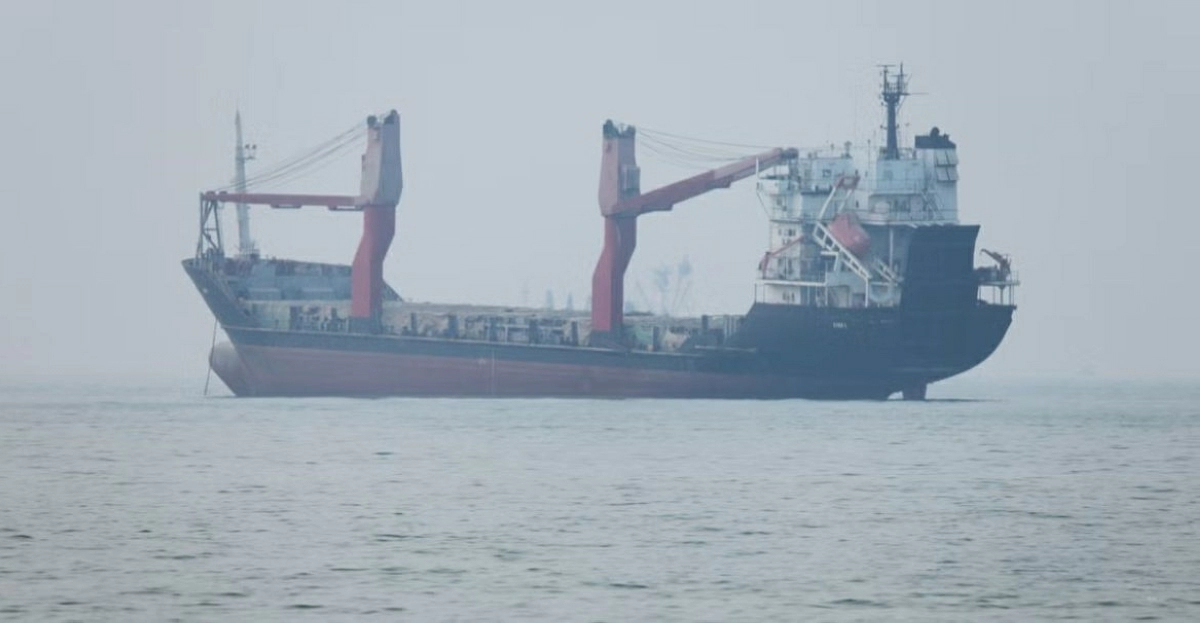

DUBAI — A foreign container ship has run aground in the shallow waters on the Omani side of the Strait of Hormuz, Iranian state television reported on Wednesday, claiming the vessel failed to follow an approved route. While identifying it as a foreign container ship, the report provided no further immediate details about the incident.Iran’s IRGC claimed the grounding was linked to the vessel not using Iran’s approved route. Iranian officials said they had “repeatedly warned captains, shipowners and officials of shipping companies around the world that any entry or exit through routes other than the ‘Route of Authority’ in the Gulf could lead to irreparable incidents.”Iranian state television said the ship ran aground “because of shallow waters along its chosen route” and gave no further details about its identity or nationality.The vessel is believed to have been using the Oman corridor established last week by Muscat in coordination with the International Maritime Organization as an alternative to Iran’s designated route south of Larak Island.The IRGC said it would only guarantee safe navigation for vessels that coordinate their passage through the Iranian corridor, promising that “the Revolutionary Guard Navy will be responsible for their security from the moment they enter until they leave the Gulf.”Iran’s position — that it holds sovereign authority over the waterway and may designate approved routes and eventually charge transit fees — directly contradicts longstanding international law and the position of the US, the Gulf states and most of the international community, who regard the strait as an international waterway under the transit passage provisions of the UN Convention on the Law of the Sea (UNCLOS). Iran has signed but never ratified it.The incident coincided with the arrival in Qatar of US special envoy Steve Witkoff and senior White House adviser Jared Kushner for talks over reaching a permanent end to the Iran war. Iran’s top negotiator, Kazem Gharibabadi, also travelled to Doha with a team.Technical talks between diplomats began Wednesday in Qatar, two regional officials said, speaking on condition of anonymity to discuss the closed-door discussions.Negotiators aim to nail down specifics to pave the way for top leaders to seal an agreement, although differences over the strait and the Israeli intervention against Hezbollah in Lebanon loom large.The Strait of Hormuz remains the central sticking point in the US-Iran talks. Under the interim memorandum of understanding signed on 17 June, ships may transit the waterway without fees for 60 days.Tehran insists it must control the route taken by vessels and intends to charge transit fees once that period expires — a position Washington and Gulf Arab states have flatly rejected.The US Treasury sanctioned Iran’s Persian Gulf Strait Authority in May, calling it an unlawful scheme to extort commercial shipping.A senior US official told AP that the Hormuz dispute and the situation in Lebanon remain the two main obstacles to a final agreement.An attempt last week by Oman and the IMO to formalise an alternative shipping corridor near the Omani coast triggered a new wave of IRGC warnings and a broader exchange of fire across the region, as the situation around the strait remains volatile even as diplomacy continues.While ship traffic in the strait dropped after this weekend’s attacks, more countries say their vessels have left the crucial waterway.Thailand’s Foreign Ministry said Tuesday that 10 out of 11 Thai-flagged vessels or vessels chartered by Thai operators have departed the Strait of Hormuz safely. South Korean officials say all but two of the country’s 26 vessels that were stranded have left safelyDUBAI — A foreign container ship has run aground in the shallow waters on the Omani side of the Strait of Hormuz, Iranian state television reported on Wednesday, claiming the vessel failed to follow an approved route. While identifying it as a foreign container ship, the report provided no further immediate details about the incident.Iran’s IRGC claimed the grounding was linked to the vessel not using Iran’s approved route. Iranian officials said they had “repeatedly warned captains, shipowners and officials of shipping companies around the world that any entry or exit through routes other than the ‘Route of Authority’ in the Gulf could lead to irreparable incidents.”Iranian state television said the ship ran aground “because of shallow waters along its chosen route” and gave no further details about its identity or nationality.The vessel is believed to have been using the Oman corridor established last week by Muscat in coordination with the International Maritime Organization as an alternative to Iran’s designated route south of Larak Island.The IRGC said it would only guarantee safe navigation for vessels that coordinate their passage through the Iranian corridor, promising that “the Revolutionary Guard Navy will be responsible for their security from the moment they enter until they leave the Gulf.”Iran’s position — that it holds sovereign authority over the waterway and may designate approved routes and eventually charge transit fees — directly contradicts longstanding international law and the position of the US, the Gulf states and most of the international community, who regard the strait as an international waterway under the transit passage provisions of the UN Convention on the Law of the Sea (UNCLOS). Iran has signed but never ratified it.The incident coincided with the arrival in Qatar of US special envoy Steve Witkoff and senior White House adviser Jared Kushner for talks over reaching a permanent end to the Iran war. Iran’s top negotiator, Kazem Gharibabadi, also travelled to Doha with a team.Technical talks between diplomats began Wednesday in Qatar, two regional officials said, speaking on condition of anonymity to discuss the closed-door discussions.Negotiators aim to nail down specifics to pave the way for top leaders to seal an agreement, although differences over the strait and the Israeli intervention against Hezbollah in Lebanon loom large.The Strait of Hormuz remains the central sticking point in the US-Iran talks. Under the interim memorandum of understanding signed on 17 June, ships may transit the waterway without fees for 60 days.Tehran insists it must control the route taken by vessels and intends to charge transit fees once that period expires — a position Washington and Gulf Arab states have flatly rejected.The US Treasury sanctioned Iran’s Persian Gulf Strait Authority in May, calling it an unlawful scheme to extort commercial shipping.A senior US official told AP that the Hormuz dispute and the situation in Lebanon remain the two main obstacles to a final agreement.An attempt last week by Oman and the IMO to formalise an alternative shipping corridor near the Omani coast triggered a new wave of IRGC warnings and a broader exchange of fire across the region, as the situation around the strait remains volatile even as diplomacy continues.While ship traffic in the strait dropped after this weekend’s attacks, more countries say their vessels have left the crucial waterway.Thailand’s Foreign Ministry said Tuesday that 10 out of 11 Thai-flagged vessels or vessels chartered by Thai operators have departed the Strait of Hormuz safely. South Korean officials say all but two of the country’s 26 vessels that were stranded have left safely
Container ship runs aground in Strait of Hormuz as Iran insists on controlling the waterway