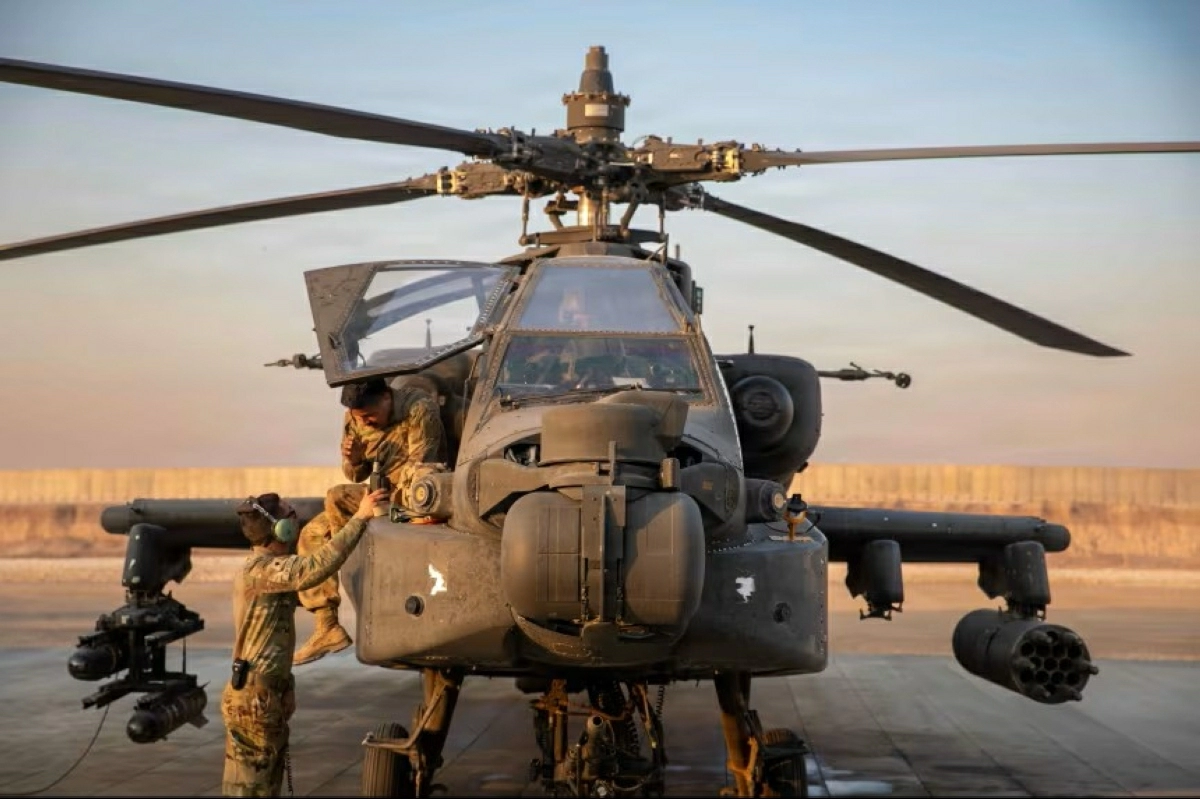

DUBAI — A US Army Apache helicopter gunship went down near the Strait of Hormuz on Monday, and the two crew members were safely rescued, The New York Times reported citing informed sources.It was not immediately clear whether the Apache was shot down by Iranian fire, experienced mechanical failure or encountered some other problem, one of the sources told the Times on condition of anonymity.The incident occurred after days in which hostilities in the region escalated and then ebbed, as Israel and Iran exchanged military strikes before stepping back, the latest example of the tenuous nature of the cease-fire.US President Donald Trump told reporters early Tuesday that the crew members were fine.“The pilots are fine, nobody injured,” Trump told reporters in New York after attending Monday night’s NBA Finals game.He did not provide further details, saying that a report on the incident would be issued soon.The US military has used Apaches, as well as armed MQ-9 Reaper drones and F/A-18 and F-35 attack planes, as part of an aggressive effort by Central Command to challenge Iran’s effective closure of the Strait of Hormuz to most commercial traffic.While it’s not clear what the Apache was doing at the time, they have previously been used to attack Iranian small boats as part of the US blockade of Iranian ports.Apache helicopters are primarily used for precision strikes, close air support, and air reconnaissance, according to the Central Command website.If confirmed, it would be the first loss of an Apache since the conflict with Iran began.Iran has shot down about 30 unmanned Reaper drones, and a handful of US fighter jets have been lost to hostile and friendly fire since the war started on Feb. 28. But this would be the first Apache lost in the conflict.The US military has lost dozens of aircraft –– including at least five fighter jets, seven Stratotanker refueling aircraft, a search-and-rescue helicopter and more then two dozens drones –– since the war with Iran began in late February, according to a Congressional Research Service report issued in May.In early April, the US military had to launch a risky operation to rescue one of the pilots of a F-15E Strike Eagle that was shot down inside Iran. The military had to blow up two of its own special operations aircraft on the ground in Iran during the covert mission, which involved hundreds of American military and intelligence personnel, including special operations forces.In March, a KC-135 Stratotanker refueling aircraft crashed in western Iraq, killing all six crew members onboard. And days earlier, three US F-15 fighter jets were mistakenly shot down by Kuwaiti air defenses, with all crew members ejecting safely.A number of aircraft were damaged in Iranian strikes on US airbases in the region, while other aircraft sustained damage after coming under Iranian fire while they were in the air.Last month, Central Command posted imagery on social media of Adm. Brad Cooper, the head of the command, flying over waters in or near the strait on the eve of an effort by the US Navy to help guide commercial ships through the strait, a short-lived operation called Project Freedom.The AH-64 Apache gunship, which is armed with Hellfire missiles, is one of the most fearsome types of aircraft operating in the region. They patrol the strategic waterway in part to deter small-boat attacks and to shoot down drones.But the helicopters have been pushing closer to Iranian territory — including islands the Iranians control in the Gulf — as part of the aggressive posture Central Command has maintained even as the United States and Iran have engaged in negotiations to reopen the strait.In response to Iran’s blockade, the United States imposed a blockade of its own on April 13, barring commercial vessels from entering or leaving an Iranian port. Since then, US military ships have turned away 134 vessels.The Navy has disabled seven other vessels that ignored American warnings to turn back, including a Palau-flagged oil tanker as it steamed through international waters in the Gulf of Oman toward Iran on Monday, Central Command said in a statement.DUBAI — A US Army Apache helicopter gunship went down near the Strait of Hormuz on Monday, and the two crew members were safely rescued, The New York Times reported citing informed sources.It was not immediately clear whether the Apache was shot down by Iranian fire, experienced mechanical failure or encountered some other problem, one of the sources told the Times on condition of anonymity.The incident occurred after days in which hostilities in the region escalated and then ebbed, as Israel and Iran exchanged military strikes before stepping back, the latest example of the tenuous nature of the cease-fire.US President Donald Trump told reporters early Tuesday that the crew members were fine.“The pilots are fine, nobody injured,” Trump told reporters in New York after attending Monday night’s NBA Finals game.He did not provide further details, saying that a report on the incident would be issued soon.The US military has used Apaches, as well as armed MQ-9 Reaper drones and F/A-18 and F-35 attack planes, as part of an aggressive effort by Central Command to challenge Iran’s effective closure of the Strait of Hormuz to most commercial traffic.While it’s not clear what the Apache was doing at the time, they have previously been used to attack Iranian small boats as part of the US blockade of Iranian ports.Apache helicopters are primarily used for precision strikes, close air support, and air reconnaissance, according to the Central Command website.If confirmed, it would be the first loss of an Apache since the conflict with Iran began.Iran has shot down about 30 unmanned Reaper drones, and a handful of US fighter jets have been lost to hostile and friendly fire since the war started on Feb. 28. But this would be the first Apache lost in the conflict.The US military has lost dozens of aircraft –– including at least five fighter jets, seven Stratotanker refueling aircraft, a search-and-rescue helicopter and more then two dozens drones –– since the war with Iran began in late February, according to a Congressional Research Service report issued in May.In early April, the US military had to launch a risky operation to rescue one of the pilots of a F-15E Strike Eagle that was shot down inside Iran. The military had to blow up two of its own special operations aircraft on the ground in Iran during the covert mission, which involved hundreds of American military and intelligence personnel, including special operations forces.In March, a KC-135 Stratotanker refueling aircraft crashed in western Iraq, killing all six crew members onboard. And days earlier, three US F-15 fighter jets were mistakenly shot down by Kuwaiti air defenses, with all crew members ejecting safely.A number of aircraft were damaged in Iranian strikes on US airbases in the region, while other aircraft sustained damage after coming under Iranian fire while they were in the air.Last month, Central Command posted imagery on social media of Adm. Brad Cooper, the head of the command, flying over waters in or near the strait on the eve of an effort by the US Navy to help guide commercial ships through the strait, a short-lived operation called Project Freedom.The AH-64 Apache gunship, which is armed with Hellfire missiles, is one of the most fearsome types of aircraft operating in the region. They patrol the strategic waterway in part to deter small-boat attacks and to shoot down drones.But the helicopters have been pushing closer to Iranian territory — including islands the Iranians control in the Gulf — as part of the aggressive posture Central Command has maintained even as the United States and Iran have engaged in negotiations to reopen the strait.In response to Iran’s blockade, the United States imposed a blockade of its own on April 13, barring commercial vessels from entering or leaving an Iranian port. Since then, US military ships have turned away 134 vessels.The Navy has disabled seven other vessels that ignored American warnings to turn back, including a Palau-flagged oil tanker as it steamed through international waters in the Gulf of Oman toward Iran on Monday, Central Command said in a statement.
Crew rescued after US Army Apache helicopter goes down near Strait of Hormuz