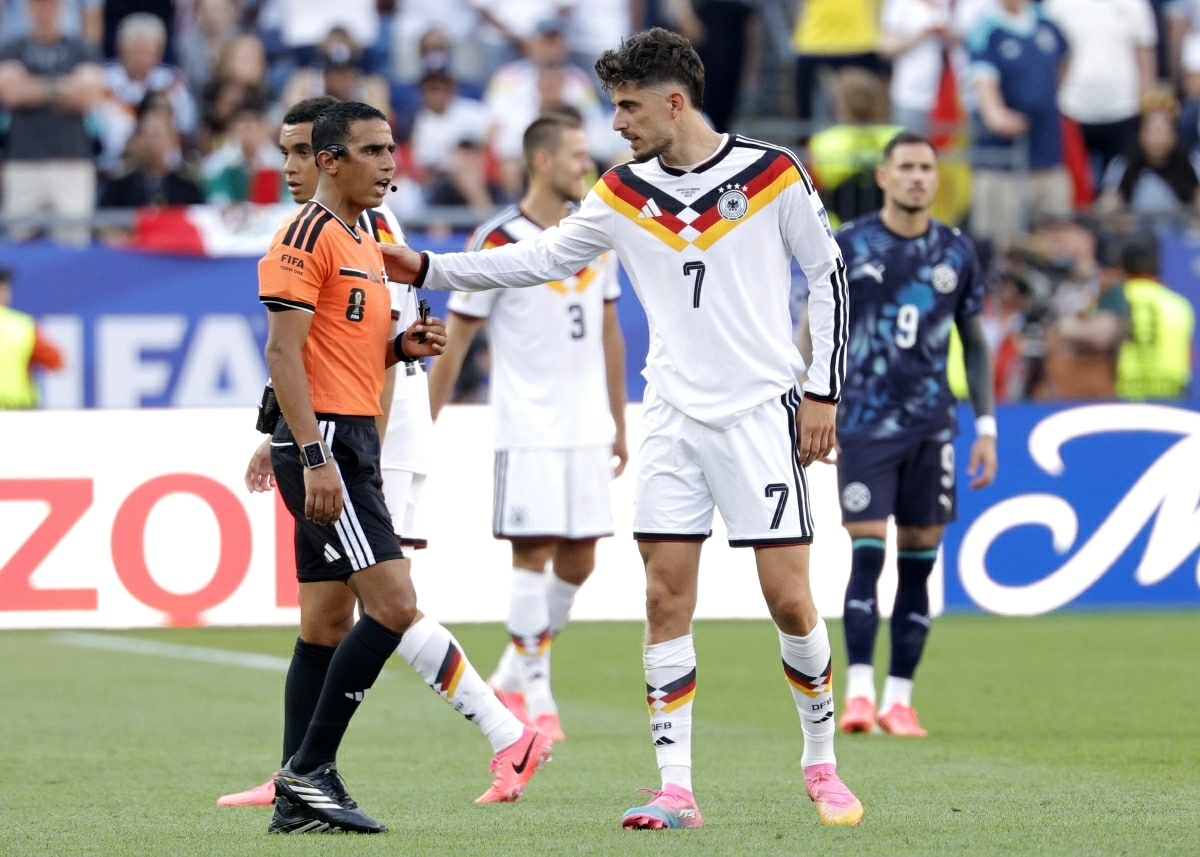

ATLANTA — FIFA has defended the controversial VAR decision that disallowed Germany’s extra-time goal against Paraguay, saying referees were correctly applying stricter instructions designed to protect goalkeepers.Germany thought it had taken a 2-1 lead in extra time of Monday’s World Cup round-of-32 match when Jonathan Tah headed home from a corner, only for the goal to be ruled out after a video review.VAR determined that Germany defender Waldemar Anton had fouled Paraguay goalkeeper Orlando Gill by impeding him before the header, despite replays showing only minimal contact.Germany eventually lost 4-3 in a penalty shootout, with Tah missing the decisive spot kick as Paraguay completed one of the biggest upsets of the tournament.FIFA refereeing chief Pierluigi Collina said officials had been instructed before the tournament to penalize attacking players who deliberately block opponents, particularly goalkeepers, without attempting to play the ball.”Although keeping a position is not a foul per se, when an attacking player is not interested in the ball and deliberately moves, even marginally, with the clear intention of obstructing opponents’ movement and prevents him from defending, then referees, and VAR when needed, should carefully analyze the incident and intervene,” Collina said.”This is especially the case when the tactic aims to prevent the opposing goalkeeper from being able to defend the goal.”Collina added that the guidance had been communicated to teams before the tournament.”Coaches and players were informed, so it should come as no surprise that referees will punish these fouls,” he said.The decision sparked debate after Germany’s elimination, with many questioning whether the contact warranted overturning what would have been the likely winning goal.Collina also praised several new tournament regulations aimed at reducing timewasting, saying they had produced positive results.The 2026 World Cup introduced stricter limits on goal kicks, throw-ins and substitutions, while injured players are now required to remain off the field for one minute before returning.”These measures have all been very effective and unanimously considered as very positive innovations,” Collina said.ATLANTA — FIFA has defended the controversial VAR decision that disallowed Germany’s extra-time goal against Paraguay, saying referees were correctly applying stricter instructions designed to protect goalkeepers.Germany thought it had taken a 2-1 lead in extra time of Monday’s World Cup round-of-32 match when Jonathan Tah headed home from a corner, only for the goal to be ruled out after a video review.VAR determined that Germany defender Waldemar Anton had fouled Paraguay goalkeeper Orlando Gill by impeding him before the header, despite replays showing only minimal contact.Germany eventually lost 4-3 in a penalty shootout, with Tah missing the decisive spot kick as Paraguay completed one of the biggest upsets of the tournament.FIFA refereeing chief Pierluigi Collina said officials had been instructed before the tournament to penalize attacking players who deliberately block opponents, particularly goalkeepers, without attempting to play the ball.”Although keeping a position is not a foul per se, when an attacking player is not interested in the ball and deliberately moves, even marginally, with the clear intention of obstructing opponents’ movement and prevents him from defending, then referees, and VAR when needed, should carefully analyze the incident and intervene,” Collina said.”This is especially the case when the tactic aims to prevent the opposing goalkeeper from being able to defend the goal.”Collina added that the guidance had been communicated to teams before the tournament.”Coaches and players were informed, so it should come as no surprise that referees will punish these fouls,” he said.The decision sparked debate after Germany’s elimination, with many questioning whether the contact warranted overturning what would have been the likely winning goal.Collina also praised several new tournament regulations aimed at reducing timewasting, saying they had produced positive results.The 2026 World Cup introduced stricter limits on goal kicks, throw-ins and substitutions, while injured players are now required to remain off the field for one minute before returning.”These measures have all been very effective and unanimously considered as very positive innovations,” Collina said.
FIFA explains VAR ruling behind Germany's World Cup exit