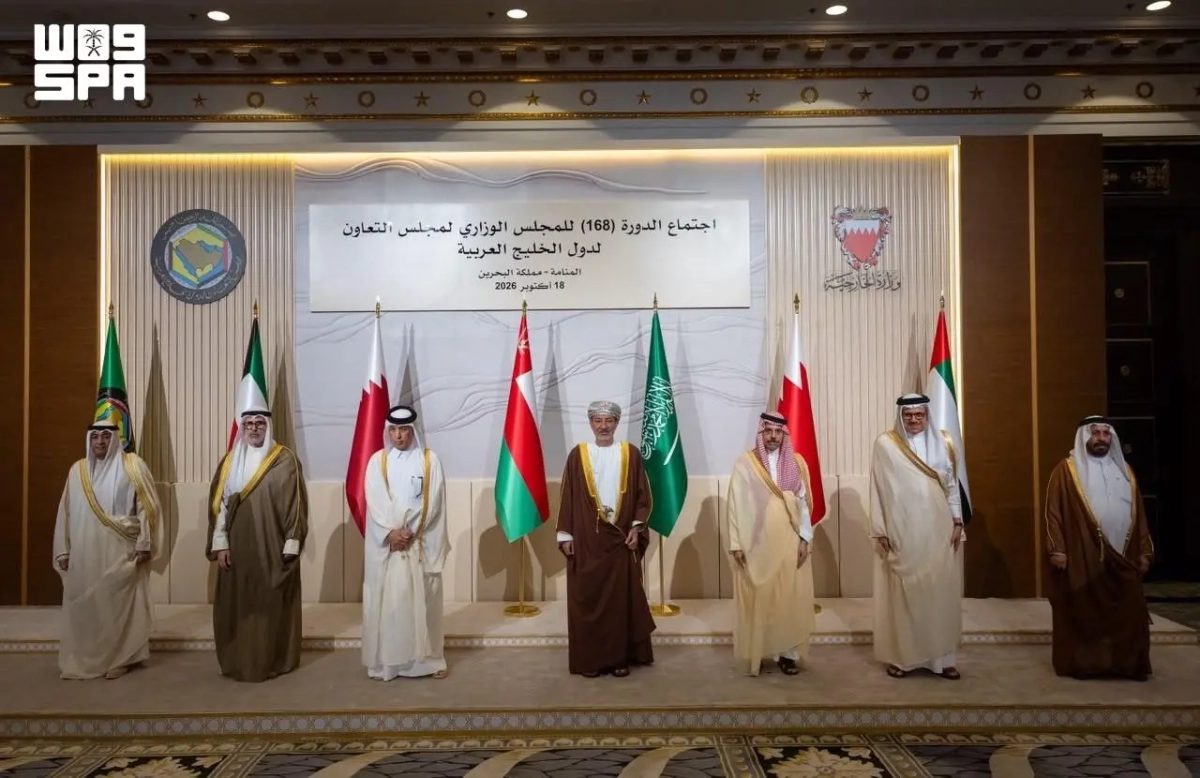

MANAMA — The Ministerial Council of the Gulf Cooperation Council (GCC) called for designating the Houthi militia as a terrorist group and dealing with it in the same manner the international system addresses terrorist groups that threaten security, peace, development, and prosperity. In a final communique, issued at the end of the 168th session of the Ministerial Council, held in Manama on Sunday, the council also underlined the need to halt all support that enables the militia to acquire missiles and unmanned aerial vehicles (UAVs). Dr. Abdullatif Al Zayani, Minister of Foreign Affairs of Bahrain and Chairman of the current session of the Ministerial Council, presided over the session. The Council condemned in the strongest terms the continuous attacks launched by the Houthi militia on Saudi Arabia, including the targeting of the Two Holy Mosques and surrounding areas, as well as civilian airports and vital facilities, which have resulted in civilian casualties and injuries, in flagrant violation of international law and international humanitarian law. The council expressed its sincere condolences to the families of the victims and its wishes for a swift recovery to the injured. The Council underscored the GCC member states’ full solidarity with Saudi Arabia, their united stance alongside it, and their support for all measures it undertakes to safeguard its sovereignty and protect its security and interests. The Council stressed that the security of the GCC member states is indivisible, and that any aggression against any member state constitutes a direct aggression against all GCC states, pursuant to the Joint Defense Agreement. It further reaffirmed the inherent right of the GCC member states to self-defense, individually and collectively, in accordance with Article 51 of the United Nations (UN) Charter, and to take all necessary measures to protect their citizens and residents, and preserve their sovereignty, security, stability, and interests. The Ministerial Council called for the implementation of the UN Security Council resolutions adopted regarding Yemen and the Houthi rebellion, and attacks on vessels in the Red Sea. The Council demanded that the UN and the international community ensure the rigorous enforcement of the arms embargo on the Houthi militia stipulated in those resolutions. It further called upon the Security Council, and its permanent members in particular, to shoulder their responsibilities in maintaining international peace and security, enforce its resolutions, and treat the freedom of maritime and aerial navigation as a shared international interest that admits no selectivity. The Council welcomed the Presidential Statement adopted by consensus by the UN Security Council on October 15, which condemned the continuous and escalating Houthi attacks on Saudi Arabia, including the targeting of Aramco facilities, affirmed its right to self-defense in accordance with international law, and condemned attacks and threats against commercial shipping in the Red Sea and the Bab Al Mandeb Strait. The statement also underscored the full implementation of the arms embargo imposed pursuant to Resolution 2216. The GCC member states underlined the sovereignty, unity, and territorial integrity of Yemen, and support efforts aimed at reaching a political solution to the Yemeni crisis through dialogue and understanding, in accordance with the three references: the outcomes of the Comprehensive National Dialogue Conference, the GCC Initiative, and relevant UN Security Council resolutions, thereby contributing to fulfilling the aspirations of the Yemeni people for peace, security, and stability. The Ministerial Council condemned the continued Iranian missile and drone attacks against the GCC states and Jordan, whether directly or through its proxies in the region. These attacks have targeted civilian facilities, public service facilities, residential areas and diplomatic missions, resulting in significant material damage and posing a threat to the security and safety of citizens and residents. The Council held Iran fully responsible for these attacks and their consequences, categorically rejecting all claims put forward by Iran to justify them. It demanded the immediate and unconditional cessation of all attacks, provocations and threats, and full compliance with UN Security Council Resolution 2817. The Council called on the UN Security Council and the international community to fulfil their responsibilities and take the necessary measures to ensure the full implementation of the resolution, hold those responsible for these attacks accountable, and compel Iran to provide full reparation for all resulting damage, in accordance with UN Human Rights Council Resolution 61/1. The Council affirmed that the Strait of Hormuz, the Bab Al Mandeb Strait and the Red Sea are vital waterways whose importance extends beyond the countries of the region, serving as major arteries of the global economy. Ensuring their security and the safety and freedom of navigation through them is a shared international interest and responsibility. The Council stressed that closing these waterways, obstructing navigation, targeting commercial vessels and their crews, laying mines, or imposing unlawful fees or restrictions on passage constitutes a threat to international peace and security and exposes energy, food and medicine supplies, as well as global trade, to serious risks.The Council rejected any attempt to subject the right of transit passage to prior authorization or imposed routes, in violation of the 1982 UN Convention on the Law of the Sea and customary international law. It called on the International Maritime Organization to continue fulfilling its responsibilities in safeguarding maritime navigation and protecting seafarers. The Council further emphasized the necessity of restoring maritime security and freedom of navigation, and returning conditions in the Strait of Hormuz to those prevailing before 28 February 2026, in accordance with the rules and principles of international law, the 1982 UN Convention on the Law of the Sea, and the Agreement on the Delimitation of Maritime Boundaries and the Continental Shelf signed between the Sultanate of Oman and Iran on 25 July 1974, while respecting the sovereignty of coastal states and the rights of the states concerned.The Council called for a return to dialogue and diplomacy to overcome the current crisis and safeguard the security and stability of the region and the safety of its peoples. It expressed its support for the mediation efforts and diplomatic initiatives undertaken by countries in the region, as well as friendly nations, to reach a political solution that prevents the region from descending into further tensions and instability, which would serve neither the interests of the region nor those of the wider world. The Council emphasized that any understandings must address all outstanding issues, including Iran’s nuclear program, missile program, drones and support for proxies, based on the principles of respect for sovereignty, good neighborliness and non-interference in internal affairs. It also stressed the importance of involving the GCC states in any negotiations or arrangements affecting their security and interests.MANAMA — The Ministerial Council of the Gulf Cooperation Council (GCC) called for designating the Houthi militia as a terrorist group and dealing with it in the same manner the international system addresses terrorist groups that threaten security, peace, development, and prosperity. In a final communique, issued at the end of the 168th session of the Ministerial Council, held in Manama on Sunday, the council also underlined the need to halt all support that enables the militia to acquire missiles and unmanned aerial vehicles (UAVs). Dr. Abdullatif Al Zayani, Minister of Foreign Affairs of Bahrain and Chairman of the current session of the Ministerial Council, presided over the session. The Council condemned in the strongest terms the continuous attacks launched by the Houthi militia on Saudi Arabia, including the targeting of the Two Holy Mosques and surrounding areas, as well as civilian airports and vital facilities, which have resulted in civilian casualties and injuries, in flagrant violation of international law and international humanitarian law. The council expressed its sincere condolences to the families of the victims and its wishes for a swift recovery to the injured. The Council underscored the GCC member states’ full solidarity with Saudi Arabia, their united stance alongside it, and their support for all measures it undertakes to safeguard its sovereignty and protect its security and interests. The Council stressed that the security of the GCC member states is indivisible, and that any aggression against any member state constitutes a direct aggression against all GCC states, pursuant to the Joint Defense Agreement. It further reaffirmed the inherent right of the GCC member states to self-defense, individually and collectively, in accordance with Article 51 of the United Nations (UN) Charter, and to take all necessary measures to protect their citizens and residents, and preserve their sovereignty, security, stability, and interests. The Ministerial Council called for the implementation of the UN Security Council resolutions adopted regarding Yemen and the Houthi rebellion, and attacks on vessels in the Red Sea. The Council demanded that the UN and the international community ensure the rigorous enforcement of the arms embargo on the Houthi militia stipulated in those resolutions. It further called upon the Security Council, and its permanent members in particular, to shoulder their responsibilities in maintaining international peace and security, enforce its resolutions, and treat the freedom of maritime and aerial navigation as a shared international interest that admits no selectivity. The Council welcomed the Presidential Statement adopted by consensus by the UN Security Council on October 15, which condemned the continuous and escalating Houthi attacks on Saudi Arabia, including the targeting of Aramco facilities, affirmed its right to self-defense in accordance with international law, and condemned attacks and threats against commercial shipping in the Red Sea and the Bab Al Mandeb Strait. The statement also underscored the full implementation of the arms embargo imposed pursuant to Resolution 2216. The GCC member states underlined the sovereignty, unity, and territorial integrity of Yemen, and support efforts aimed at reaching a political solution to the Yemeni crisis through dialogue and understanding, in accordance with the three references: the outcomes of the Comprehensive National Dialogue Conference, the GCC Initiative, and relevant UN Security Council resolutions, thereby contributing to fulfilling the aspirations of the Yemeni people for peace, security, and stability. The Ministerial Council condemned the continued Iranian missile and drone attacks against the GCC states and Jordan, whether directly or through its proxies in the region. These attacks have targeted civilian facilities, public service facilities, residential areas and diplomatic missions, resulting in significant material damage and posing a threat to the security and safety of citizens and residents. The Council held Iran fully responsible for these attacks and their consequences, categorically rejecting all claims put forward by Iran to justify them. It demanded the immediate and unconditional cessation of all attacks, provocations and threats, and full compliance with UN Security Council Resolution 2817. The Council called on the UN Security Council and the international community to fulfil their responsibilities and take the necessary measures to ensure the full implementation of the resolution, hold those responsible for these attacks accountable, and compel Iran to provide full reparation for all resulting damage, in accordance with UN Human Rights Council Resolution 61/1. The Council affirmed that the Strait of Hormuz, the Bab Al Mandeb Strait and the Red Sea are vital waterways whose importance extends beyond the countries of the region, serving as major arteries of the global economy. Ensuring their security and the safety and freedom of navigation through them is a shared international interest and responsibility. The Council stressed that closing these waterways, obstructing navigation, targeting commercial vessels and their crews, laying mines, or imposing unlawful fees or restrictions on passage constitutes a threat to international peace and security and exposes energy, food and medicine supplies, as well as global trade, to serious risks.The Council rejected any attempt to subject the right of transit passage to prior authorization or imposed routes, in violation of the 1982 UN Convention on the Law of the Sea and customary international law. It called on the International Maritime Organization to continue fulfilling its responsibilities in safeguarding maritime navigation and protecting seafarers. The Council further emphasized the necessity of restoring maritime security and freedom of navigation, and returning conditions in the Strait of Hormuz to those prevailing before 28 February 2026, in accordance with the rules and principles of international law, the 1982 UN Convention on the Law of the Sea, and the Agreement on the Delimitation of Maritime Boundaries and the Continental Shelf signed between the Sultanate of Oman and Iran on 25 July 1974, while respecting the sovereignty of coastal states and the rights of the states concerned.The Council called for a return to dialogue and diplomacy to overcome the current crisis and safeguard the security and stability of the region and the safety of its peoples. It expressed its support for the mediation efforts and diplomatic initiatives undertaken by countries in the region, as well as friendly nations, to reach a political solution that prevents the region from descending into further tensions and instability, which would serve neither the interests of the region nor those of the wider world. The Council emphasized that any understandings must address all outstanding issues, including Iran’s nuclear program, missile program, drones and support for proxies, based on the principles of respect for sovereignty, good neighborliness and non-interference in internal affairs. It also stressed the importance of involving the GCC states in any negotiations or arrangements affecting their security and interests.
GCC urges global designation of Houthis as terrorist group