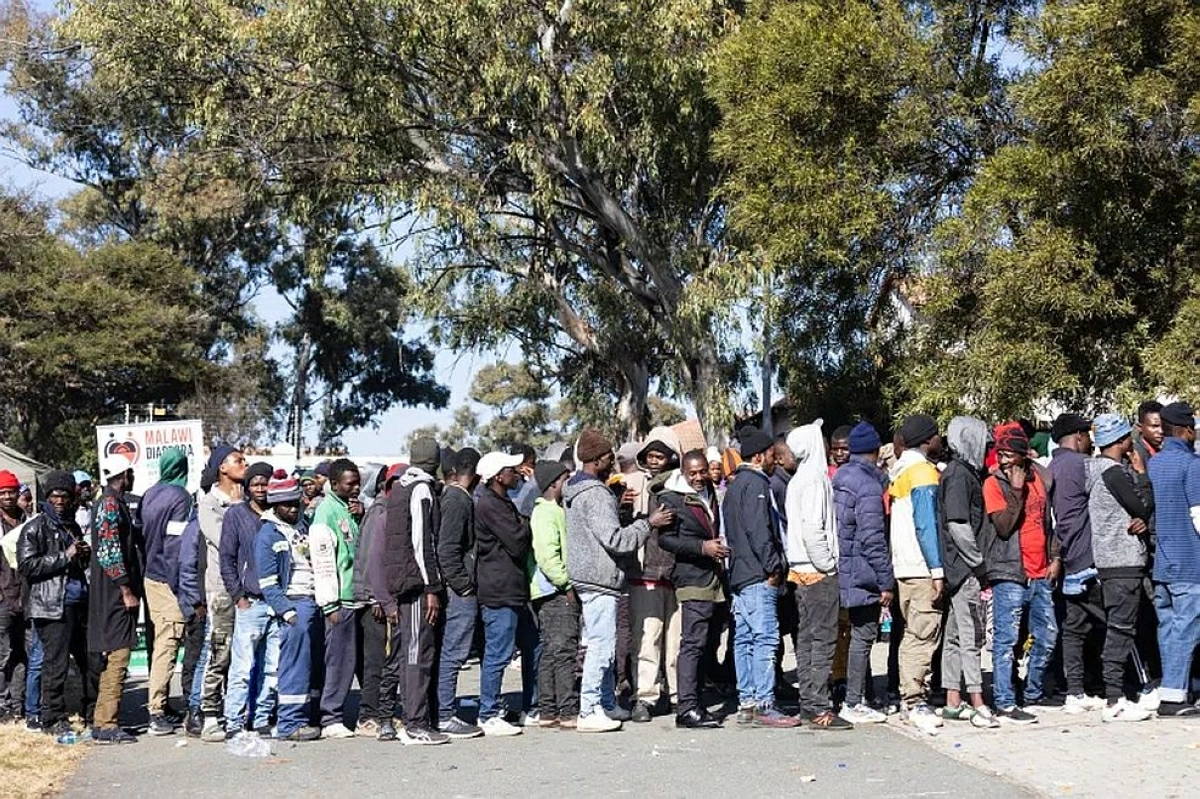

DURBAN — Businesses in South African cities have been shuttered and police have been deployed to the streets across the country because of fears that anti-immigration protests could turn violent.The protests mark an unofficial deadline set by campaigners for all undocumented foreigners to leave the country.President Cyril Ramaphosa on Monday urged demonstrators to refrain from “intimidation, threats or ultimatums”. He said the right to protest “does not allow people to threaten or intimidate others, or to engage in acts of vandalism or violence”.“Whatever the motivation, taking the law into one’s own hands is vigilantism,” he said.Many have already fled to escape violence and intimidation. South African police say 25,000 have been repatriated so far. Most are from other African countries.Anti-immigrant groups have given undocumented foreign nationals a “deadline” of Tuesday to leave the country. The groups have falsely claimed that undocumented immigrants will face arrest and deportation if they do not leave in time.The South African government has rejected the groups’ threats as false, but thousands of people have been pushed to flee.The demonstrators were both working-class and middle-class South Africans and from different tribes around the country, according to an Al Jazeera correspondent.“They all have one goal, which is basically that they want the government to do something about undocumented foreigners in the country,” she said.The Ministry of Police said the protests were largely peaceful across the country, with isolated incidents of looting and attempted looting.Johannesburg, where one of the protests is taking place, is unusually quiet. Shops in the city centre are closed, while police visibility is high on major streets.Some protesters threw bricks, breaking the windows of some flats in Yeoville, a suburb in Johannesburg where many African migrants live.Police said that five people were arrested in Johannesburg’s biggest township, Soweto, for allegedly looting a foreign-owned shop.The protests started as small gatherings of anti-immigrant groups in April but have been growing recently.The country has seen weeks of xenophobic attacks, with at least two Mozambicans, an Ethiopian and a Malawian killed in anti-immigrant violence, the AFP news agency reported.Although the groups say they are targeting undocumented migrants, foreign people who are in South Africa legally are also at risk. Thousands of foreign nationals are camping outside consulates and shelters for protection. Others say they have been evicted or fired, their landlords and employers citing fears of fines or attacks.Many foreign nationals have already fled the country. Some have left on their own, while others have asked their embassies for assistance. Several African countries have sent aircraft and buses to repatriate their fleeing nationals.While some political parties have been calling for peaceful protests, other politicians have increasingly been using anti-immigrant rhetoric as the country’s November elections approach.South Africa has a history of anti-immigrant violence. In 2008, 62 people were killed in riots, and more xenophobic attacks occurred in 2015 and 2016. At least 12 people were killed in 2019 when armed mobs attacked foreign-owned businesses around Johannesburg.DURBAN — Businesses in South African cities have been shuttered and police have been deployed to the streets across the country because of fears that anti-immigration protests could turn violent.The protests mark an unofficial deadline set by campaigners for all undocumented foreigners to leave the country.President Cyril Ramaphosa on Monday urged demonstrators to refrain from “intimidation, threats or ultimatums”. He said the right to protest “does not allow people to threaten or intimidate others, or to engage in acts of vandalism or violence”.“Whatever the motivation, taking the law into one’s own hands is vigilantism,” he said.Many have already fled to escape violence and intimidation. South African police say 25,000 have been repatriated so far. Most are from other African countries.Anti-immigrant groups have given undocumented foreign nationals a “deadline” of Tuesday to leave the country. The groups have falsely claimed that undocumented immigrants will face arrest and deportation if they do not leave in time.The South African government has rejected the groups’ threats as false, but thousands of people have been pushed to flee.The demonstrators were both working-class and middle-class South Africans and from different tribes around the country, according to an Al Jazeera correspondent.“They all have one goal, which is basically that they want the government to do something about undocumented foreigners in the country,” she said.The Ministry of Police said the protests were largely peaceful across the country, with isolated incidents of looting and attempted looting.Johannesburg, where one of the protests is taking place, is unusually quiet. Shops in the city centre are closed, while police visibility is high on major streets.Some protesters threw bricks, breaking the windows of some flats in Yeoville, a suburb in Johannesburg where many African migrants live.Police said that five people were arrested in Johannesburg’s biggest township, Soweto, for allegedly looting a foreign-owned shop.The protests started as small gatherings of anti-immigrant groups in April but have been growing recently.The country has seen weeks of xenophobic attacks, with at least two Mozambicans, an Ethiopian and a Malawian killed in anti-immigrant violence, the AFP news agency reported.Although the groups say they are targeting undocumented migrants, foreign people who are in South Africa legally are also at risk. Thousands of foreign nationals are camping outside consulates and shelters for protection. Others say they have been evicted or fired, their landlords and employers citing fears of fines or attacks.Many foreign nationals have already fled the country. Some have left on their own, while others have asked their embassies for assistance. Several African countries have sent aircraft and buses to repatriate their fleeing nationals.While some political parties have been calling for peaceful protests, other politicians have increasingly been using anti-immigrant rhetoric as the country’s November elections approach.South Africa has a history of anti-immigrant violence. In 2008, 62 people were killed in riots, and more xenophobic attacks occurred in 2015 and 2016. At least 12 people were killed in 2019 when armed mobs attacked foreign-owned businesses around Johannesburg.
Heavy security in South Africa as anti-migrant protesters take to the streets