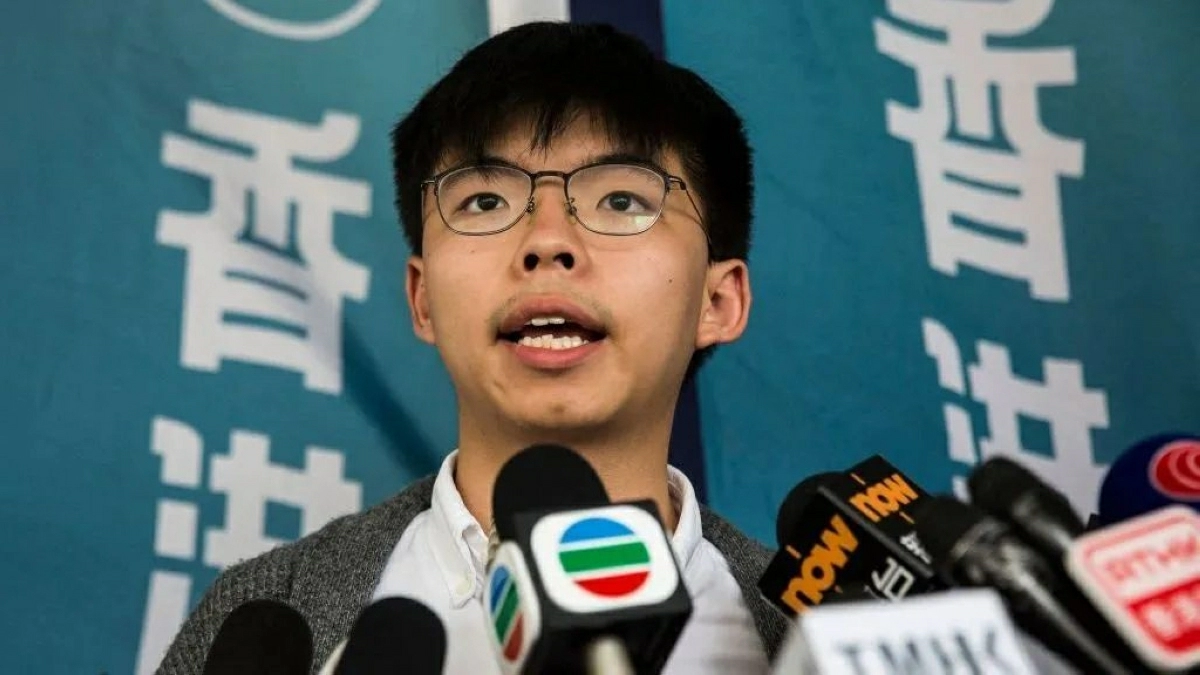

HONG KONG— A court has sentenced Hong Kong pro-democracy campaigner Joshua Wong to 10 years in prison over a second national security conviction, extending his incarceration just two months before he was due to be freed.The term handed down by the Hong Kong High Court on Thursday was among the heaviest imposed under the Beijing-imposed national security law, surpassed only by former media tycoon Jimmy Lai’s 20-year sentence and matching that given to former law professor Benny Tai.Wong became the face of Hong Kong’s now-decimated pro-democracy movement when he was a teenager, and entered prison for the first time at 23. He turned 30 last month.On Thursday, he arrived in court wearing a dark blue long-sleeved shirt, khaki trousers and black-rimmed glasses. He looked slimmer compared to his previous public appearances.He nodded in greeting towards members of the packed public gallery, and took notes intermittently as the judge read out the reasons for his sentencing.A crowd had gathered outside the court, with dozens of Hongkongers having queued for hours hoping to get a seat in the public gallery. There was also a heavy police presence.Wong is already serving time for subversion and was due to be freed early next year when he was handed the latest charges, which he has pleaded guilty to earlier in September.Two months and two days of the 10-year term will be served concurrently with his ongoing sentence, the judge said on Thursday.In September, he pleaded guilty to conspiring with fellow activists to invite foreign sanctions against China and Hong Kong in 2020 – the year Beijing introduced the city’s National Security Law (NSL), which led to a crackdown on dissent, the shuttering of vocal news outlets, and the dissolution of civic groups.Wong is among hundreds of campaigners and ordinary Hongkongers arrested under the law, which was imposed following explosive pro-democracy protests against Beijing’s growing control.Critics say the far-reaching law has silenced dissent, but authorities argue that it is needed to maintain stability and deny it has weakened the city’s cherished autonomy.Beijing imposed the sweeping national security law on Hong Kong after huge and often violent pro-democracy protests convulsed the international financial hub in 2019.The law tightened Beijing’s grip on the former British colony. Both the Hong Kong and Chinese governments say it has helped restore stability, but rights groups say the law has stifled dissent and made any criticism of the government risky.China’s leaders have previously labeled Wong and other activists “separatists.”In the latest case, prosecutors accused Wong of conspiring with others to lobby the United States and other countries to sanction China and Hong Kong, prior to the NSL’s imposition.This, they said, happened through social media campaigning, as well as meetings with US politicians, including former House Speaker Nancy Pelosi and then Senator Marco Rubio, now the US secretary of state.The lobbying continued after the law was enacted, prosecutors said, with the US sanctioning more than a dozen Hong Kong and Chinese officials after 2020.A Hong Kong government spokesperson earlier dismissed international criticism of Wong’s prosecution.“The lawful exercise of free speech must not be conflated with taking actions to collude with a foreign country to impose ‘sanctions’ to harm one’s own country,” they said in September.HONG KONG— A court has sentenced Hong Kong pro-democracy campaigner Joshua Wong to 10 years in prison over a second national security conviction, extending his incarceration just two months before he was due to be freed.The term handed down by the Hong Kong High Court on Thursday was among the heaviest imposed under the Beijing-imposed national security law, surpassed only by former media tycoon Jimmy Lai’s 20-year sentence and matching that given to former law professor Benny Tai.Wong became the face of Hong Kong’s now-decimated pro-democracy movement when he was a teenager, and entered prison for the first time at 23. He turned 30 last month.On Thursday, he arrived in court wearing a dark blue long-sleeved shirt, khaki trousers and black-rimmed glasses. He looked slimmer compared to his previous public appearances.He nodded in greeting towards members of the packed public gallery, and took notes intermittently as the judge read out the reasons for his sentencing.A crowd had gathered outside the court, with dozens of Hongkongers having queued for hours hoping to get a seat in the public gallery. There was also a heavy police presence.Wong is already serving time for subversion and was due to be freed early next year when he was handed the latest charges, which he has pleaded guilty to earlier in September.Two months and two days of the 10-year term will be served concurrently with his ongoing sentence, the judge said on Thursday.In September, he pleaded guilty to conspiring with fellow activists to invite foreign sanctions against China and Hong Kong in 2020 – the year Beijing introduced the city’s National Security Law (NSL), which led to a crackdown on dissent, the shuttering of vocal news outlets, and the dissolution of civic groups.Wong is among hundreds of campaigners and ordinary Hongkongers arrested under the law, which was imposed following explosive pro-democracy protests against Beijing’s growing control.Critics say the far-reaching law has silenced dissent, but authorities argue that it is needed to maintain stability and deny it has weakened the city’s cherished autonomy.Beijing imposed the sweeping national security law on Hong Kong after huge and often violent pro-democracy protests convulsed the international financial hub in 2019.The law tightened Beijing’s grip on the former British colony. Both the Hong Kong and Chinese governments say it has helped restore stability, but rights groups say the law has stifled dissent and made any criticism of the government risky.China’s leaders have previously labeled Wong and other activists “separatists.”In the latest case, prosecutors accused Wong of conspiring with others to lobby the United States and other countries to sanction China and Hong Kong, prior to the NSL’s imposition.This, they said, happened through social media campaigning, as well as meetings with US politicians, including former House Speaker Nancy Pelosi and then Senator Marco Rubio, now the US secretary of state.The lobbying continued after the law was enacted, prosecutors said, with the US sanctioning more than a dozen Hong Kong and Chinese officials after 2020.A Hong Kong government spokesperson earlier dismissed international criticism of Wong’s prosecution.“The lawful exercise of free speech must not be conflated with taking actions to collude with a foreign country to impose ‘sanctions’ to harm one’s own country,” they said in September.
Hong Kong democracy campaigner Joshua Wong handed another 10 years in jail