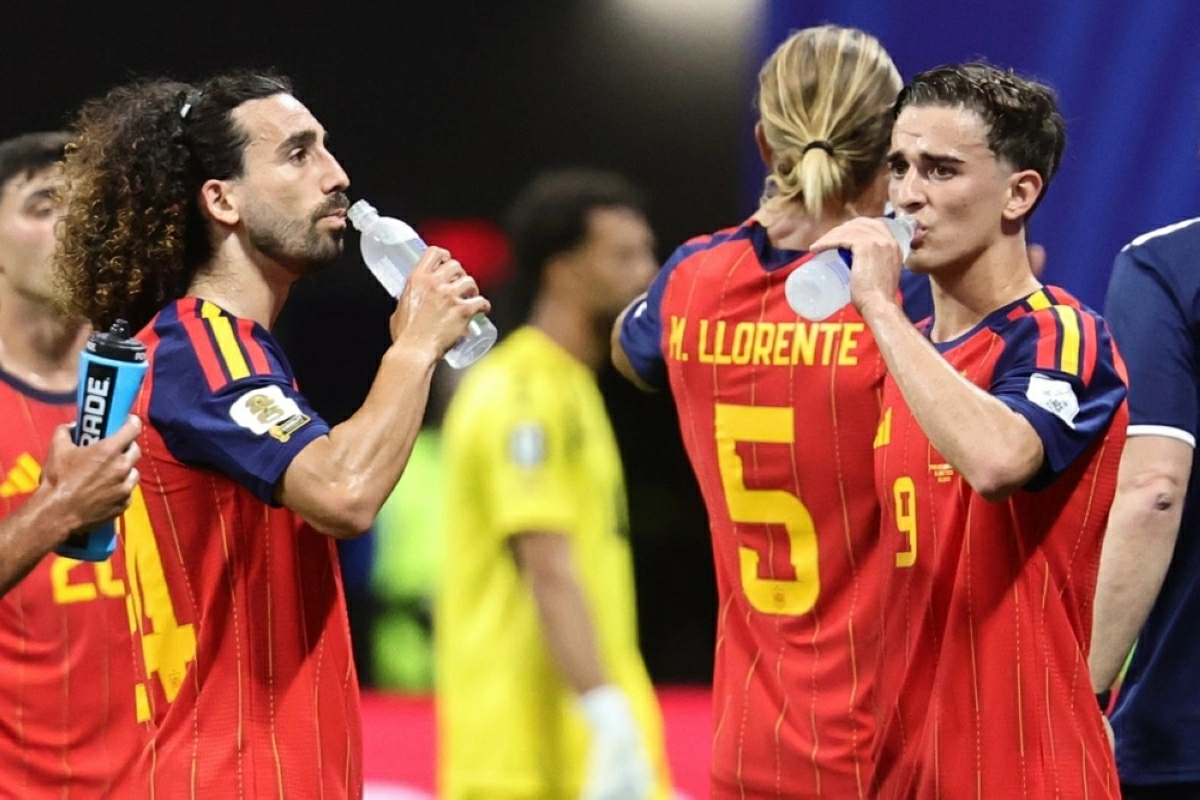

ATLANTA — FIFA’s mandatory hydration breaks at World Cup 2026 have quickly become one of the tournament’s most debated innovations, with players, coaches and pundits questioning whether the stoppages are helping player welfare at the expense of the game’s rhythm.Introduced to help teams cope with summer conditions across the United States, Canada and Mexico, the breaks occur around the 22nd minute of each half regardless of weather conditions or venue.While FIFA says the policy ensures equal treatment for all teams, critics argue the stoppages are disrupting momentum, creating unofficial tactical timeouts and altering the flow of matches.The debate intensified after Germany’s 7-1 victory over World Cup debutant Curaçao in Houston. Curaçao had stunned the four-time champions by equalizing at 1-1 and briefly threatened a major upset before a hydration break interrupted play. Germany regained control after the restart, scoring twice before halftime and eventually cruising to victory.Former England captain Alan Shearer said the stoppage appeared to halt Curaçao’s momentum, while former Manchester United midfielder Roy Keane likened the breaks to timeouts commonly seen in American sports.Coaches have openly acknowledged using the breaks for tactical discussions. Netherlands coach Ronald Koeman said the stoppages provide an opportunity to relay instructions and make adjustments that would otherwise be difficult during play.Statistics from the opening five days of the tournament suggest the breaks may be influencing matches. Goals were scored within 10 minutes of the restart in eight of the first 16 matches, with teams including Brazil, Canada, Australia, Sweden and Iran benefiting after tactical resets.The policy has also divided coaches. Spain manager Luis de la Fuente said hydration breaks make sense in extreme heat but questioned the need for them in climate-controlled stadiums such as Atlanta’s covered venue. Norway coach Ståle Solbakken echoed those concerns, describing the rule as unnecessary in cooler conditions.Broadcasters have further fueled criticism by using the stoppages for commercial breaks. In the United States, Fox cuts directly to advertisements during hydration intervals, while Spanish-language broadcaster Telemundo continues live coverage.Liverpool defender Virgil van Dijk said the interruptions are not ideal for television audiences, while France coach Didier Deschamps suggested football may simply be adapting to a new reality.”It is not two halves anymore,” Deschamps said. “It is almost four quarters.”FIFA has not indicated whether the policy will remain in place beyond the 2026 tournament. However, the English Football Association has already suggested similar breaks are unlikely to be introduced at UEFA Euro 2028, which will be hosted by the United Kingdom and Ireland.As temperatures continue to rise across several World Cup venues, the balance between player welfare and preserving the game’s traditional flow is likely to remain a major talking point throughout the tournament.ATLANTA — FIFA’s mandatory hydration breaks at World Cup 2026 have quickly become one of the tournament’s most debated innovations, with players, coaches and pundits questioning whether the stoppages are helping player welfare at the expense of the game’s rhythm.Introduced to help teams cope with summer conditions across the United States, Canada and Mexico, the breaks occur around the 22nd minute of each half regardless of weather conditions or venue.While FIFA says the policy ensures equal treatment for all teams, critics argue the stoppages are disrupting momentum, creating unofficial tactical timeouts and altering the flow of matches.The debate intensified after Germany’s 7-1 victory over World Cup debutant Curaçao in Houston. Curaçao had stunned the four-time champions by equalizing at 1-1 and briefly threatened a major upset before a hydration break interrupted play. Germany regained control after the restart, scoring twice before halftime and eventually cruising to victory.Former England captain Alan Shearer said the stoppage appeared to halt Curaçao’s momentum, while former Manchester United midfielder Roy Keane likened the breaks to timeouts commonly seen in American sports.Coaches have openly acknowledged using the breaks for tactical discussions. Netherlands coach Ronald Koeman said the stoppages provide an opportunity to relay instructions and make adjustments that would otherwise be difficult during play.Statistics from the opening five days of the tournament suggest the breaks may be influencing matches. Goals were scored within 10 minutes of the restart in eight of the first 16 matches, with teams including Brazil, Canada, Australia, Sweden and Iran benefiting after tactical resets.The policy has also divided coaches. Spain manager Luis de la Fuente said hydration breaks make sense in extreme heat but questioned the need for them in climate-controlled stadiums such as Atlanta’s covered venue. Norway coach Ståle Solbakken echoed those concerns, describing the rule as unnecessary in cooler conditions.Broadcasters have further fueled criticism by using the stoppages for commercial breaks. In the United States, Fox cuts directly to advertisements during hydration intervals, while Spanish-language broadcaster Telemundo continues live coverage.Liverpool defender Virgil van Dijk said the interruptions are not ideal for television audiences, while France coach Didier Deschamps suggested football may simply be adapting to a new reality.”It is not two halves anymore,” Deschamps said. “It is almost four quarters.”FIFA has not indicated whether the policy will remain in place beyond the 2026 tournament. However, the English Football Association has already suggested similar breaks are unlikely to be introduced at UEFA Euro 2028, which will be hosted by the United Kingdom and Ireland.As temperatures continue to rise across several World Cup venues, the balance between player welfare and preserving the game’s traditional flow is likely to remain a major talking point throughout the tournament.
Hydration breaks spark debate at World Cup 2026