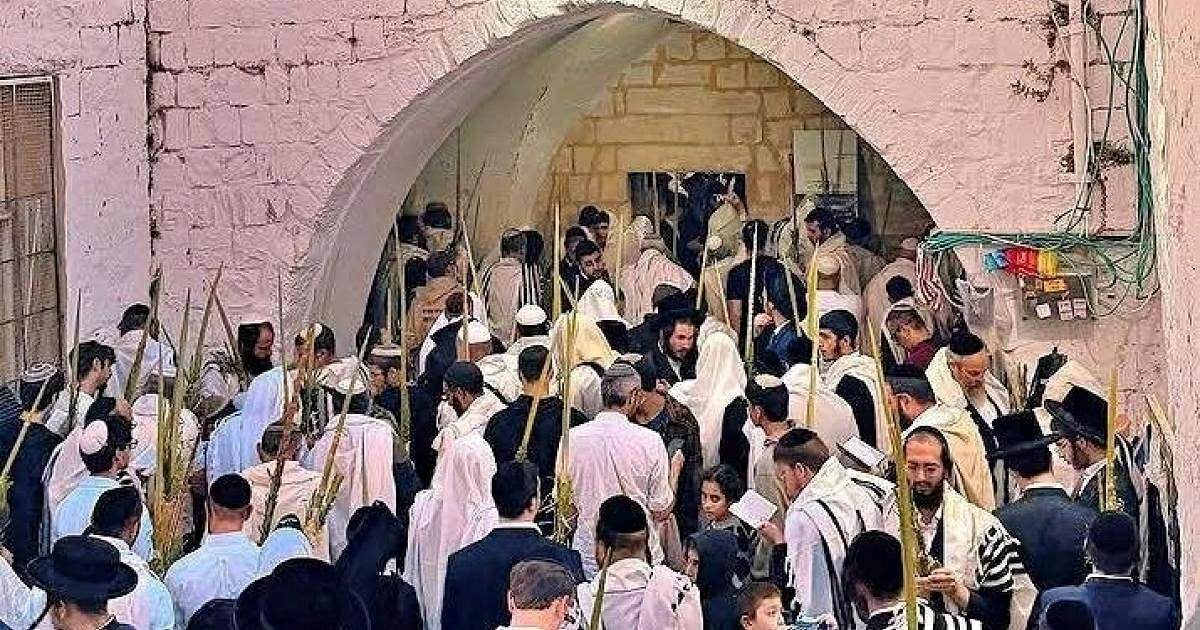

AMMAN — Hundreds of Israeli settlers stormed Joseph’s Tomb in the eastern part of Nablus early Thursday and performed Jewish rituals at the site under heavy protection from Israeli forces.Israeli military vehicles raided the eastern part of the city, forcing residents of homes surrounding the site to evacuate and turning the houses into military posts. Israeli snipers were also deployed on the rooftops of several homes, sources told Palestinian news agency WAFA.The sources added that buses carrying hundreds of settlers entered the eastern part of Nablus and headed to Joseph’s Tomb to perform Talmudic rituals.Earlier, Israeli forces raided the central vegetable market east of Nablus city, where they launched a search campaign and assaulted and abused a number of citizens and workers present there. The assaults triggered severe tension and led to confrontations in the vicinity of the market and the industrial area.The incident came amid intensified incursions by Israeli settlers into Muslim holy sites during the Jewish holiday of Sukkot, which began Sept. 26 and runs through Oct. 2.On Wednesday, nearly 2,500 Israeli settlers stormed the Al-Aqsa Mosque compound in occupied East Jerusalem during the holiday under Israeli police protection, according to the Jerusalem Islamic Waqf Department.The incursions have included Talmudic rituals, prayers, dancing and singing, according to the department.“Joseph’s Tomb” is located on the eastern edge of Nablus, an area under Palestinian control, and is one of the most tense sites in the West Bank.On Tuesday, Israeli settlers burned down a house near Nablus as the IDF increased its presence in the West Bank amid growing concerns of violent confrontations between Israelis and Palestinians.Since Israel occupied the West Bank in 1967, Jewish worshippers have regarded the site as a sacred religious shrine and believe the remains of the Prophet Joseph, son of Jacob (peace be upon them), are buried there.Archaeologists dispute that claim, saying the site is only a few centuries old and is likely the tomb of a Muslim scholar named Yusuf Dweikat.AMMAN — Hundreds of Israeli settlers stormed Joseph’s Tomb in the eastern part of Nablus early Thursday and performed Jewish rituals at the site under heavy protection from Israeli forces.Israeli military vehicles raided the eastern part of the city, forcing residents of homes surrounding the site to evacuate and turning the houses into military posts. Israeli snipers were also deployed on the rooftops of several homes, sources told Palestinian news agency WAFA.The sources added that buses carrying hundreds of settlers entered the eastern part of Nablus and headed to Joseph’s Tomb to perform Talmudic rituals.Earlier, Israeli forces raided the central vegetable market east of Nablus city, where they launched a search campaign and assaulted and abused a number of citizens and workers present there. The assaults triggered severe tension and led to confrontations in the vicinity of the market and the industrial area.The incident came amid intensified incursions by Israeli settlers into Muslim holy sites during the Jewish holiday of Sukkot, which began Sept. 26 and runs through Oct. 2.On Wednesday, nearly 2,500 Israeli settlers stormed the Al-Aqsa Mosque compound in occupied East Jerusalem during the holiday under Israeli police protection, according to the Jerusalem Islamic Waqf Department.The incursions have included Talmudic rituals, prayers, dancing and singing, according to the department.“Joseph’s Tomb” is located on the eastern edge of Nablus, an area under Palestinian control, and is one of the most tense sites in the West Bank.On Tuesday, Israeli settlers burned down a house near Nablus as the IDF increased its presence in the West Bank amid growing concerns of violent confrontations between Israelis and Palestinians.Since Israel occupied the West Bank in 1967, Jewish worshippers have regarded the site as a sacred religious shrine and believe the remains of the Prophet Joseph, son of Jacob (peace be upon them), are buried there.Archaeologists dispute that claim, saying the site is only a few centuries old and is likely the tomb of a Muslim scholar named Yusuf Dweikat.
Israeli settlers storm ‘Joseph’s Tomb’ under military protection