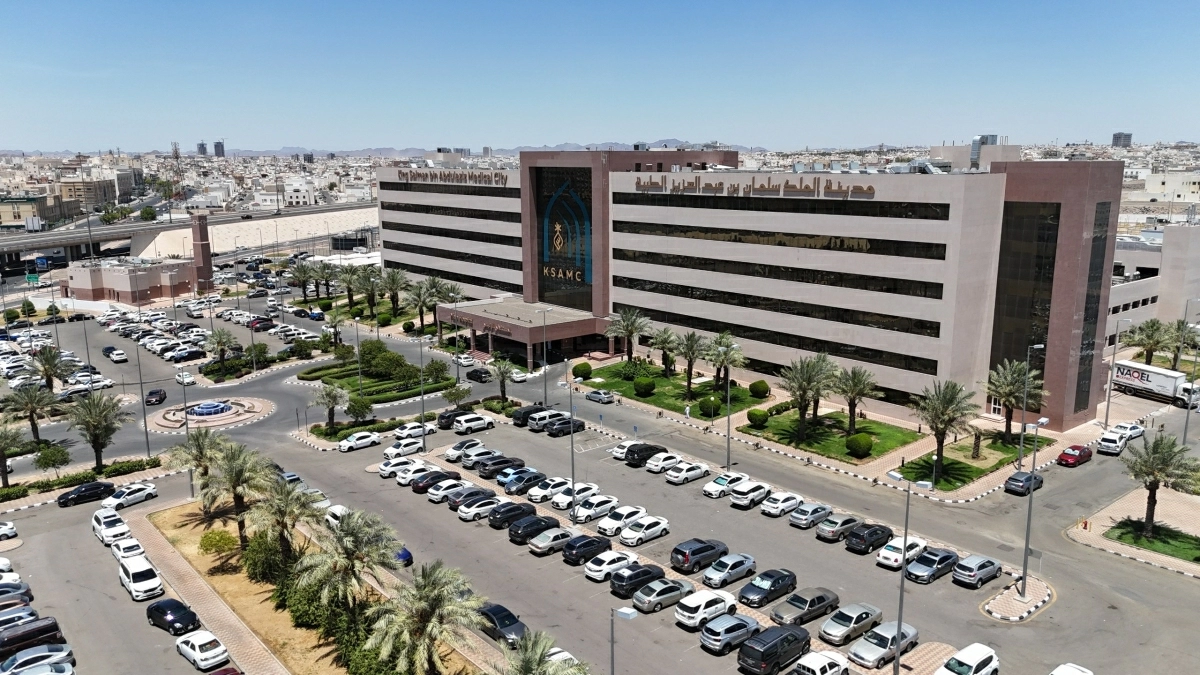
MADINAH — King Salman bin Abdulaziz Medical City recorded significant growth and service expansion in 2025, reinforcing its position as one of Saudi Arabia’s leading healthcare institutions.The medical city saw a notable increase in emergency cases, with 285,694 patients treated, while achieving a 97% response rate within four hours, reflecting improved efficiency in handling critical cases.Outpatient services also expanded sharply, with visits exceeding 931,745 compared to 547,372 in 2024, indicating increased capacity and improved access to care.Radiology services recorded 214,459 procedures, up from 125,687, driven by expanded service hours and enhanced equipment maintenance programs.The city also expanded its specialized centers from eight to 12, covering key fields including oncology, cardiology, diabetes, neurological sciences, ophthalmology, dermatology, and nutrition therapy, alongside centers for developmental, behavioral, genetic, and metabolic disorders.In infrastructure, the medical city launched several projects, including a new dialysis unit with a capacity of 10 beds, an advanced interventional radiology center, and a specialized diabetic foot center aimed at improving prevention and treatment outcomes.Emergency response capabilities were strengthened with the launch of two air ambulance helipads in cooperation with the Saudi Red Crescent Authority, enhancing rapid transport of critical cases.At the institutional level, the main hospital received “Age-Friendly Hospital” accreditation, while the Women’s and Children’s Hospital earned “Baby-Friendly Hospital” recognition in line with World Health Organization and UNICEF standards.The medical city also received the Outstanding Performance Award in the “Saving Lives” category for acute stroke management and obtained ISO certification for food safety management systems.In workforce development, 12 specialized training programs were accredited in fields including neurosurgery, emergency medicine, clinical pharmacy, and critical care nursing, supporting the development of national healthcare talent.These developments align with Saudi Arabia’s healthcare transformation efforts under Vision 2030, aimed at improving service quality and enhancing the overall patient experience in Madinah.MADINAH — King Salman bin Abdulaziz Medical City recorded significant growth and service expansion in 2025, reinforcing its position as one of Saudi Arabia’s leading healthcare institutions.The medical city saw a notable increase in emergency cases, with 285,694 patients treated, while achieving a 97% response rate within four hours, reflecting improved efficiency in handling critical cases.Outpatient services also expanded sharply, with visits exceeding 931,745 compared to 547,372 in 2024, indicating increased capacity and improved access to care.Radiology services recorded 214,459 procedures, up from 125,687, driven by expanded service hours and enhanced equipment maintenance programs.The city also expanded its specialized centers from eight to 12, covering key fields including oncology, cardiology, diabetes, neurological sciences, ophthalmology, dermatology, and nutrition therapy, alongside centers for developmental, behavioral, genetic, and metabolic disorders.In infrastructure, the medical city launched several projects, including a new dialysis unit with a capacity of 10 beds, an advanced interventional radiology center, and a specialized diabetic foot center aimed at improving prevention and treatment outcomes.Emergency response capabilities were strengthened with the launch of two air ambulance helipads in cooperation with the Saudi Red Crescent Authority, enhancing rapid transport of critical cases.At the institutional level, the main hospital received “Age-Friendly Hospital” accreditation, while the Women’s and Children’s Hospital earned “Baby-Friendly Hospital” recognition in line with World Health Organization and UNICEF standards.The medical city also received the Outstanding Performance Award in the “Saving Lives” category for acute stroke management and obtained ISO certification for food safety management systems.In workforce development, 12 specialized training programs were accredited in fields including neurosurgery, emergency medicine, clinical pharmacy, and critical care nursing, supporting the development of national healthcare talent.These developments align with Saudi Arabia’s healthcare transformation efforts under Vision 2030, aimed at improving service quality and enhancing the overall patient experience in Madinah.
King Salman Medical City expands services, advances toward world-class healthcare standards