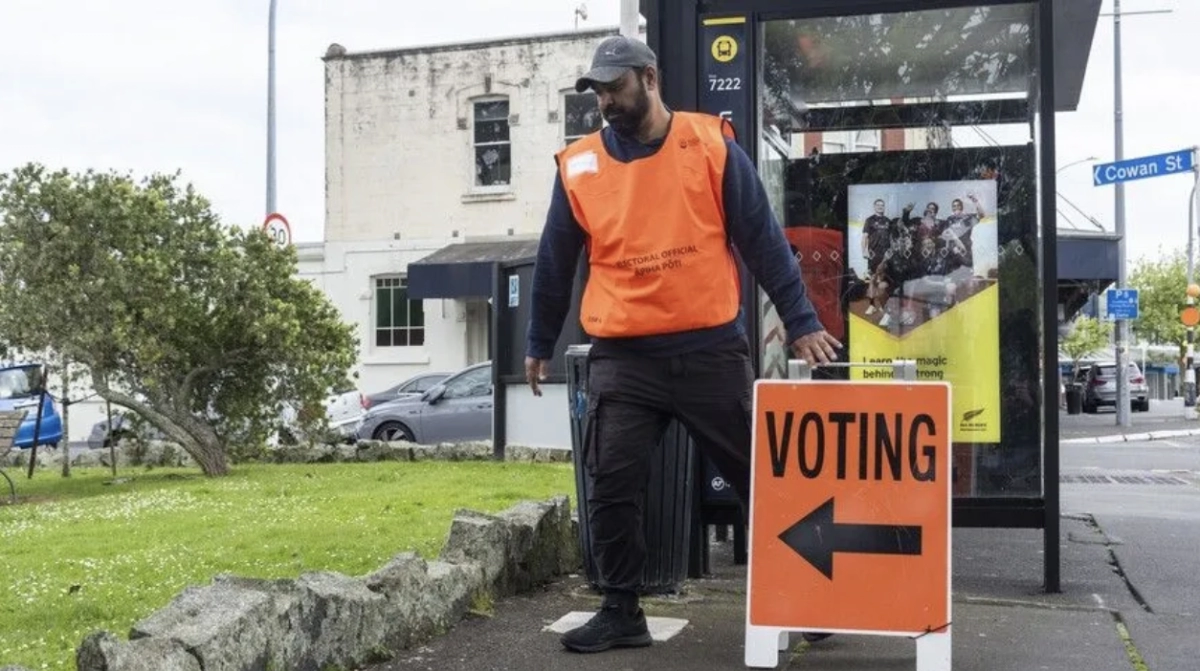

WELLINGTON — New Zealand’s general election ended without a clear winner on Saturday, leaving the formation of the next government dependent on the counting of approximately 300,000 special votes.Prime Minister and National Party leader Christopher Luxon said his party still had a chance of forming the next government but acknowledged that the final outcome remained uncertain.”We have a pathway to forming the next government, but it is too close to call,” Luxon said, according to Radio New Zealand.He noted that approximately 300,000 special votes remained to be counted before the final election results could be determined.Special votes include ballots cast by voters who are not on the electoral roll at their polling location, those on the unpublished electoral roll, overseas voters and people unable to access a polling station.Both the governing National Party and the opposition Labour Party failed to secure more than 30% of the party vote, with only a narrow margin separating the two parties.Labour received 29.4% of the vote, or 710,330 votes, compared with National’s 29.2%, or 706,680 votes — a difference of just 3,650 votes.Despite trailing Labour in the party vote, National secured 42 parliamentary seats, while Labour won 36.Under the projected parliamentary composition, a party or coalition would need at least 66 seats to secure a majority, with 11 additional overhang seats expected to bring the total number of seats to 131.Luxon’s governing coalition consists of the National Party, ACT New Zealand and New Zealand First. ACT currently holds 13 seats, while New Zealand First has 12.Together, the three coalition partners hold 67 seats in the preliminary count, leaving the final balance of power dependent on the outstanding special votes.The official election results are expected to be announced on Nov. 27.WELLINGTON — New Zealand’s general election ended without a clear winner on Saturday, leaving the formation of the next government dependent on the counting of approximately 300,000 special votes.Prime Minister and National Party leader Christopher Luxon said his party still had a chance of forming the next government but acknowledged that the final outcome remained uncertain.”We have a pathway to forming the next government, but it is too close to call,” Luxon said, according to Radio New Zealand.He noted that approximately 300,000 special votes remained to be counted before the final election results could be determined.Special votes include ballots cast by voters who are not on the electoral roll at their polling location, those on the unpublished electoral roll, overseas voters and people unable to access a polling station.Both the governing National Party and the opposition Labour Party failed to secure more than 30% of the party vote, with only a narrow margin separating the two parties.Labour received 29.4% of the vote, or 710,330 votes, compared with National’s 29.2%, or 706,680 votes — a difference of just 3,650 votes.Despite trailing Labour in the party vote, National secured 42 parliamentary seats, while Labour won 36.Under the projected parliamentary composition, a party or coalition would need at least 66 seats to secure a majority, with 11 additional overhang seats expected to bring the total number of seats to 131.Luxon’s governing coalition consists of the National Party, ACT New Zealand and New Zealand First. ACT currently holds 13 seats, while New Zealand First has 12.Together, the three coalition partners hold 67 seats in the preliminary count, leaving the final balance of power dependent on the outstanding special votes.The official election results are expected to be announced on Nov. 27.
New Zealand election ends without clear winner as 300,000 special votes await counting