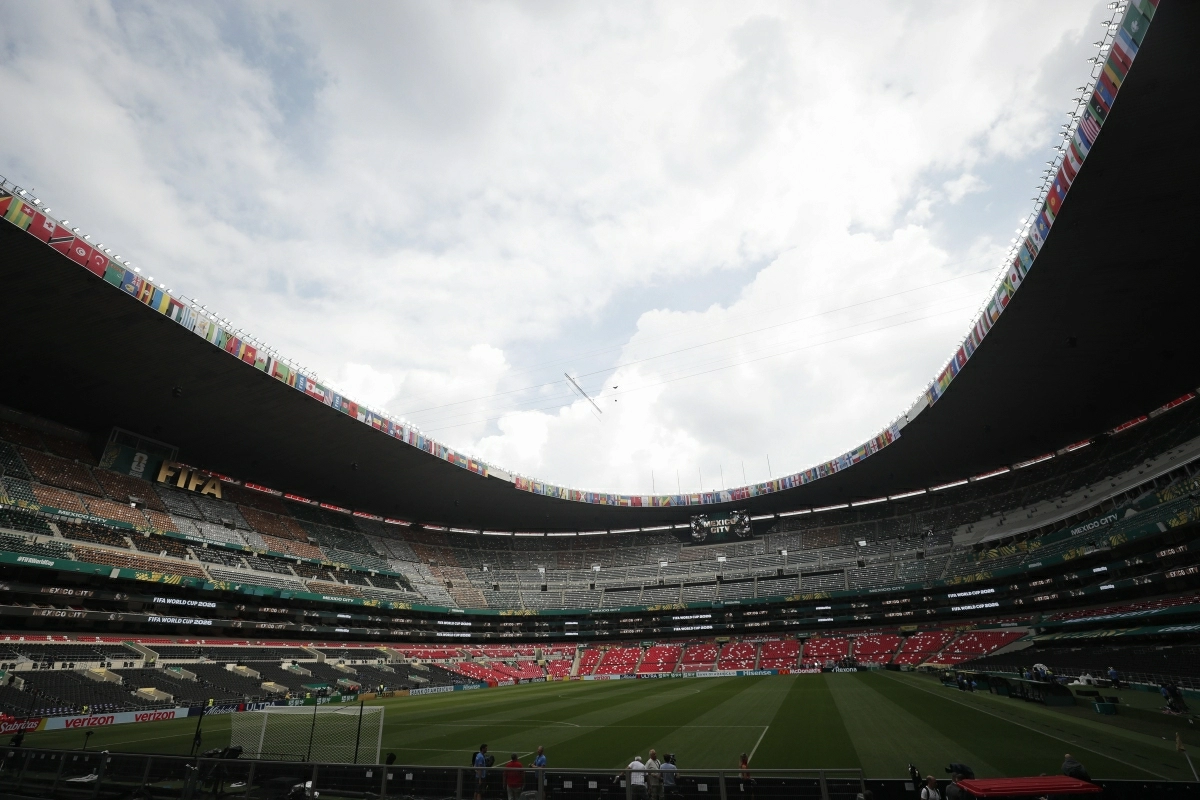

MEXICO CITY — A Saudi manufacturer has contributed to preparations for the opening match of the 2026 FIFA World Cup after supplying advanced construction materials for the renovation of Mexico City’s iconic Azteca Stadium.Saudi-listed company FIPCO said its subsidiary, FIPCO Industries, supplied more than 4,000 square meters of Saudi-made PVC technical fabrics for use in the stadium’s roofing and architectural structures.The materials were airlifted from Saudi Arabia to Mexico as part of the redevelopment of Azteca Stadium, which has a capacity of more than 100,000 spectators and is set to become the first venue in football history to host the opening match of the FIFA World Cup three times.Saudi manufacturing on the global stageFIPCO said the project reflects the growing presence of Saudi industrial products in major international projects.The company noted that its specialized technical fabrics facility is the first of its kind in the Middle East and ranks among the world’s largest producers, with manufacturing capacity exceeding 3.6 million square meters per month.Badr Al-Herbish, CEO of the Saudi Export Development Authority, described the project as a success story that highlights the competitiveness of Saudi products in international markets.He said the company benefited from several export support initiatives, including participation in international exhibitions, product registration incentives and certificates of origin programs, helping expand its global reach.Abdullah Al-Harbi, FIPCO’s CEO said the company’s products were selected following international competition involving suppliers from multiple countries, reflecting growing confidence in Saudi manufacturing capabilities.He added that the company aims to expand its share of the global tensile architectural fabric market despite competition from established European manufacturers.According to the company, its products are exported to markets across the Americas, Russia, Central Asia, India, Europe, Africa and the Middle East.Stadium with World Cup historyAzteca Stadium occupies a unique place in football history. It hosted the 1970 FIFA World Cup final, where Brazil’s legendary team led by Pelé lifted the trophy, and the 1986 final, won by Diego Maradona and Argentina.The venue will add another chapter to its legacy when it hosts the opening match of the 2026 FIFA World Cup.MEXICO CITY — A Saudi manufacturer has contributed to preparations for the opening match of the 2026 FIFA World Cup after supplying advanced construction materials for the renovation of Mexico City’s iconic Azteca Stadium.Saudi-listed company FIPCO said its subsidiary, FIPCO Industries, supplied more than 4,000 square meters of Saudi-made PVC technical fabrics for use in the stadium’s roofing and architectural structures.The materials were airlifted from Saudi Arabia to Mexico as part of the redevelopment of Azteca Stadium, which has a capacity of more than 100,000 spectators and is set to become the first venue in football history to host the opening match of the FIFA World Cup three times.Saudi manufacturing on the global stageFIPCO said the project reflects the growing presence of Saudi industrial products in major international projects.The company noted that its specialized technical fabrics facility is the first of its kind in the Middle East and ranks among the world’s largest producers, with manufacturing capacity exceeding 3.6 million square meters per month.Badr Al-Herbish, CEO of the Saudi Export Development Authority, described the project as a success story that highlights the competitiveness of Saudi products in international markets.He said the company benefited from several export support initiatives, including participation in international exhibitions, product registration incentives and certificates of origin programs, helping expand its global reach.Abdullah Al-Harbi, FIPCO’s CEO said the company’s products were selected following international competition involving suppliers from multiple countries, reflecting growing confidence in Saudi manufacturing capabilities.He added that the company aims to expand its share of the global tensile architectural fabric market despite competition from established European manufacturers.According to the company, its products are exported to markets across the Americas, Russia, Central Asia, India, Europe, Africa and the Middle East.Stadium with World Cup historyAzteca Stadium occupies a unique place in football history. It hosted the 1970 FIFA World Cup final, where Brazil’s legendary team led by Pelé lifted the trophy, and the 1986 final, won by Diego Maradona and Argentina.The venue will add another chapter to its legacy when it hosts the opening match of the 2026 FIFA World Cup.
Saudi-made materials help prepare historic Azteca Stadium for World Cup opener