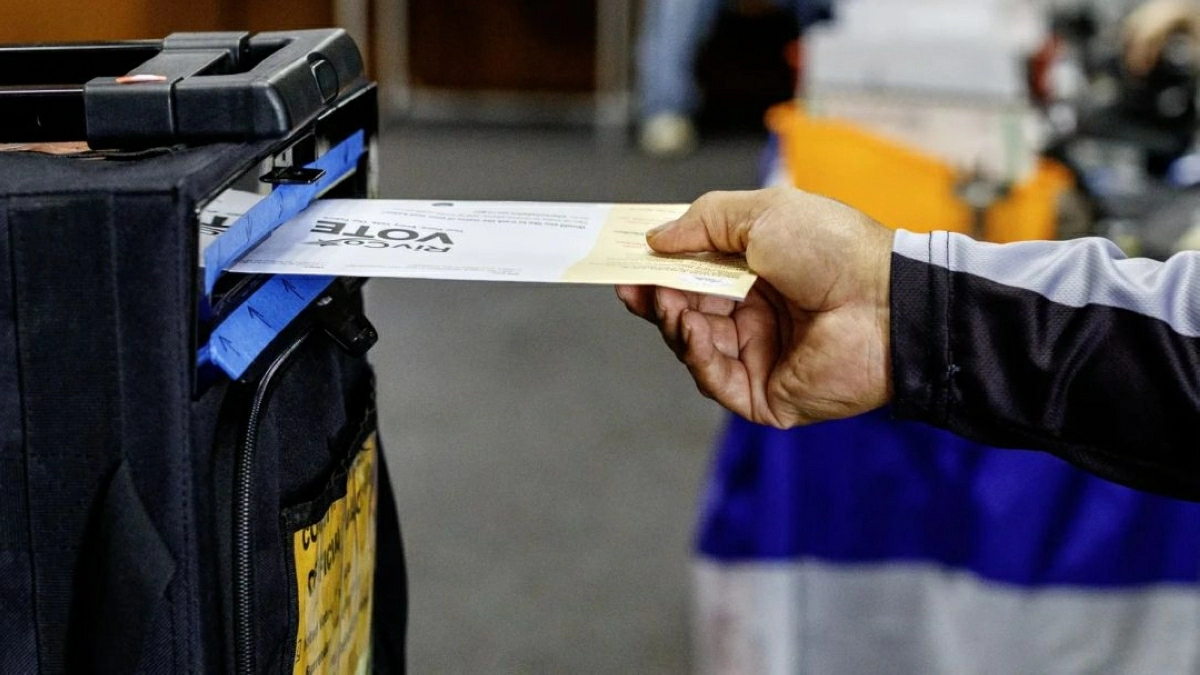

WASHINGTON — The US Supreme Court on Monday rejected an emergency request by the Trump administration to force California election officials to set aside mail-in ballots from approximately 20,000 registered voters who federal authorities claim are noncitizens.”The application for injunction pending appeal presented to Justice Kagan and by her referred to the Court is denied,” said the court, rejecting the administration’s emergency request hours after it was filed. Earlier Monday, the Trump administration appealed to the nation’s highest court, asking justices to intervene in the escalating legal dispute and prevent the ballots from being counted before their eligibility was established.Federal authorities had identified more than 20,000 registered California voters whom they suspected of being noncitizens and the Justice Department argued that election officials should temporarily separate their ballots pending verification of citizenship.The court did not explain its reasoning and instead handed down only a one-sentence order. There were no noted dissents.Tens of millions of voters have already cast early ballots nationwide.“This office has been informed that the United States has identified more than 20,000 individuals who appear to be registered to vote in California based on publicly available information at the time that information was received, but who, in the United States’ view, are likely not U.S. citizens,” US Solicitor General D. John Sauer told the court earlier Monday.In another sign that the Supreme Court didn’t take the appeal especially seriously, the justices did not ask to see a response brief from California or other parties before ruling – as is their usual practice in high-profile cases.“After repeatedly losing in the lower courts, the highest court in the land firmly slapped down the Trump DOJ’s baseless attack on California’s electoral process — not even entertaining it,” Democratic California Gov. Gavin Newsom said in a statement.DOJ had argued the federal government had a constitutional interest in ensuring that only citizens vote. It also claims that California’s failure to investigate the registered voters the administration has flagged is frustrating enforcement of the federal criminal law banning noncitizen voting.California and voting rights groups countered that the federal government’s past claims of noncitizen voters have not withstood scrutiny, that the current claims are based on fuzzy evidence that risks disenfranchising citizens and that the Trump administration doesn’t have authority to tell state officials how to handle the issue. Those are arguments that found purchase in lower federal courts that ruled against Trump.“Every court to hear this case has now rejected the DOJ’s attempt to cast a cloud of suspicion over eligible voters’ ballots on the eve of an election,” said Uzoma Nkwonta, with the Elias Law Group, which represented groups opposed to the Trump administration suit.On Friday, the 9th US Circuit Court of Appeals barred the administration from intervening in California’s mail-in ballot counting, concluding that the federal government has no power to dictate to states how to run elections.“If the United States believes different procedures are necessary for vote-by-mail ballots, we believe it should take that suggestion to Congress, not the courts,” the appeals court wrote in a 2-1 decision that was issued by US Circuit Judges Mark Bennett, a Trump nominee, and Gabriel Sanchez, who was named to the bench by former President Joe Biden.“The district court found that the risks that noncitizens are voting are, at best, uncertain, and also tempered by California’s established voter-eligibility procedures,” the 9th Circuit wrote Friday. “In contrast, there is a material risk that granting the United States its requested relief would result in disenfranchisement.”Trump has had a mixed record with emergency election appeals at the Supreme Court. Most notably, the justices in September rejected the president’s attempt to give the US Postal Service extraordinary power to withhold certain mail ballots. But the court sided with the Department of Homeland Security days later, allowing it to continue providing controversial citizenship data to state election officials.WASHINGTON — The US Supreme Court on Monday rejected an emergency request by the Trump administration to force California election officials to set aside mail-in ballots from approximately 20,000 registered voters who federal authorities claim are noncitizens.”The application for injunction pending appeal presented to Justice Kagan and by her referred to the Court is denied,” said the court, rejecting the administration’s emergency request hours after it was filed. Earlier Monday, the Trump administration appealed to the nation’s highest court, asking justices to intervene in the escalating legal dispute and prevent the ballots from being counted before their eligibility was established.Federal authorities had identified more than 20,000 registered California voters whom they suspected of being noncitizens and the Justice Department argued that election officials should temporarily separate their ballots pending verification of citizenship.The court did not explain its reasoning and instead handed down only a one-sentence order. There were no noted dissents.Tens of millions of voters have already cast early ballots nationwide.“This office has been informed that the United States has identified more than 20,000 individuals who appear to be registered to vote in California based on publicly available information at the time that information was received, but who, in the United States’ view, are likely not U.S. citizens,” US Solicitor General D. John Sauer told the court earlier Monday.In another sign that the Supreme Court didn’t take the appeal especially seriously, the justices did not ask to see a response brief from California or other parties before ruling – as is their usual practice in high-profile cases.“After repeatedly losing in the lower courts, the highest court in the land firmly slapped down the Trump DOJ’s baseless attack on California’s electoral process — not even entertaining it,” Democratic California Gov. Gavin Newsom said in a statement.DOJ had argued the federal government had a constitutional interest in ensuring that only citizens vote. It also claims that California’s failure to investigate the registered voters the administration has flagged is frustrating enforcement of the federal criminal law banning noncitizen voting.California and voting rights groups countered that the federal government’s past claims of noncitizen voters have not withstood scrutiny, that the current claims are based on fuzzy evidence that risks disenfranchising citizens and that the Trump administration doesn’t have authority to tell state officials how to handle the issue. Those are arguments that found purchase in lower federal courts that ruled against Trump.“Every court to hear this case has now rejected the DOJ’s attempt to cast a cloud of suspicion over eligible voters’ ballots on the eve of an election,” said Uzoma Nkwonta, with the Elias Law Group, which represented groups opposed to the Trump administration suit.On Friday, the 9th US Circuit Court of Appeals barred the administration from intervening in California’s mail-in ballot counting, concluding that the federal government has no power to dictate to states how to run elections.“If the United States believes different procedures are necessary for vote-by-mail ballots, we believe it should take that suggestion to Congress, not the courts,” the appeals court wrote in a 2-1 decision that was issued by US Circuit Judges Mark Bennett, a Trump nominee, and Gabriel Sanchez, who was named to the bench by former President Joe Biden.“The district court found that the risks that noncitizens are voting are, at best, uncertain, and also tempered by California’s established voter-eligibility procedures,” the 9th Circuit wrote Friday. “In contrast, there is a material risk that granting the United States its requested relief would result in disenfranchisement.”Trump has had a mixed record with emergency election appeals at the Supreme Court. Most notably, the justices in September rejected the president’s attempt to give the US Postal Service extraordinary power to withhold certain mail ballots. But the court sided with the Department of Homeland Security days later, allowing it to continue providing controversial citizenship data to state election officials.
Supreme Court rejects Trump’s attempt to block 20,000 California mail ballots