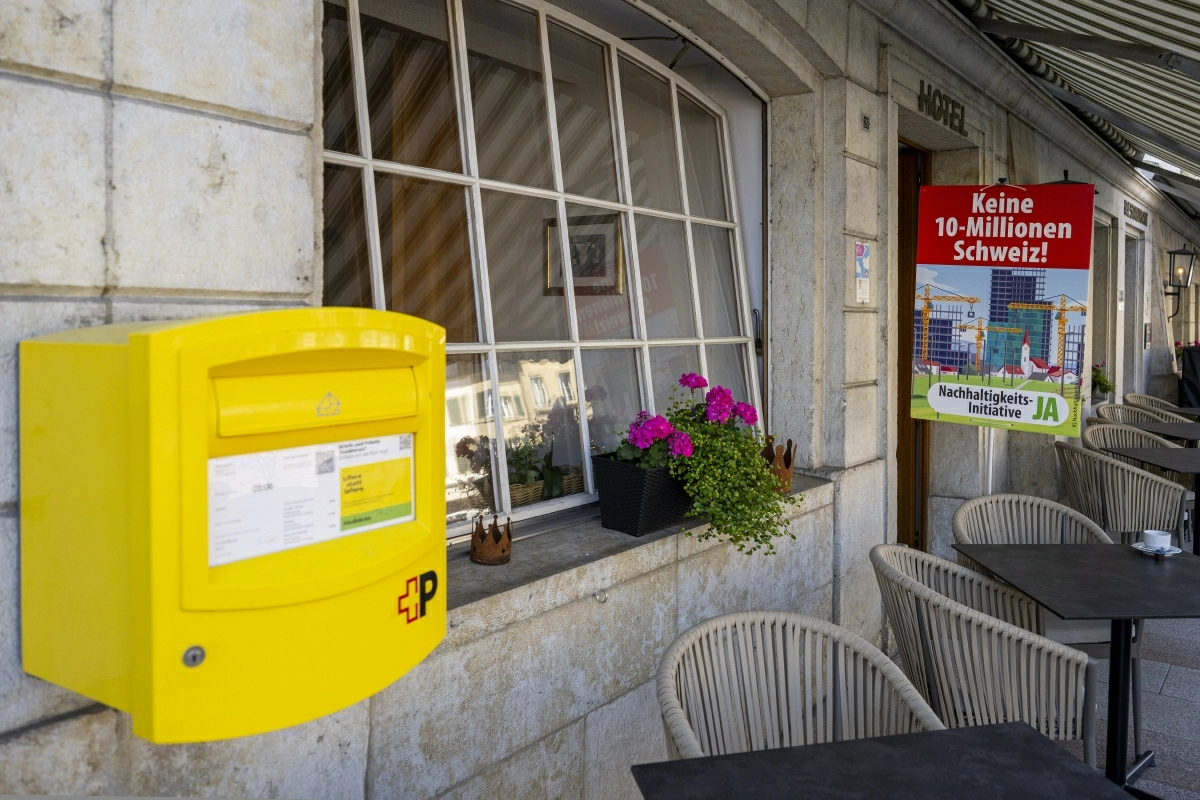

GENEVA — Swiss voters have rejected a proposal to limit the country’s population to 10 million people, according to early projections released Sunday.With most votes counted, the trend indicated that about 55% of voters opposed the measure, while 45% supported it.The proposal was backed by the right-wing Swiss People’s Party, which argued that limiting population growth would ease pressure on housing, transportation, public services and the environment.Switzerland’s population has grown from 7.3 million in 2002 to around 9.1 million today, with non-Swiss citizens accounting for roughly 27% of residents.Supporters of the initiative said rapid immigration was contributing to housing shortages, traffic congestion and strains on schools and social services.Opponents argued that restricting immigration would worsen labor shortages in key sectors, including tourism, healthcare and elder care, while also threatening Switzerland’s economic ties with the European Union.A key concern during the campaign was that approval of the population cap could have jeopardized Switzerland’s free movement agreement with the EU, which underpins access to the bloc’s single market.More than half of Swiss exports are sold to EU countries, and business groups warned that limiting immigration could complicate relations with Switzerland’s largest trading partner.Business association Economiesuisse said maintaining stable relations with the EU remains critical for the country’s economy and access to skilled workers.Critics of the proposal also argued that immigration is increasingly important as Switzerland’s population ages, noting that about one-fifth of residents are now over the age of 65.Under Switzerland’s system of direct democracy, nationwide referendums can be triggered if campaigners gather at least 100,000 signatures.The result marks a setback for the Swiss People’s Party, which has long campaigned for tighter immigration controls and has made population growth a central political issue.GENEVA — Swiss voters have rejected a proposal to limit the country’s population to 10 million people, according to early projections released Sunday.With most votes counted, the trend indicated that about 55% of voters opposed the measure, while 45% supported it.The proposal was backed by the right-wing Swiss People’s Party, which argued that limiting population growth would ease pressure on housing, transportation, public services and the environment.Switzerland’s population has grown from 7.3 million in 2002 to around 9.1 million today, with non-Swiss citizens accounting for roughly 27% of residents.Supporters of the initiative said rapid immigration was contributing to housing shortages, traffic congestion and strains on schools and social services.Opponents argued that restricting immigration would worsen labor shortages in key sectors, including tourism, healthcare and elder care, while also threatening Switzerland’s economic ties with the European Union.A key concern during the campaign was that approval of the population cap could have jeopardized Switzerland’s free movement agreement with the EU, which underpins access to the bloc’s single market.More than half of Swiss exports are sold to EU countries, and business groups warned that limiting immigration could complicate relations with Switzerland’s largest trading partner.Business association Economiesuisse said maintaining stable relations with the EU remains critical for the country’s economy and access to skilled workers.Critics of the proposal also argued that immigration is increasingly important as Switzerland’s population ages, noting that about one-fifth of residents are now over the age of 65.Under Switzerland’s system of direct democracy, nationwide referendums can be triggered if campaigners gather at least 100,000 signatures.The result marks a setback for the Swiss People’s Party, which has long campaigned for tighter immigration controls and has made population growth a central political issue.
Swiss voters reject proposal to cap population at 10 million