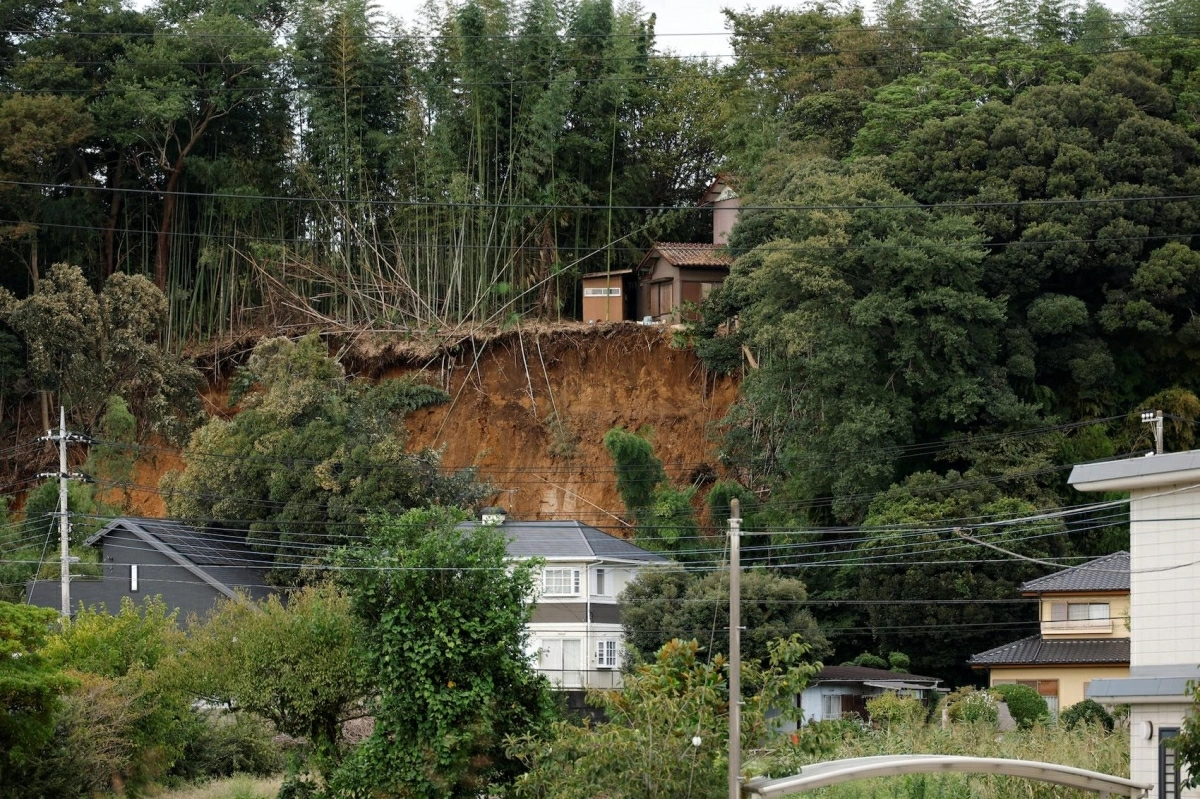

TOKYO — Thousands of people were left without power and running water after Typhoon Dujuan battered parts of Japan, damaging power and communications lines and leaving at least 11 people dead and three others missing.More than 10,000 homes around Tokyo remained without power on Friday after the typhoon brought record rainfall to eastern Japan earlier this week, Kyodo News reported.Power supplier TEPCO Power Grid Inc. warned that “outages could continue for an extended period, as roads have been blocked by landslides and fallen trees across wide areas, preventing crews in some locations from even inspecting damaged facilities,” the report added.The outages were reported in Chiba and Kanagawa prefectures and have left people coping with hot weather and shortages of water for domestic use.The storm also breached some levees at Lake Imbanuma in northern Chiba Prefecture, flooding homes and rice paddies across an extensive area. With another typhoon approaching, the infrastructure ministry said on Friday it aims to complete emergency repairs and draining of inundated areas within about a week.The lake’s water level stood at about 3 meters as of 7 a.m. Friday. The ministry plans to use drainage pumps to bring it back to its normal level of 2.3 meters by Saturday at the earliest.Hundreds of households were also left without water after the storm hit the region earlier this week.In Chiba Prefecture, about 2,700 households had no running water as of noon Thursday, according to prefectural authorities.Minister of Land, Infrastructure, Transport and Tourism Tatsunori Ibayashi told a press conference Friday that the ministry would work with the prefecture and the Japan Water Agency on the recovery effort, pledging to “do everything we can.”Shoji Sakuma, 63, who runs his own business in Ichihara, where the power outage is affecting more households than in any other city in Chiba, said his home had been without electricity since Monday evening. His solar panels provided some power, but not enough.”It’s hot and I can’t use the air conditioner, so I plan to sleep in my car,” he said. His home was also without running water, and it remains unclear when either service will be restored.In Kimitsu, where water outages continued across a wide area, Ayumi Kono, 32, carried about 60 liters of water home from a distribution point.Kono has used paper plates and disposable chopsticks to conserve water, but said, “The toilet is the biggest problem.”TOKYO — Thousands of people were left without power and running water after Typhoon Dujuan battered parts of Japan, damaging power and communications lines and leaving at least 11 people dead and three others missing.More than 10,000 homes around Tokyo remained without power on Friday after the typhoon brought record rainfall to eastern Japan earlier this week, Kyodo News reported.Power supplier TEPCO Power Grid Inc. warned that “outages could continue for an extended period, as roads have been blocked by landslides and fallen trees across wide areas, preventing crews in some locations from even inspecting damaged facilities,” the report added.The outages were reported in Chiba and Kanagawa prefectures and have left people coping with hot weather and shortages of water for domestic use.The storm also breached some levees at Lake Imbanuma in northern Chiba Prefecture, flooding homes and rice paddies across an extensive area. With another typhoon approaching, the infrastructure ministry said on Friday it aims to complete emergency repairs and draining of inundated areas within about a week.The lake’s water level stood at about 3 meters as of 7 a.m. Friday. The ministry plans to use drainage pumps to bring it back to its normal level of 2.3 meters by Saturday at the earliest.Hundreds of households were also left without water after the storm hit the region earlier this week.In Chiba Prefecture, about 2,700 households had no running water as of noon Thursday, according to prefectural authorities.Minister of Land, Infrastructure, Transport and Tourism Tatsunori Ibayashi told a press conference Friday that the ministry would work with the prefecture and the Japan Water Agency on the recovery effort, pledging to “do everything we can.”Shoji Sakuma, 63, who runs his own business in Ichihara, where the power outage is affecting more households than in any other city in Chiba, said his home had been without electricity since Monday evening. His solar panels provided some power, but not enough.”It’s hot and I can’t use the air conditioner, so I plan to sleep in my car,” he said. His home was also without running water, and it remains unclear when either service will be restored.In Kimitsu, where water outages continued across a wide area, Ayumi Kono, 32, carried about 60 liters of water home from a distribution point.Kono has used paper plates and disposable chopsticks to conserve water, but said, “The toilet is the biggest problem.”
Thousands remain without power after Typhoon Dujuan batters Japan