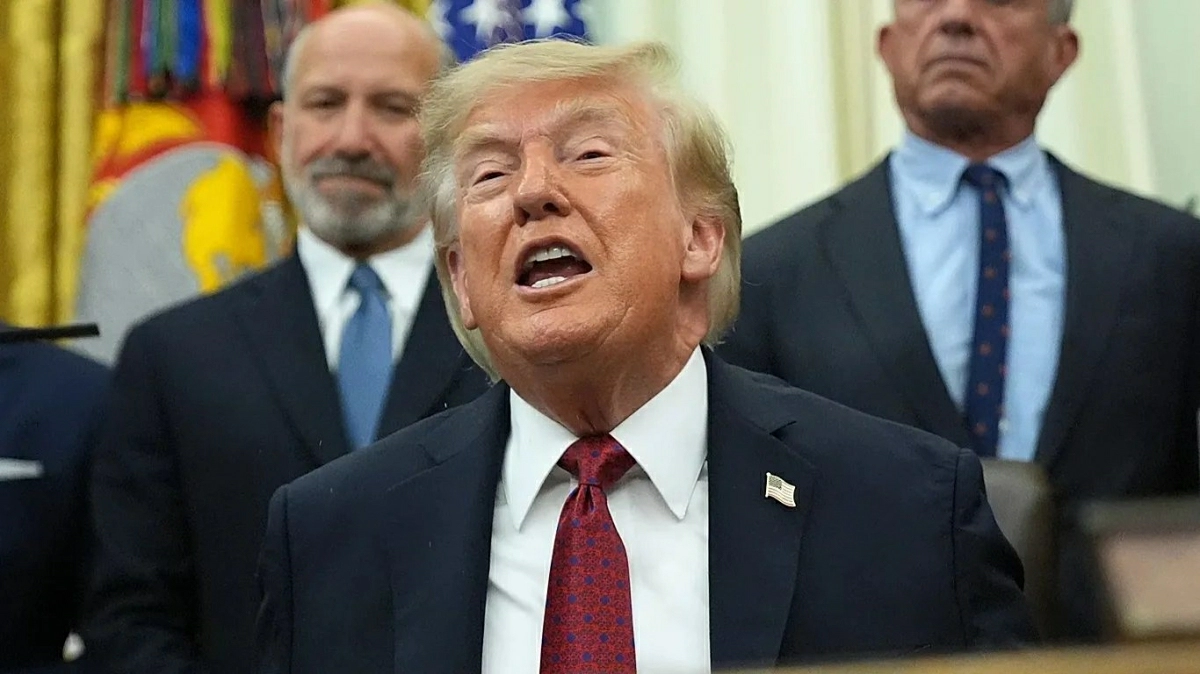

WASHINGTON — Days after announcing what it calls the largest oil deal in history, the Trump administration has disclosed the terms of the unprecedented deal for the US to gain access to a fifth of Venezuela’s oil reserves.A White House fact sheet released late on Monday outlined an arrangement under which private oil firm North American Blue Energy Partners (NABEP) would receive a 100-year lease for 17 oilfields in Venezuela holding some 65 billion barrels of oil reserves. The US will take a 35% equity stake in the corporate parent company, receive a guaranteed 20% of the oil production and hold a right-of-first-refusal to purchase all of the remaining output.Venezuela’s interim authorities have granted NABEP 100-year concessions over 17 fields, with the agreement signed by US Secretary of State Marco Rubio and US Secretary of War Pete Hegseth.The Venezuelan reserves dwarf America’s own, as the 65 billion barrels covered by the concessions compare with roughly 46 billion across US territory.Speaking in the Oval Office on Monday, US President Donald Trump called the reserves “unbelievable value that was sitting dormant” and added that the US is “going to be taking all of that. We’re going to be taking that oil out.”The US president also reasserted that American majors were queuing up to be a part of the takeover of Venezuelan oil fields.”We have Exxon going in, we have Chevron going in, we have our big oil companies going in, and everybody’s bidding,” Trump stated.In exchange for the inclusion in the deal, NABEP has given the US Department of War’s Office of Strategic Capital a 35% equity stake in its corporate parent, which the White House says is worth up to hundreds of billions at zero cost to taxpayers.The US State Department also secures the right to buy 20% of output from all current and future NABEP fields at production cost, intended to partly refill the Strategic Petroleum Reserve, plus right of first refusal on the remaining 80%.Washington holds a veto over board appointments, a majority of directors must be US citizens and the agreement falls under US law and courts.NABEP has committed to investing up to $100 billion (€86bn) in Venezuelan oil infrastructure and is expected to pay around $200 billion (€172bn) in royalties and taxes over 25 years.Most of the fields were previously run by Russian or Chinese firms, which the White House casts as a reassertion of the Monroe Doctrine.Further energy contracts are due to be signed this week, but reports suggest the arrangement is causing unease among the very majors that Trump says are queuing.NABEP is controlled by Venezuelan businessman Alejandro Betancourt, investigated by US and European authorities over past dealings with the Venezuelan government, though never charged, and who denies wrongdoing.Reportedly, oil majors negotiating their own contracts want assurances they will not find themselves seated alongside him.Exxon and ConocoPhillips both left Venezuela in 2007 after their assets were nationalised, and each says its requirements on legal certainty and contract sanctity remain unmet.Former US energy advisers have warned of political risk, since a future government in Caracas or Washington could challenge the terms. NABEP reportedly produces between 170,000 and 200,000 barrels a day, second among private operators behind Chevron.Betancourt said Venezuela is “blessed with an abundance of natural resources, hardworking people and untapped potential,” and that the deal would “unleash that potential to the great benefit of both Venezuelans and Americans.”Venezuela’s Acting President Delcy Rodríguez has also backed it as a chance to modernise the industry, insisting in the face of criticism that the country cedes nothing of its sovereignty.Lawmakers on Capitol Hill said on Monday they were seeking further information about the agreement, which was negotiated without congressional involvement.The planned structure and the massive assets NABEP could accumulate in the OPEC country are raising concerns that American oil companies could face competition from the US government itself in Venezuela, sources familiar with the situation told Reuters.That could add more obstacles to Trump’s goal of increasing Venezuela’s oil output and exports to boost US reserves, said Alejo Czerwonko, chief investment officer of emerging markets for UBS. “You would need sizable investment and know-how from the likes of Exxon and ConocoPhillips,” he said. “How do you lure these companies into the country?””There’s still a lot of unknowns and confusing elements,” said Radhika Bansal, a senior vice president at Rystad Energy, in an interview earlier on Monday before the White House published details about the agreement.Whether the majors share the Trump administration’s confidence should become clearer within days, when the contracts are due to be signed.WASHINGTON — Days after announcing what it calls the largest oil deal in history, the Trump administration has disclosed the terms of the unprecedented deal for the US to gain access to a fifth of Venezuela’s oil reserves.A White House fact sheet released late on Monday outlined an arrangement under which private oil firm North American Blue Energy Partners (NABEP) would receive a 100-year lease for 17 oilfields in Venezuela holding some 65 billion barrels of oil reserves. The US will take a 35% equity stake in the corporate parent company, receive a guaranteed 20% of the oil production and hold a right-of-first-refusal to purchase all of the remaining output.Venezuela’s interim authorities have granted NABEP 100-year concessions over 17 fields, with the agreement signed by US Secretary of State Marco Rubio and US Secretary of War Pete Hegseth.The Venezuelan reserves dwarf America’s own, as the 65 billion barrels covered by the concessions compare with roughly 46 billion across US territory.Speaking in the Oval Office on Monday, US President Donald Trump called the reserves “unbelievable value that was sitting dormant” and added that the US is “going to be taking all of that. We’re going to be taking that oil out.”The US president also reasserted that American majors were queuing up to be a part of the takeover of Venezuelan oil fields.”We have Exxon going in, we have Chevron going in, we have our big oil companies going in, and everybody’s bidding,” Trump stated.In exchange for the inclusion in the deal, NABEP has given the US Department of War’s Office of Strategic Capital a 35% equity stake in its corporate parent, which the White House says is worth up to hundreds of billions at zero cost to taxpayers.The US State Department also secures the right to buy 20% of output from all current and future NABEP fields at production cost, intended to partly refill the Strategic Petroleum Reserve, plus right of first refusal on the remaining 80%.Washington holds a veto over board appointments, a majority of directors must be US citizens and the agreement falls under US law and courts.NABEP has committed to investing up to $100 billion (€86bn) in Venezuelan oil infrastructure and is expected to pay around $200 billion (€172bn) in royalties and taxes over 25 years.Most of the fields were previously run by Russian or Chinese firms, which the White House casts as a reassertion of the Monroe Doctrine.Further energy contracts are due to be signed this week, but reports suggest the arrangement is causing unease among the very majors that Trump says are queuing.NABEP is controlled by Venezuelan businessman Alejandro Betancourt, investigated by US and European authorities over past dealings with the Venezuelan government, though never charged, and who denies wrongdoing.Reportedly, oil majors negotiating their own contracts want assurances they will not find themselves seated alongside him.Exxon and ConocoPhillips both left Venezuela in 2007 after their assets were nationalised, and each says its requirements on legal certainty and contract sanctity remain unmet.Former US energy advisers have warned of political risk, since a future government in Caracas or Washington could challenge the terms. NABEP reportedly produces between 170,000 and 200,000 barrels a day, second among private operators behind Chevron.Betancourt said Venezuela is “blessed with an abundance of natural resources, hardworking people and untapped potential,” and that the deal would “unleash that potential to the great benefit of both Venezuelans and Americans.”Venezuela’s Acting President Delcy Rodríguez has also backed it as a chance to modernise the industry, insisting in the face of criticism that the country cedes nothing of its sovereignty.Lawmakers on Capitol Hill said on Monday they were seeking further information about the agreement, which was negotiated without congressional involvement.The planned structure and the massive assets NABEP could accumulate in the OPEC country are raising concerns that American oil companies could face competition from the US government itself in Venezuela, sources familiar with the situation told Reuters.That could add more obstacles to Trump’s goal of increasing Venezuela’s oil output and exports to boost US reserves, said Alejo Czerwonko, chief investment officer of emerging markets for UBS. “You would need sizable investment and know-how from the likes of Exxon and ConocoPhillips,” he said. “How do you lure these companies into the country?””There’s still a lot of unknowns and confusing elements,” said Radhika Bansal, a senior vice president at Rystad Energy, in an interview earlier on Monday before the White House published details about the agreement.Whether the majors share the Trump administration’s confidence should become clearer within days, when the contracts are due to be signed.
Trump vows US will take 'all' of Venezuela's oil as deal details emerge