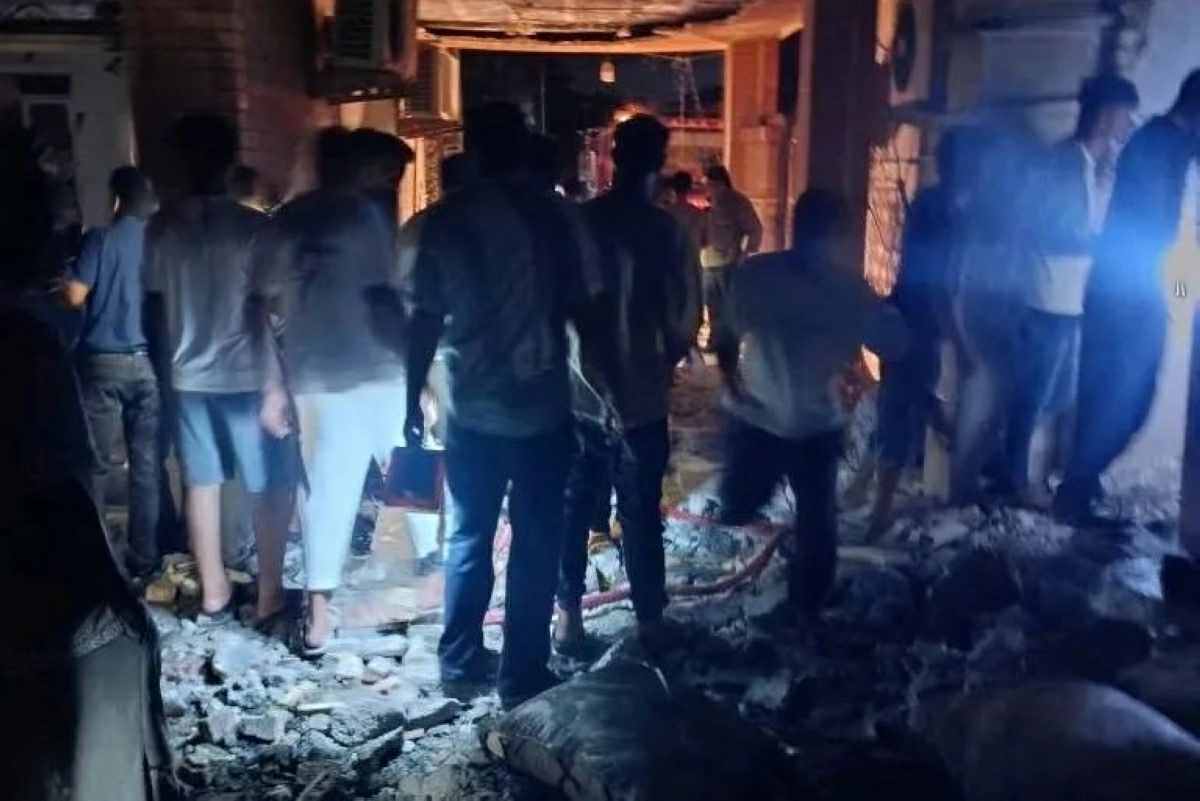

DUBAI — Iran has accused the United States of bombing a residetial home hosting a wedding celebration in the southern county of Sirik, killing at least five people, including a child, and wounding more than 60 others.Esmaeil Baghaei, the spokesman for Iran’s Ministry of Foreign Affairs, said the “brutal” attack hit a home in the city of Kuhestak early on Wednesday.“Following a US missile attack, shrapnel hit a residential home in the city of Kuhestak, in Sirik county of Hormozgan province, where a wedding celebration was taking place,” the Iranian Red Crescent said in a post on X.A video shared by an Iranian government account showed extensive debris and damage at what it said was the site of the wedding in Sirik following the US strike, with people heard screaming in the background.“This cruelty cannot be separated from the chain of atrocities that preceded in it,” Baghaei said, pointing to attacks on the city of Minab and Lamerd on the first day of the war. In Minab, US forces struck an elementary school, killed more than 150 people, and in Lamerd, they hit a sport hall, killing at least 21 people.The state-owned Press TV reported that at least five people were killed.Reza Shahidiyan, the governor of Sirik county, later told the IRIB state broadcaster that 63 others were wounded, and that 50 of the victims were women and children. All of the wounded have been taken to a hospital in the nearby city of Minab and were “in stable condition,” he said.The semi-official Fars news agency meanwhile published an account from a child who survived the blast.The child said he heard fighter jets before he arrived at the venue. “When we arrived there, an explosion occurred. It was very intense. Bricks, stones, and cement hit me in the face and head, and many others were injured,” he said.The reports came as the US military announced a new wave of strikes against “Iranian military targets”, saying it followed attempted attacks by the Islamic Revolutionary Guard Corps (IRGC) against commercial shipping in the Strait of Hormuz.The US military said it had hit Iranian air defence sites, radar systems, maritime assets and facilities, mine-laying capabilities and communications sites.It was not immediately clear what was targeted in Sirik. The southern Sirik county lies along the strategic Strait of Hormuz.Iran has been at war with the United States since February 28 when US-Israeli strikes were launched, killing the Islamic republic’s supreme leader Ali Khamenei along with senior military officials.Iran retaliated with attacks across the region. The initial intense bombardment campaign lasted nearly 40 days but sporadic attacks mainlyaround Hormuz have continued, dimming prospects for a final peace agreement.US forces struck Iran on Tuesday and President Donald Trump vowed a “much harder” response to any counterattacks, as exchanges of fire between the two sides threatened to reignite their smoldering conflict.Washington hit Iranian targets on Sunday in its first known strikes in several weeks, after which Tehran’s forces targeted US troops in Jordan and the United Arab Emirates, and projectiles struck two oil tankers in unclaimed attacks.More US strikes came on Tuesday, with Iranian state television reporting that explosions were heard in the country’s south along the strategic Strait of Hormuz waterway and on an island in the Gulf, and that US forces hit an airport in the southern province of Kerman.The official IRNA news agency said that “four projectiles hit areas within the counties of Chabahar and Konarak,” without specifying whether there was any damage.Trump said the “large and powerful” strikes were “in retaliation for the Iranians’ failed attempt at adding sea mines to the Strait” and “the Iranians shooting eight missiles, all successfully knocked down, at our Military Base in Jordan.”Revolutionary Guards spokesman Hossein Mohebi warned on X that Washington “will regret its new attacks,” saying that “severe punishment awaits the aggressors.”Iran’s Tasnim news agency later said a “decisive operation by Iran’s armed forces in response to the US enemy has begun,” and that “US bases and interests in the region are being targeted by Iranian missiles and drones.”After six months of war, the foes remain at an impasse, with Iran keeping the Strait of Hormuz closed and the United States persisting with a counter-blockade of Iranian ports.Washington said its forces attacked Iranian rocket launchers on the island of Larak on Sunday to prevent Tehran from planting mines in the strait’s key shipping lanes.Greek maritime risk management firm Marisks said Tuesday that two crude tankers were hit by “unknown projectiles” late the previous day.One of the incidents had been publicized earlier by the United Kingdom Maritime Trade Operations agency, which added that no casualties or environmental effects had been reported.Attacks on commercial ships in the Strait of Hormuz, through which one-fifth of world oil supplies flowed before the war, previously led to the collapse of a ceasefire between the United States and Iran.Iran’s President Masoud Pezeshkian meanwhile vowed on Tuesday to match any US move to return to a deal aimed at ending the war.He also warned that a return by the United States to “a policy of pressure and threats could derail the path of diplomacy.”DUBAI — Iran has accused the United States of bombing a residetial home hosting a wedding celebration in the southern county of Sirik, killing at least five people, including a child, and wounding more than 60 others.Esmaeil Baghaei, the spokesman for Iran’s Ministry of Foreign Affairs, said the “brutal” attack hit a home in the city of Kuhestak early on Wednesday.“Following a US missile attack, shrapnel hit a residential home in the city of Kuhestak, in Sirik county of Hormozgan province, where a wedding celebration was taking place,” the Iranian Red Crescent said in a post on X.A video shared by an Iranian government account showed extensive debris and damage at what it said was the site of the wedding in Sirik following the US strike, with people heard screaming in the background.“This cruelty cannot be separated from the chain of atrocities that preceded in it,” Baghaei said, pointing to attacks on the city of Minab and Lamerd on the first day of the war. In Minab, US forces struck an elementary school, killed more than 150 people, and in Lamerd, they hit a sport hall, killing at least 21 people.The state-owned Press TV reported that at least five people were killed.Reza Shahidiyan, the governor of Sirik county, later told the IRIB state broadcaster that 63 others were wounded, and that 50 of the victims were women and children. All of the wounded have been taken to a hospital in the nearby city of Minab and were “in stable condition,” he said.The semi-official Fars news agency meanwhile published an account from a child who survived the blast.The child said he heard fighter jets before he arrived at the venue. “When we arrived there, an explosion occurred. It was very intense. Bricks, stones, and cement hit me in the face and head, and many others were injured,” he said.The reports came as the US military announced a new wave of strikes against “Iranian military targets”, saying it followed attempted attacks by the Islamic Revolutionary Guard Corps (IRGC) against commercial shipping in the Strait of Hormuz.The US military said it had hit Iranian air defence sites, radar systems, maritime assets and facilities, mine-laying capabilities and communications sites.It was not immediately clear what was targeted in Sirik. The southern Sirik county lies along the strategic Strait of Hormuz.Iran has been at war with the United States since February 28 when US-Israeli strikes were launched, killing the Islamic republic’s supreme leader Ali Khamenei along with senior military officials.Iran retaliated with attacks across the region. The initial intense bombardment campaign lasted nearly 40 days but sporadic attacks mainlyaround Hormuz have continued, dimming prospects for a final peace agreement.US forces struck Iran on Tuesday and President Donald Trump vowed a “much harder” response to any counterattacks, as exchanges of fire between the two sides threatened to reignite their smoldering conflict.Washington hit Iranian targets on Sunday in its first known strikes in several weeks, after which Tehran’s forces targeted US troops in Jordan and the United Arab Emirates, and projectiles struck two oil tankers in unclaimed attacks.More US strikes came on Tuesday, with Iranian state television reporting that explosions were heard in the country’s south along the strategic Strait of Hormuz waterway and on an island in the Gulf, and that US forces hit an airport in the southern province of Kerman.The official IRNA news agency said that “four projectiles hit areas within the counties of Chabahar and Konarak,” without specifying whether there was any damage.Trump said the “large and powerful” strikes were “in retaliation for the Iranians’ failed attempt at adding sea mines to the Strait” and “the Iranians shooting eight missiles, all successfully knocked down, at our Military Base in Jordan.”Revolutionary Guards spokesman Hossein Mohebi warned on X that Washington “will regret its new attacks,” saying that “severe punishment awaits the aggressors.”Iran’s Tasnim news agency later said a “decisive operation by Iran’s armed forces in response to the US enemy has begun,” and that “US bases and interests in the region are being targeted by Iranian missiles and drones.”After six months of war, the foes remain at an impasse, with Iran keeping the Strait of Hormuz closed and the United States persisting with a counter-blockade of Iranian ports.Washington said its forces attacked Iranian rocket launchers on the island of Larak on Sunday to prevent Tehran from planting mines in the strait’s key shipping lanes.Greek maritime risk management firm Marisks said Tuesday that two crude tankers were hit by “unknown projectiles” late the previous day.One of the incidents had been publicized earlier by the United Kingdom Maritime Trade Operations agency, which added that no casualties or environmental effects had been reported.Attacks on commercial ships in the Strait of Hormuz, through which one-fifth of world oil supplies flowed before the war, previously led to the collapse of a ceasefire between the United States and Iran.Iran’s President Masoud Pezeshkian meanwhile vowed on Tuesday to match any US move to return to a deal aimed at ending the war.He also warned that a return by the United States to “a policy of pressure and threats could derail the path of diplomacy.”
US bombs wedding party in Iran, killing five and wounding dozens