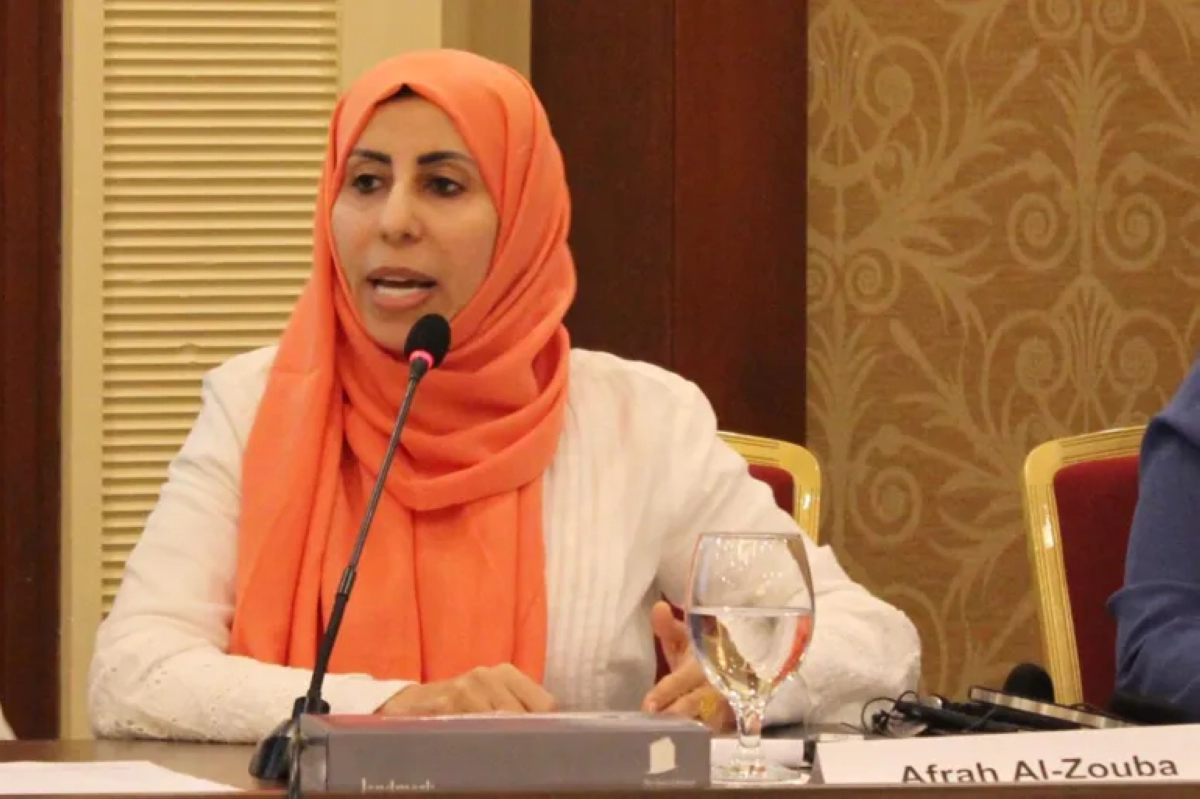

ADEN — Yemen is not an “Iranian bargaining chip” or an arena for settling regional scores, Foreign Minister Afrah Al-Zouba said Saturday, while describing the country’s partnership with Saudi Arabia as “firm” amid escalating fighting with the Houthis.In an interview published by Yemen’s official Saba news agency, Al-Zouba said restoring state institutions was essential to Yemen’s security, regional stability and the safety of maritime routes.“Restoring Yemeni state institutions is a pillar of Yemen’s security, regional stability and the safety of maritime routes, and the government is dealing with the repercussions of recent developments responsibly and with commitment,” she said.Al-Zouba said the government recognizes the difficulty of recent developments and the suffering of Yemenis, adding that its responsibilities include addressing shortcomings, strengthening state institutions, protecting civilians and assisting those affected.She said the political leadership was pursuing an “integrated deterrence” approach extending beyond military action to include civilian protection, restoring capabilities, diplomacy, maintaining state institutions and services, and expanding the humanitarian response.On the Red Sea and Bab Al-Mandab, Al-Zouba said the threat was not limited to disruptions to shipping but involved an attempt by an armed group to impose its conditions on maritime navigation.“Military control of a location does not create a right to control navigation,” she said. “Yemeni sovereignty over its territory and islands does not change by force, and the passage of a vessel under threat does not mean freedom of navigation is secure.”She said sustainable stability required empowering the state along Yemen’s coasts, ports and islands while expanding cooperation with littoral states and international partners on maritime intelligence, port security, coast guard capabilities and efforts to combat smuggling and organized crime.Al-Zouba praised Saudi Arabia for standing alongside the Yemeni people and their legitimate leadership and for its support and sacrifices.“The partnership with the Kingdom is firm, and Saudi Arabia’s role in supporting the Yemeni state represents an important pillar for Yemen’s security and regional stability,” she said. “Saudi security is strengthened by the existence of a safe and stable Yemen.”She also described Egypt as a key Arab partner and said coordination with Cairo on Yemen, Red Sea security and bilateral relations was continuing.Al-Zouba said the core of Yemen’s crisis was the Houthis’ seizure of state institutions and imposition of authority by force, framing the conflict as one between the national state and a Houthi “non-state project” that seeks to turn Yemen into a platform for threatening the region and international interests.She welcomed Russia’s support at the UN Security Council for freedom of navigation and opposition to attacks on commercial vessels, while reaffirming Yemen’s interest in developing its longstanding political, economic and development relations with Moscow.Turning to Iran, Al-Zouba reiterated the Yemeni government’s condemnation of Iranian support that it says has strengthened Houthi military capabilities and enabled threats against neighboring countries and maritime routes.“Yemen is not compensation for anyone’s loss in another arena, nor an arena for settling scores, nor a bargaining chip for any regional power to improve the terms of regional negotiations,” she said.Her remarks came amid escalating fighting on several fronts. The army said Saturday that 13 soldiers had died during the previous two days of fighting with the Houthis in Taiz and Lahj.A government official also said a senior Houthi commander and six of his escorts were killed on the Kahboub front near Bab Al-Mandab.Fighting has intensified in Taiz, Marib, Al-Jawf, Al-Bayda and Lahj since early July, marking the sharpest escalation following the relative calm that began with the April 2022 truce.The escalation accelerated in September, with the Houthis seizing several key locations in Al-Hudaydah and Taiz, including the strategic city of Mokha and Perim Island in the Bab Al-Mandab Strait.ADEN — Yemen is not an “Iranian bargaining chip” or an arena for settling regional scores, Foreign Minister Afrah Al-Zouba said Saturday, while describing the country’s partnership with Saudi Arabia as “firm” amid escalating fighting with the Houthis.In an interview published by Yemen’s official Saba news agency, Al-Zouba said restoring state institutions was essential to Yemen’s security, regional stability and the safety of maritime routes.“Restoring Yemeni state institutions is a pillar of Yemen’s security, regional stability and the safety of maritime routes, and the government is dealing with the repercussions of recent developments responsibly and with commitment,” she said.Al-Zouba said the government recognizes the difficulty of recent developments and the suffering of Yemenis, adding that its responsibilities include addressing shortcomings, strengthening state institutions, protecting civilians and assisting those affected.She said the political leadership was pursuing an “integrated deterrence” approach extending beyond military action to include civilian protection, restoring capabilities, diplomacy, maintaining state institutions and services, and expanding the humanitarian response.On the Red Sea and Bab Al-Mandab, Al-Zouba said the threat was not limited to disruptions to shipping but involved an attempt by an armed group to impose its conditions on maritime navigation.“Military control of a location does not create a right to control navigation,” she said. “Yemeni sovereignty over its territory and islands does not change by force, and the passage of a vessel under threat does not mean freedom of navigation is secure.”She said sustainable stability required empowering the state along Yemen’s coasts, ports and islands while expanding cooperation with littoral states and international partners on maritime intelligence, port security, coast guard capabilities and efforts to combat smuggling and organized crime.Al-Zouba praised Saudi Arabia for standing alongside the Yemeni people and their legitimate leadership and for its support and sacrifices.“The partnership with the Kingdom is firm, and Saudi Arabia’s role in supporting the Yemeni state represents an important pillar for Yemen’s security and regional stability,” she said. “Saudi security is strengthened by the existence of a safe and stable Yemen.”She also described Egypt as a key Arab partner and said coordination with Cairo on Yemen, Red Sea security and bilateral relations was continuing.Al-Zouba said the core of Yemen’s crisis was the Houthis’ seizure of state institutions and imposition of authority by force, framing the conflict as one between the national state and a Houthi “non-state project” that seeks to turn Yemen into a platform for threatening the region and international interests.She welcomed Russia’s support at the UN Security Council for freedom of navigation and opposition to attacks on commercial vessels, while reaffirming Yemen’s interest in developing its longstanding political, economic and development relations with Moscow.Turning to Iran, Al-Zouba reiterated the Yemeni government’s condemnation of Iranian support that it says has strengthened Houthi military capabilities and enabled threats against neighboring countries and maritime routes.“Yemen is not compensation for anyone’s loss in another arena, nor an arena for settling scores, nor a bargaining chip for any regional power to improve the terms of regional negotiations,” she said.Her remarks came amid escalating fighting on several fronts. The army said Saturday that 13 soldiers had died during the previous two days of fighting with the Houthis in Taiz and Lahj.A government official also said a senior Houthi commander and six of his escorts were killed on the Kahboub front near Bab Al-Mandab.Fighting has intensified in Taiz, Marib, Al-Jawf, Al-Bayda and Lahj since early July, marking the sharpest escalation following the relative calm that began with the April 2022 truce.The escalation accelerated in September, with the Houthis seizing several key locations in Al-Hudaydah and Taiz, including the strategic city of Mokha and Perim Island in the Bab Al-Mandab Strait.
Yemen is not an ‘Iranian bargaining chip,’ foreign minister says