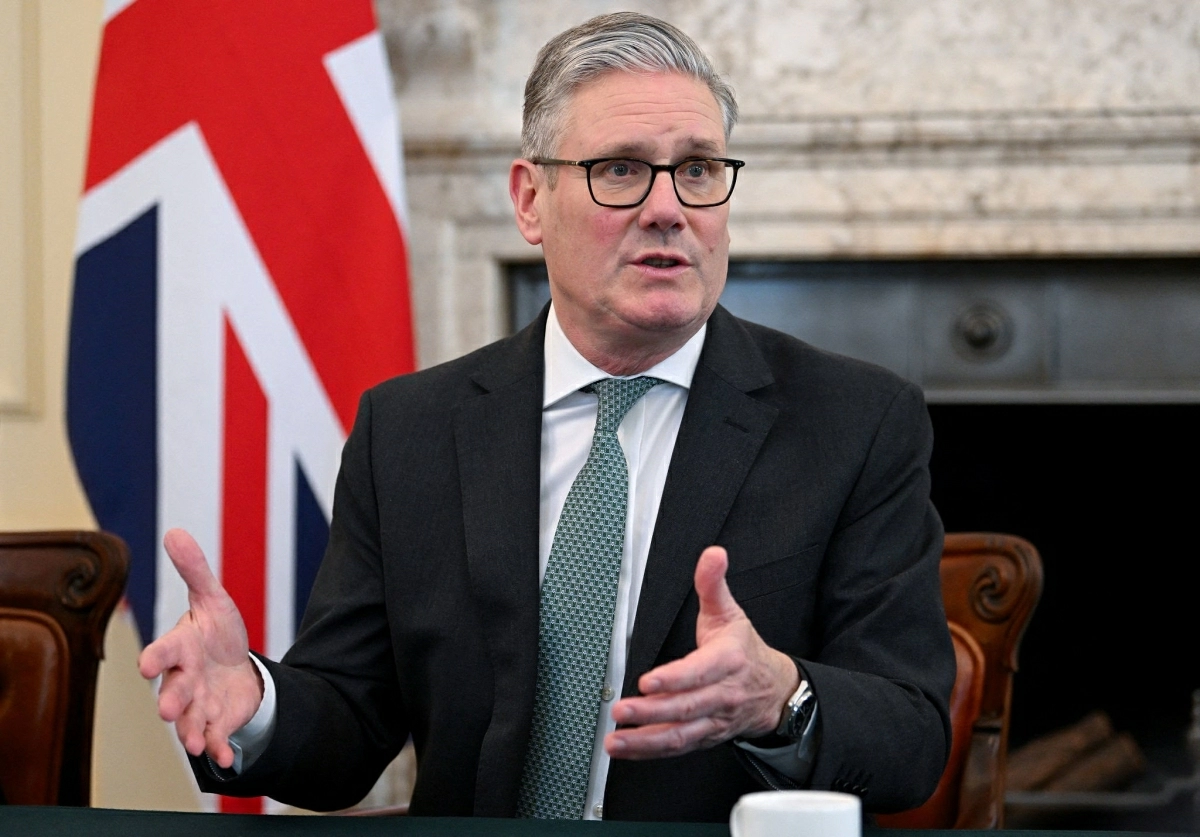

LONDON — Britain’s Prime Minister Keir Starmer rejected calls to resign on Tuesday, telling ministers he would “get on with governing” despite growing calls for him to quit after a drubbing in local elections. Starmer is fighting to save his premiership after almost 80 lawmakers from his governing center-left Labour Party have publicly called for him to resign or set a timetable for his departure. At a meeting of his cabinet, Starmer noted that a formal challenge had not yet been mounted against his leadership, laying down the gauntlet to his potential rivals. The Labour Party mutiny was spurred by disastrous results in last week’s local elections, which saw it lose more than 1,400 seats in English councils and suffer heavy losses in elections for the Welsh and Scottish parliaments. The hard-right Reform UK party was the main beneficiary of Labour’s slump. Starmer, in the top job for less than two years, repeated that, while he took responsibility for one of his Labour Party’s worst election defeats, there had been no official move to trigger a leadership contest. Several loyal ministers expressed their support for him. It was the latest pledge from Starmer to press on with a premiership that has been dogged by scandal and policy U-turns since he won a large majority at a national election in 2024. On Monday, he promised to be bolder in tackling the problems besetting Britain to try to shore up his political future. In a nod to an increase in borrowing costs on the markets over fears of another bout of political instability in Britain, Starmer said the “past 48 hours have been destabilizing for government and that has a real economic cost for our country and for families”. “The Labour Party has a process for challenging a leader and that has not been triggered,” Starmer told his cabinet, according to his Downing Street office. “The country expects us to get on with governing. That is what I am doing and what we must do as a cabinet.” Leaving Downing Street after the cabinet meeting, several senior ministers offered Starmer their support, with pensions minister Pat McFadden telling reporters that no one had challenged the prime minister at cabinet. Others who are thought to want Starmer to go, including health minister Wes Streeting and interior minister Shabana Mahmood, either left without comment or did not leave via Downing Street, where reporters were gathered. Some of those Labour lawmakers calling for Starmer to announce his departure had hoped a senior minister might quit to force the issue. Keeping up the pressure, several more Labour lawmakers, including a junior minister, called for his removal on Tuesday. Starmer became Labour leader in 2020, inheriting the party after its worst national election showing since 1935 under his predecessor, veteran left-winger Jeremy Corbyn. At the 2024 election, he won one of the largest majorities in modern British history for Labour with an offer of stability after years of chaos under the Conservatives, who oversaw five prime ministers in eight years and left what his government called a “black hole” in the public finances. Bond markets have been sensitive to any suggestion that Starmer and his finance minister Rachel Reeves could go. Investors are worried that a more left-wing replacement would push for more spending at a time when Britain’s finances are already stretched, with borrowing costs the highest among the Group of Seven advanced economies. It is generally harder for Labour lawmakers to remove a prime minister than the opposition Conservative Party. While dozens of Labour lawmakers might have expressed their dissatisfaction with Starmer, 81 of them need to rally behind one single candidate to trigger a contest. Of those who have called for him to go, about half of them are on the left of the party, while just over a quarter are more centrist, according to a Reuters tally. That would suggest there is no one candidate who commands the numbers yet. The crisis looks set to tip Britain back into the political chaos which has defined its last decade. If Starmer chooses to step aside, or is ousted, his successor would become Britain’s sixth prime minister in seven years. Jenny Chapman, a junior minister in the foreign office, said the majority of Labour’s 403 lawmakers “don’t want the chaos”.LONDON — Britain’s Prime Minister Keir Starmer rejected calls to resign on Tuesday, telling ministers he would “get on with governing” despite growing calls for him to quit after a drubbing in local elections. Starmer is fighting to save his premiership after almost 80 lawmakers from his governing center-left Labour Party have publicly called for him to resign or set a timetable for his departure. At a meeting of his cabinet, Starmer noted that a formal challenge had not yet been mounted against his leadership, laying down the gauntlet to his potential rivals. The Labour Party mutiny was spurred by disastrous results in last week’s local elections, which saw it lose more than 1,400 seats in English councils and suffer heavy losses in elections for the Welsh and Scottish parliaments. The hard-right Reform UK party was the main beneficiary of Labour’s slump. Starmer, in the top job for less than two years, repeated that, while he took responsibility for one of his Labour Party’s worst election defeats, there had been no official move to trigger a leadership contest. Several loyal ministers expressed their support for him. It was the latest pledge from Starmer to press on with a premiership that has been dogged by scandal and policy U-turns since he won a large majority at a national election in 2024. On Monday, he promised to be bolder in tackling the problems besetting Britain to try to shore up his political future. In a nod to an increase in borrowing costs on the markets over fears of another bout of political instability in Britain, Starmer said the “past 48 hours have been destabilizing for government and that has a real economic cost for our country and for families”. “The Labour Party has a process for challenging a leader and that has not been triggered,” Starmer told his cabinet, according to his Downing Street office. “The country expects us to get on with governing. That is what I am doing and what we must do as a cabinet.” Leaving Downing Street after the cabinet meeting, several senior ministers offered Starmer their support, with pensions minister Pat McFadden telling reporters that no one had challenged the prime minister at cabinet. Others who are thought to want Starmer to go, including health minister Wes Streeting and interior minister Shabana Mahmood, either left without comment or did not leave via Downing Street, where reporters were gathered. Some of those Labour lawmakers calling for Starmer to announce his departure had hoped a senior minister might quit to force the issue. Keeping up the pressure, several more Labour lawmakers, including a junior minister, called for his removal on Tuesday. Starmer became Labour leader in 2020, inheriting the party after its worst national election showing since 1935 under his predecessor, veteran left-winger Jeremy Corbyn. At the 2024 election, he won one of the largest majorities in modern British history for Labour with an offer of stability after years of chaos under the Conservatives, who oversaw five prime ministers in eight years and left what his government called a “black hole” in the public finances. Bond markets have been sensitive to any suggestion that Starmer and his finance minister Rachel Reeves could go. Investors are worried that a more left-wing replacement would push for more spending at a time when Britain’s finances are already stretched, with borrowing costs the highest among the Group of Seven advanced economies. It is generally harder for Labour lawmakers to remove a prime minister than the opposition Conservative Party. While dozens of Labour lawmakers might have expressed their dissatisfaction with Starmer, 81 of them need to rally behind one single candidate to trigger a contest. Of those who have called for him to go, about half of them are on the left of the party, while just over a quarter are more centrist, according to a Reuters tally. That would suggest there is no one candidate who commands the numbers yet. The crisis looks set to tip Britain back into the political chaos which has defined its last decade. If Starmer chooses to step aside, or is ousted, his successor would become Britain’s sixth prime minister in seven years. Jenny Chapman, a junior minister in the foreign office, said the majority of Labour’s 403 lawmakers “don’t want the chaos”.
Defiant Starmer rejects calls to quit, says he's getting on with governing